Stakeholders in Kaduna State have renewed their call for stronger financial commitment and multi-sectoral collaboration to advance Family Planning (FP) and Maternal, Newborn, and Child Health (MNCH) services, emphasizing that timely cash backing of health budgets is essential to saving mothers and children across the state.
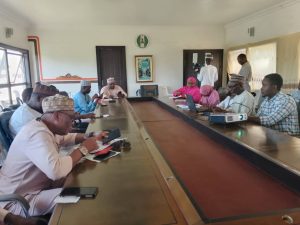
Speaking at a recent advocacy and review meeting, Garba Muhammad, Co-Chair of the Kaduna Maternal Accountability Mechanism (KADMAM), highlighted the critical roles of Civil Society Organizations (CSOs), the media, and government in addressing funding gaps that continue to hinder access to quality FP/MNCH services.

“Allocations alone are not enough — without cash releases and accountability, our health budgets remain paper commitments,” Muhammad said. “We need consistent advocacy and transparency to ensure every woman and child benefits from these investments.”
Garba Muhammad called for the establishment of a joint CSO–Media–Government Accountability Forum, regular publication of budget performance reports, and strengthened capacity for media and CSOs in budget tracking.

He urged the government to prioritize FP/MNCH financing within Kaduna’s development agenda, saying, “No woman should die giving birth — invest in FP and MNCH now.”
Representing the Kaduna State Primary Health Care Board (SPHCB), Hajiya Hussaina Kudan, presented ongoing efforts under the Maternal and Newborn Mortality Reduction Innovation Initiative (MAMII).
She reiterated SPHCB’s mission to deliver accessible, affordable, and high-quality primary health care, with a focus on maternal and child health.
According to her, despite notable progress — including community engagement through over 6,600 volunteers, improved digital health data systems, and the supply of 100 motorbike ambulances — challenges persist. These include weak infrastructure, inadequate funding, socio-cultural barriers, and poor data utilization for decision-making.
Hussaina Kudan outlined the “2 + 2 Agenda,” an SPHCB-led strategy targeting a 25 percent reduction in maternal and child mortality within the first two years, and a further 20 percent in the following two.

The plan also aims for a 30 percent reduction in malnutrition and the elimination of zero-dose Local Government Areas (LGAs).
“Through the MAMII platform, we’re coordinating interventions, identifying gaps, and promoting accountability,” she noted. “Scaling up community engagement and ensuring uninterrupted supplies of life-saving medicines are key next steps.”
Both speakers emphasized that achieving Kaduna’s health goals requires timely budget releases, sustained advocacy, and community-driven accountability.
As Kaduna strengthens partnerships through initiatives like KADMAM and MAMII, stakeholders remain united in one message: a well-funded, data-driven, and people-centered health system is the surest path to ending preventable maternal and newborn deaths.
COV: Khadija Kubau