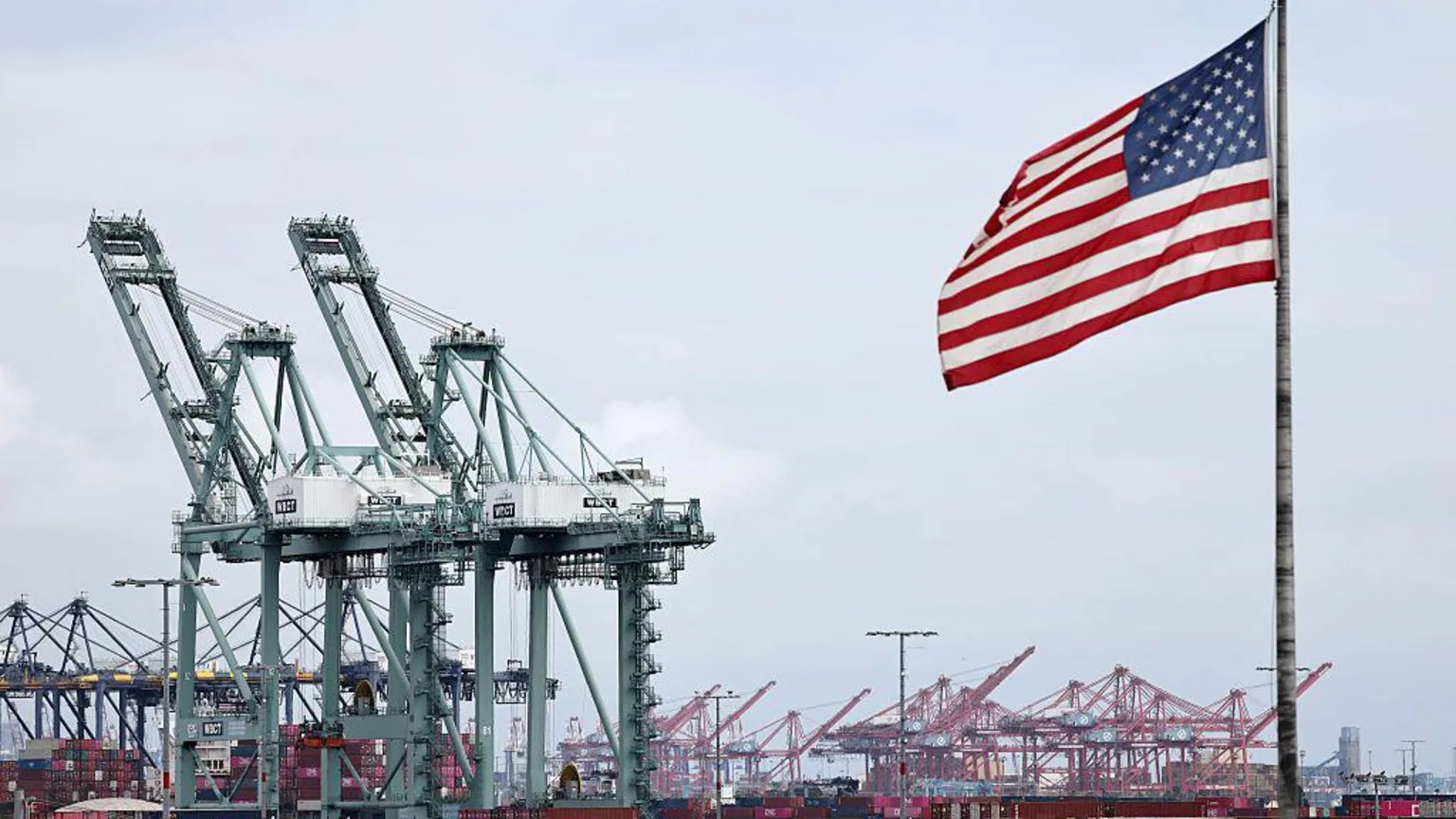

US President Donald Trump’s new global tariffs have come into effect at 10% despite a pledge to introduce them at a higher rate.
After the Supreme Court blocked many of his sweeping import taxes on Friday, the president said he would introduce a 10% global rate. He then said on Saturday that the rate would be 15%.
However, according to official documents, the tariffs have been set at the lower rate from Tuesday with no directive to increase the rate issued. The BBC has contacted the White House for comment.
“I think it simply adds to the chaos and mess,” said Carsten Brzeski, an analyst with investment bank ING, referring to the fast-changing tariffs and their effects on businesses.
“In terms of uncertainty we’re back to where we were last year,” he told the BBC’s Today programme, adding there was now a higher risk that the US’s trading partners would retaliate.
“The risk of a real fully-fledged tariff war – trade war – escalation is clearly higher than last year,” he said.
An executive order signed by Trump on Friday said the temporary 10% import duty was intended to “address fundamental international payments problems and continue the Administration’s work to rebalance our trade relationships to benefit American workers, farmers, and manufacturers”.
The administration is applying the levy under Section 122 of the 1974 Trade Act, which allows the president to impose the charge for 150 days without congressional approval.
The president has argued that tariffs are necessary to reduce America’s trade deficit – the amount by which imports exceed exports. But the deficit reached a fresh high last week, widening by 2.1% compared to 2024 and hitting roughly $1.2 trillion (£890bn).
The US has already collected at least $130bn in tariffs using the 1977 International Emergency Economic Powers Act (IEEPA), according to the most recent official data.
On Friday, the Supreme Court said the president had overstepped his authority by introducing sweeping tariffs using IEEPA last year, a decision that raised the possibility that businesses could get billions of dollars in tariff refunds,
Global transportation and postal company FedEx filed a lawsuit on Monday for a “full refund” on the import taxes it has paid under the IEEPA.
Meanwhile, campaign group We Pay The Tariffs has said it represents over 900 US “demanding full, fast, and automatic refunds of unlawful IEEPA tariffs” in an open letter to the government.
However, experts have raised doubts about the likelihood of the US handing money back, with Trump saying on Friday the issue would be fought in the courts “for the next five years”.
Supreme Court justice Brett Kavanaugh said in the ruling the refund process was likely to be a “mess”.
Trump has been highly critical of the Supreme Court’s decision, calling it “ridiculous, poorly written, and extraordinarily anti-American”.
BBC