By ALI MUHAMMAD RABIU
The Kwara State Government has graduated the first cohort of 16 National Health Fellows deployed across the state’s 16 Local Government Areas to strengthen health system coordination and promote evidence-based decision-making.
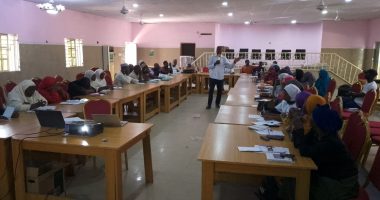
The graduation ceremony, held alongside activities relating to the validation of the 2027 Annual Operational Plan (AOP), marked the successful completion of the fellows’ 12-month engagement with the state’s health sector.
Speaking at the event, the state Commissioner for Health, Dr Amina Ahmed El-Imam, congratulated the graduating fellows and described their contributions as an important investment in the future of the state’s health system.
Dr El-Imam noted that their engagement with communities and health facilities had deepened their understanding of service delivery realities and reinforced the importance of data, accountability and coordination in improving healthcare outcomes.
She urged the fellows to regard their graduation as the beginning of greater responsibility, encouraging them to remain innovative, ethical and compassionate while applying the knowledge and experience gained during the fellowship to improve healthcare wherever they serve.
The Commissioner also stressed the importance of effective planning in the health sector, noting that a good Annual Operational Plan should focus on pressing challenges and provide realistic, measurable solutions rather than merely presenting a long list of activities.
Reviewing the state’s health sector performance in 2025 and 2026, she observed progress in malaria, tuberculosis, HIV services and health information management, while acknowledging persistent challenges in maternal and child health, workforce availability, essential medicines, health insurance coverage, referral systems and the timely release of funds.
She therefore charged departments, agencies and programmes to ensure that the 2027 AOP prioritises interventions capable of addressing identified gaps and delivering tangible improvements in healthcare services.
According to her, every priority intervention must respond to an identified need, have clear indicators and measurable targets, be properly costed, identify a funding source and assign responsibility to a relevant institution or officer.
In her remarks, the Director of Finance and Supply, Hajiya Maryam Ishola, described the graduation as a transition from structured learning and guided service to a lifelong commitment to professional excellence, innovation and public service.
She encouraged the fellows to uphold integrity, humility, teamwork, accountability and compassion, adding that the knowledge acquired during the fellowship should translate into practical solutions, stronger institutions and improved health outcomes for the people.
Also speaking, the State SWAP Desk Officer, Dr Ola Ahmed, explained that the fellows were deployed to serve as links between health-sector leadership and the realities of healthcare delivery at the local level.
He noted that their assignments provided opportunities to engage directly with the health system, observe service delivery challenges, contribute to monitoring and information gathering, and support the identification of gaps requiring management attention.
Dr Ahmed added that the fellowship reinforced the importance of evidence-based decision-making, community engagement and collaboration among health-sector stakeholders.
He emphasized that the significance of the first cohort extended beyond the completion of the 12-month programme to include; the practical experience gained, professional relationships established and understanding of public-sector governance developed by the fellows, laying a foundation for a new generation of health leaders.
Speaking on behalf of the graduating fellows, Mr Jamiu Yakub appreciated the Federal Government for providing the opportunity to serve the country through the health sector.
He noted that fellows deployed across the 16 Local Government Areas had undertaken impactful projects aimed at addressing local health challenges and contributing to improved healthcare delivery.