
By Khadija Kubau
The Kaduna State Ministry of Health, in collaboration with ISMPH, the ENGENDERHEALTH Consortium Partnership, and the Unified Health Media Network, has commenced a two-day media engagement workshop aimed at strengthening journalists’ capacity to interpret Primary Health Care (PHC) accountability data and produce evidence-based stories that promote transparency and improve health outcomes.
The workshop, themed “Strengthening Journalists’ Capacity to Interpret PHC Accountability Data and Produce Evidence-Based Accountability Stories,” brought together selected journalists and media organizations to deepen their understanding of Integrated Supportive Supervision (ISS) data and Primary Health Care Facility Assessment Tool (PHC-FAT) findings for impactful health reporting.
Delivering the welcome address on behalf of the Executive Director of ISMPH, Mrs. Moji Makanjuola-Emefiele, Mr. Solomon Dogo welcomed participants and described the workshop as a strategic platform for journalists and health stakeholders to examine evidence generated from primary healthcare facilities and translate it into stories that promote accountability and better service delivery.
He noted that the workshop was designed to strengthen journalists’ understanding of PHC accountability scorecards, ISS findings, health financing data, and PHC-FAT indicators, while enhancing their ability to analyse budget allocations, expenditure trends, and other health performance datasets.
According to him, participants are expected to develop skills in transforming complex technical health information into compelling, accurate, audience-centred, and solutions-focused stories that support evidence-based public discourse and accountability.
In his goodwill message, Chairman of the Kaduna Health Advocacy and Media Alliance (KADHAMA), Garba Muhammad, commended ISMPH and its partners for organizing what he described as a timely and strategic capacity-building initiative.
He observed that at a time when misinformation poses a threat to public confidence in the health sector, evidence-based journalism has become indispensable.
Garba said the use of ISS data, Reproductive, Maternal, Newborn, Child, Adolescent Health and Nutrition (RMNCAH+N) indicators, and PHC-FAT scorecards would enable journalists to move beyond routine event reporting to producing impactful stories capable of influencing policy, promoting accountability, and improving primary healthcare delivery.
He urged participants to take advantage of the workshop by learning, sharing experiences, and producing compelling stories that amplify citizens’ voices and inspire positive action.
The KADHAMA Chairman reaffirmed the Alliance’s commitment to working with government agencies, development partners, and media practitioners to strengthen health journalism and promote accountability for improved health outcomes in Kaduna State.
Also speaking, the Assistant Director of the Kaduna State Primary Health Care Board (KSPHCB), Dr. Joseph Natsah, emphasized the importance of responsible and ethical health reporting.
He encouraged journalists to verify information before publication, rely on credible and validated data sources, present balanced reports that highlight both achievements and challenges, and embrace solutions journalism that not only identifies problems but also explores practical responses.
According to him, evidence-based reporting remains a powerful tool for promoting transparency, amplifying citizens’ concerns, encouraging informed public dialogue on primary healthcare service delivery, and supporting accountability through constructive engagement.
Dr. Natsah reminded participants that journalists play a critical role in shaping public understanding and influencing policy conversations, stressing that continuous learning and capacity development are essential in the constantly evolving field of public health.
He described the workshop as the beginning of a long-term collaboration aimed at strengthening evidence-based health reporting across Kaduna State.
In his goodwill message, the Manager, Monitoring, Evaluation, Research and Learning (MERL) at EngenderHealth Nigeria, Dr. Abdulaziz Jumare, reaffirmed the organisation’s commitment to strengthening media capacity to support accountability and improve health outcomes through data-driven reporting.
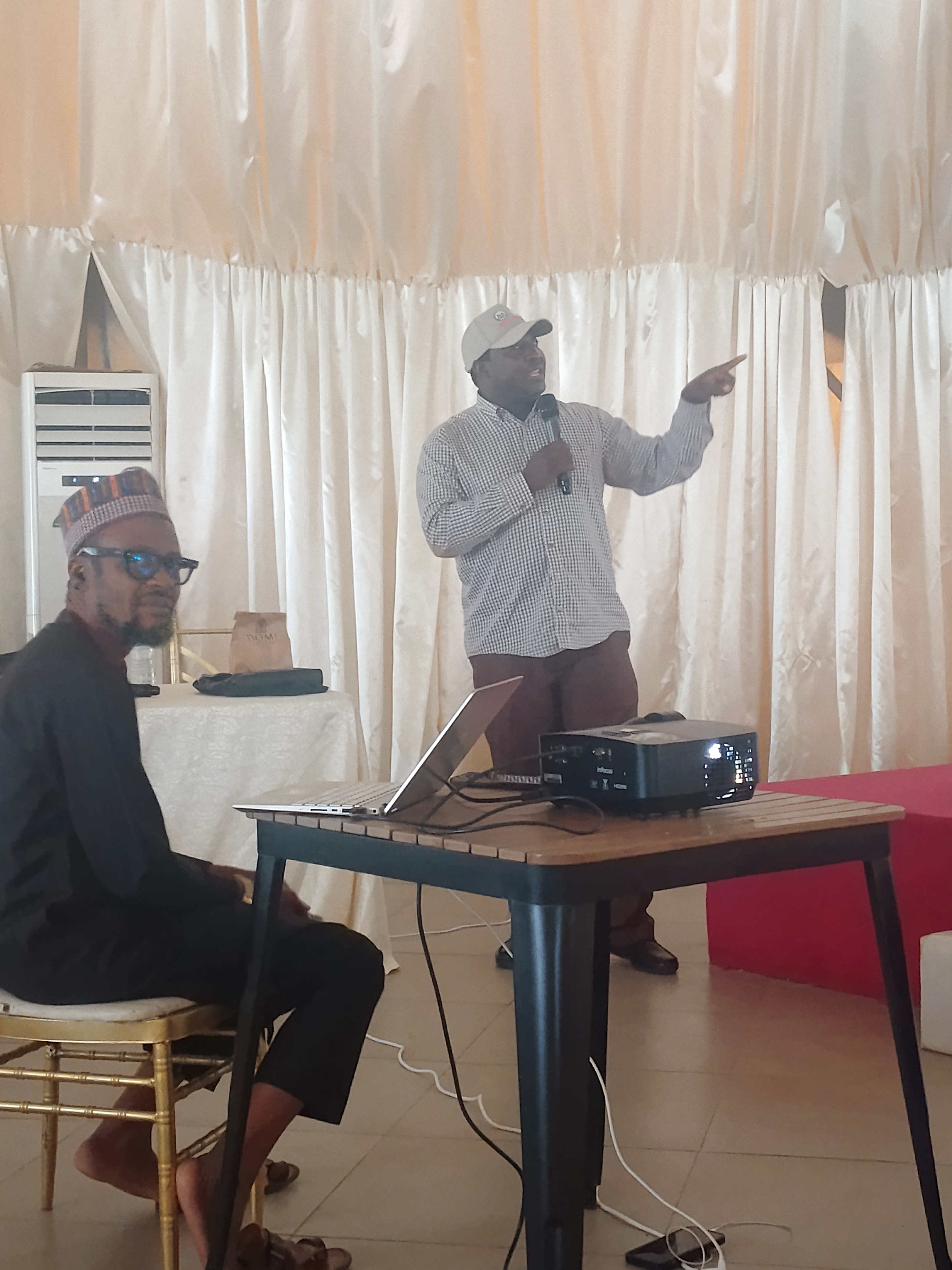
A major highlight of the opening day was a technical session facilitated by Dr. Joseph Natsah, who took participants through a comprehensive “ISS Data Deep Dive,” focusing on data interpretation, visualization, and the practical application of PHC accountability data in investigative and accountability journalism.
The workshop is expected to equip participants with practical skills in interpreting health performance data, analysing PHC accountability scorecards, and producing impactful stories that contribute to improved governance, transparency, and primary healthcare service delivery in Kaduna State.