By KHADIJAH ALIYU; Editing by BASIRAT MEMUDU
The Kano State Ministry for Local Government and Chieftaincy Affairs has commenced a three-day training programme for 132 Water, Environment, Sanitation, and Hygiene (WESH) personnel drawn from the 44 Local Government Areas of the state.
The training, which focuses on borehole maintenance, is aimed at improving access to safe drinking water across communities and reducing the frequent breakdown of rural water facilities.
The initiative forms part of the Kano State Government’s efforts to strengthen grassroots capacity for effective water infrastructure management and ensure sustainable access to clean water in both urban and rural communities.
Speaking during the opening ceremony of the workshop, the Commissioner for Local Government and Chieftaincy Affairs, Mohammed Tajo represented by Ali Faragai, said the programme reflects the commitment of Governor Abba Kabir Yusuf to improving living conditions and delivering democratic dividends at the grassroots level.
According to the commissioner, access to safe drinking water remains a fundamental right and a critical component of public health.
“Under Governor Yusuf’s leadership, this administration is taking deliberate steps to close the water supply gap in both urban and rural communities.
“By investing in the capacity of our local government staff, we are building a sustainable system that responds faster to breakdowns, reduces maintenance costs, and keeps boreholes functional for the thousands of families who depend on them daily,” he said.
The commissioner explained that empowering local government personnel with technical skills would reduce dependence on external technicians and improve the efficiency of maintenance services.
He noted that functional boreholes remain essential to improving public health outcomes and supporting community development, particularly in rural areas where residents rely heavily on groundwater sources.
The cluster-based training is being conducted simultaneously in the Rano, Bichi, and Ungogo zones.
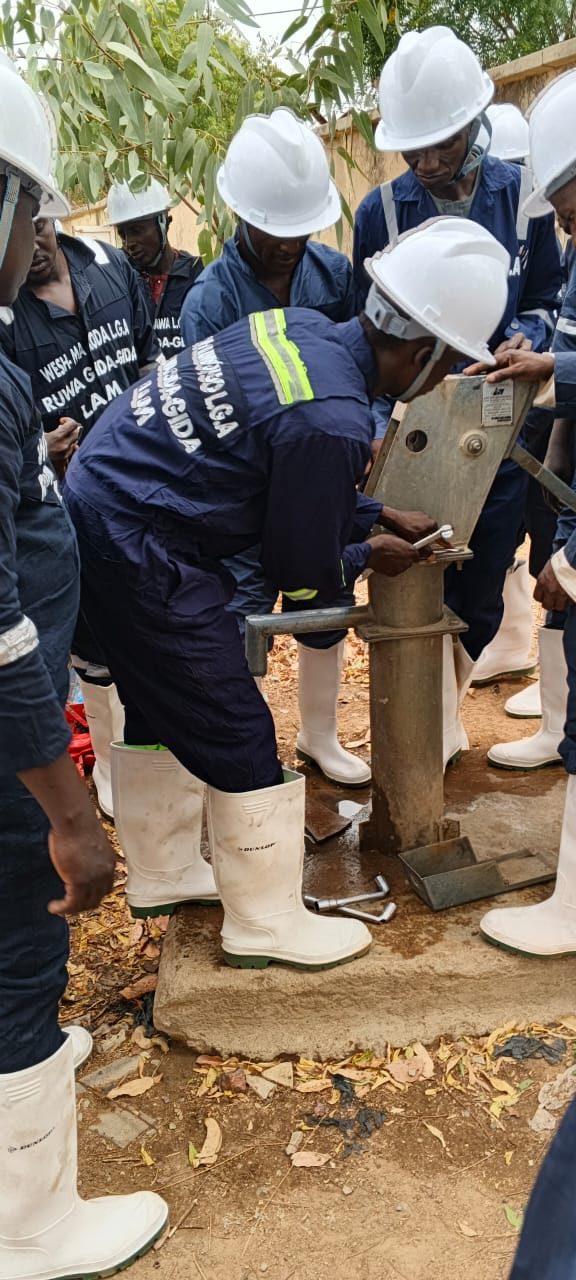
Participants are undergoing practical and technical sessions covering borehole maintenance, fault diagnosis, pump repairs, water quality testing, and record keeping to enable them to respond swiftly to equipment failures and sustain clean water supply at the community level.
The ministry said the training is expected to strengthen local capacity, reduce downtime in water facilities, and ensure more reliable access to potable water across the state.