
Writing By Teddy Daniel; Editing By Yusuf Zubairu
Federal Government has concluded plans to recruit and train one thousand youths from each state and the FCT into the livestock value chain, as part of a broader push to transform the sector into a major driver of food security, jobs, and economic growth.
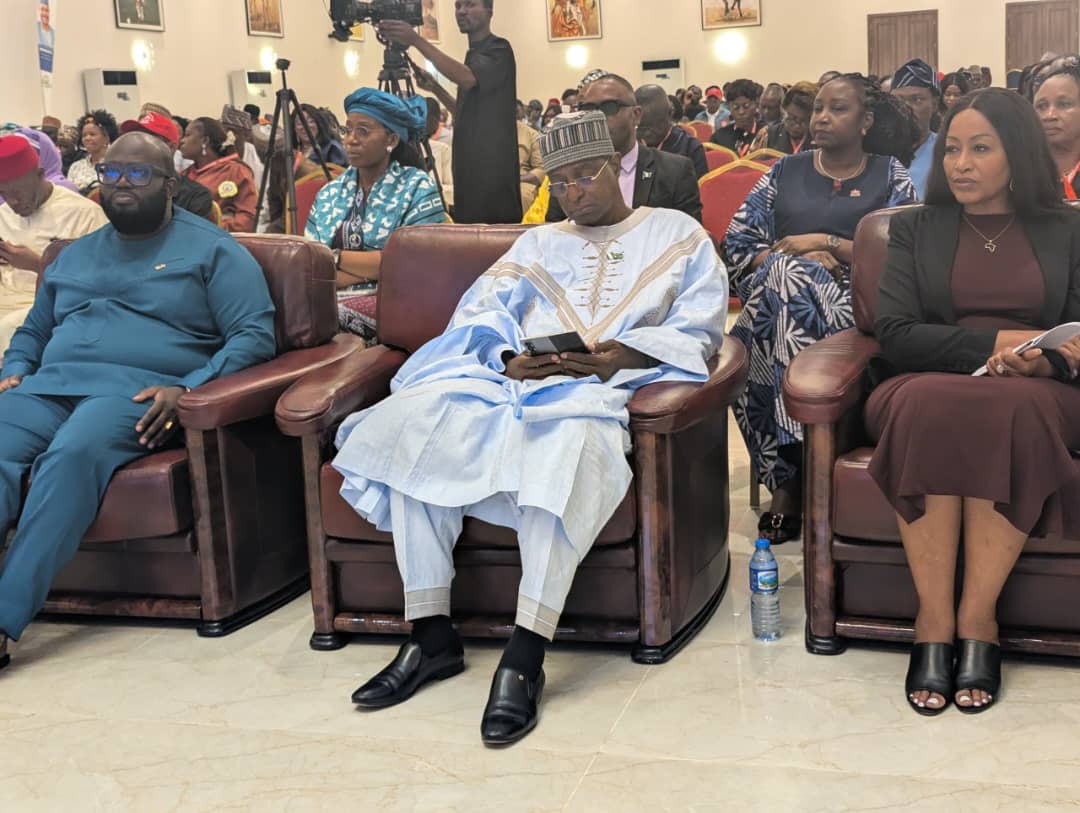
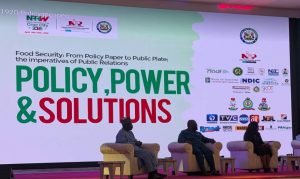
Speaking at the 2026 Nigeria Public Relations Week panel session in Kaduna, Minister of Livestock Development, Alhaji Idi Mukhtar Maiha, described the initiative as a deliberate strategy to unlock the country’s underutilized livestock potential.
“This is a very strategic and timely event. The National Institute of Public Relations has taken a bold step to focus national attention on food security, and choosing Kaduna as the venue is no coincidence,” Maiha said.
He noted that Kaduna is fast emerging as a key hub for livestock development, particularly in dairy production, aligning with ongoing federal efforts to reposition the sector.
“Our presence here is deliberate as we are here to communicate clearly and directly to Nigerians down to the last mile about the opportunities in livestock.
This sector is not about sentiment or stigmatization; it is about business, investment, food security, job creation, and rural development,” he added.
The minister disclosed that the youth focused programme will cover critical areas such as feed and fodder production, animal health services, poultry, rabbit farming, sheep and goat fattening, cattle production, and milk processing.
“This initiative is designed to tap into the energy, creativity, and innovation of Nigeria’s youth, who make up over sixty five percent of the population. For us, this is not just a programme,it is the way forward,” he said.
Maiha also highlighted the economic paradox facing the country, noting that despite having nearly fifty eight million cattle, Nigeria still spends about one point five billion dollar annually on dairy imports.
“The question is: how do we transform this natural wealth into productivity? How do we reduce imports and retain that wealth within our economy? That is the story we must tell and the direction we are heading,” he stated.
He revealed that recent assessments estimate the livestock sector holds over thirty two billion dollars in untapped potential, spanning millions of cattle, goats, sheep, poultry, pigs, camels, and donkeys most of which remain outside the formal economy.
“Livestock development is about shared prosperity. It is about creating jobs, strengthening rural economies, improving nutrition, and ensuring national stability,” Maiha said.
Also speaking, President of the Africa Public Relations Association, Mr. Arik Karani, emphasized the critical role of communication in reshaping public perception of agriculture across the continent.
“I grew up and was educated in Nairobi. From primary school, every child is introduced to all subjects, including agriculture and livestock and agriculture remains a key part of the learning experience,” Karani said.
He argued that early exposure helps remove the stigma around farming and positions it as a viable and respectable career path.
“The challenge, frankly, is perception. Agriculture is often wrongly associated with illiteracy. Farmers are made to feel they do not deserve a seat at the table,” he added.
Mr Karani urged communicators to move beyond image-building and actively translate government policies into practical, accessible information for farmers and communities.
“Governments create policies but communicators must translate those policies into clear, accessible information for the people,” he stressed
Earlier ,Vice Chairman of Council of the Nigerian Institute of Public Relations, Professor Emmanuel Samu Dandaura, stressed the need to make agriculture attractive, technology driven, and youth-focused.
“There is real wealth in agriculture and our goal is to change the narrative and make agriculture attractive to Africa’s youth,” Dandaura said.
He noted that with the right tools, young people can leverage smartphones and digital platforms to access markets, monitor production, and develop innovative agricultural solutions.
“We must stop saying we cannot feed ourselves; we have the resources, we need the will and the strategy,” he re-echoed.
Alhaji Dandaura also underscored the importance of integrating modern science, biotechnology, and digital tools into agricultural education, while promoting values such as integrity and responsibility across the value chain.
Across the panel, the speakers agreed that beyond policies and investments, a shift in narrative driven by effective communication remains critical to unlocking the full potential of Nigeria’s livestock and agricultural sectors.