Independent National Electoral Commission (INEC) has directed its personnel to suspend further annual leave as preparations intensify for the 2027 general elections.
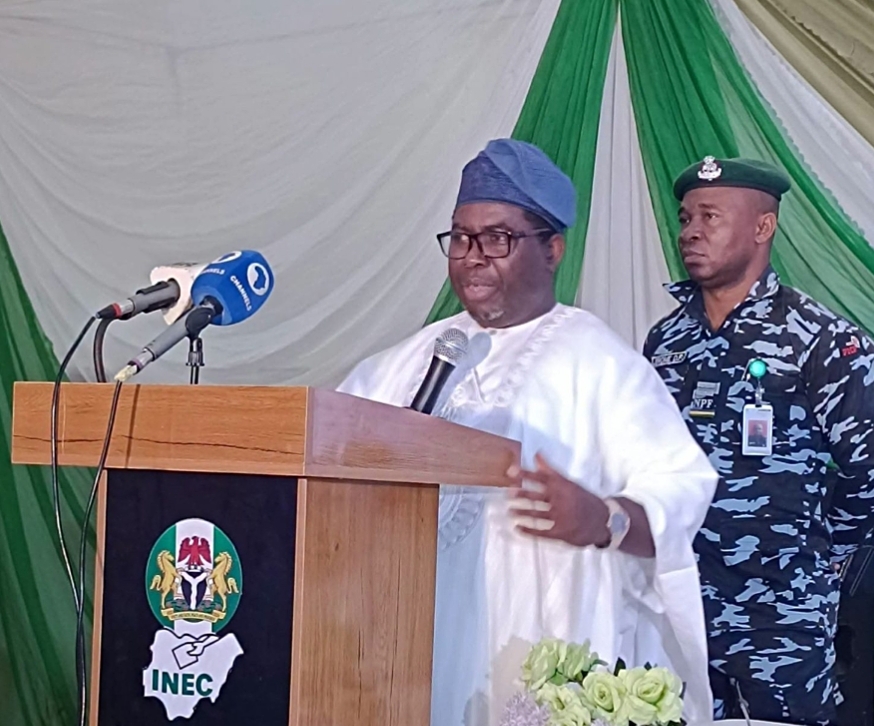
INEC Chairman, Professor Joash Amupitan, gave the directive on Friday in Lokoja, Kogi State, during the North-Central Zonal Interactive Meeting with staff and Readiness Assessment for the 2027 General Election.
He said the directive was aimed at ensuring maximum staff availability, administrative discipline and operational efficiency ahead of the elections, which will involve more than 103 million registered voters across 176,846 polling units nationwide.
Professor Amupitan warned that negligence, absenteeism, financial misconduct and political partisanship among staff would attract decisive sanctions.
The INEC Chairman also announced improved salary, hazard and field allowances for personnel, alongside a 150 per cent increase in monthly overhead allocations to state offices, effective July 1, 2026.
He disclosed that the new Consolidated Election Management Body Salary Structure (CEMBSS) took effect from January 1, 2026, while arrangements for its cash backing were ongoing.
On logistics, he said operational pickup vehicles had been distributed to state and Local Government Area offices nationwide, while 20 Sports Utility Vehicles had been procured for Resident Electoral Commissioners, with additional vehicles planned for Administrative Secretaries.
On technological preparedness, Professor Amupitan said the Commission was configuring 57,000 newly procured Bimodal Voter Accreditation System (BVAS) devices and auditing its electronic result management platforms to ensure transparent accreditation and result transmission.
He added that the certified Register of Voters would be published on December 15, 2026, following the display of the preliminary register for public scrutiny.
On election security, the INEC Chairman announced a coordinated, intelligence-led approach through the Inter-Agency Consultative Committee on Election Security (ICCES), to identify potential flashpoints and protect electoral personnel, equipment and voters.
He also warned against the growing threat of misinformation, fabricated media content and artificial intelligence-generated deepfakes, stressing that transparent administration and efficient election-day operations were essential to sustaining public confidence.
The Presidential and National Assembly elections are scheduled for January 16, 2027, while the Governorship and State Houses of Assembly elections will hold on February 6, 2027.
Professor Amupitan said the Commission had completed nine of the 14 major milestones in its statutory timetable, adding that the nationwide zonal readiness assessment was designed to identify operational gaps and strengthen preparations ahead of the polls.
RN