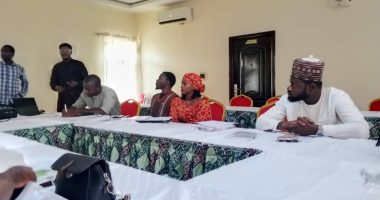
The Director-General of the National Institute of Public Health and Infectious Diseases (NIPHID), Saye, Zaria, Dr. Abdullahi Aminu Dalhatu, says the institute has been mandated to serve as Nigeria’s apex centre for specialist care, training and research on infectious diseases of public health importance.
He explained that the expanded mandate of the institute now covers tertiary specialist care for all infectious diseases, including emerging and re-emerging infections, building on its previous focus on tuberculosis and leprosy.
According to him, tuberculosis and leprosy have now been fully integrated into the broader infectious disease framework, alongside HIV, hepatitis, and other known and yet-to-be-identified epidemic diseases.
He said the second mandate of the institute is the training of human resources for the management of infectious diseases across Nigeria.
“This is an academic institution. Our first step is to strengthen the capacity of our own staff who will train others,” Dr. Dalhatu said.
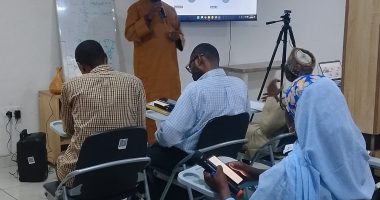
The Director General disclosed that NIPHID has commenced training-of-trainers programmes, beginning with refresher and advanced training on tuberculosis, leprosy and HIV management.
“As I speak, two of our staff – a doctor and a nurse – are currently undergoing training on drug-resistant tuberculosis in Kaduna, in collaboration with the Kaduna State Ministry of Health and partners supporting the TB programme,” he noted.
Dr. Dalhatu added that hospital staff would undergo refresher training, after which selected personnel would be deployed to the training arm of the institution, while others would remain in the clinical specialist arm, which will focus on patient management.
He said the institute would operate as a dual-purpose hospital, combining specialist clinical services with training and capacity building, while another arm will focus on research, surveillance, and clinical trials aimed at identifying new and emerging infectious diseases.
On the third mandate, the Director-General said NIPHID will conduct research on infectious diseases and public health, noting that while infectious diseases are of major public health concern, the institute will also contribute to broader public health actions.
Speaking on the benefits of the institute to Zaria and its environs, Dr. Dalhatu said the facility, which dates back to 1928–1929 as a leprosy missionary camp, has evolved into a national institution with far-reaching impact.
He said residents of Zaria will benefit from easy access to specialist treatment, reduced need for referrals outside the area, training opportunities, increased interest in health-related professions, and employment opportunities, particularly for qualified indigenes of the host community in line with federal regulations.
COV/IBRAHIM SULEIMAN