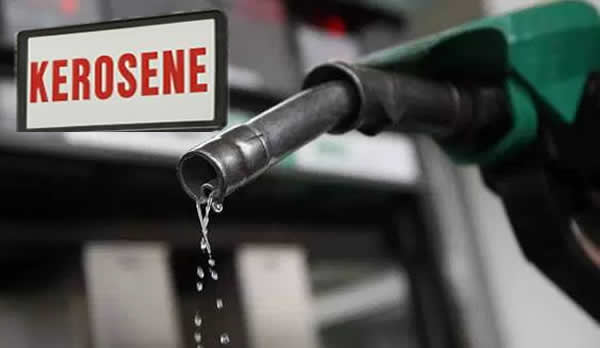

Nigeria will by 2030 eliminate kerosene lighting, reduce burning of crop residues, and increase in the use of buses for public transport.
President Buhari gave this indication in Abuja during a virtual meeting, hosted by President Joe Biden of the United States, on Major Economies Forum on Energy and Climate Change, MEF.
Listing Nigeria’s updated Nationally Determined Contribution, NDC, President Buhari restated Nigeria’s commitment to a safer and healthier global climate.
He said the development had raised an additional two percent to the NDC from 45 percent to 47 percent conditionally and 20 percent unconditionally below business-as-usual.
President Buhari said Nigeria was developing National Frameworks for Article 6 of the Kigali Accord, and for carbon pricing, explaining that Nigeria has finalised the Sectoral Action Plan for the implementation of the revised NDC in the key priority sectors of Energy, Oil & Gas, Agriculture and Land-use, Power, Transport and Water and Waste.
On the Global Methane Pledge, the President told the world leaders that Nigeria joined the Global Methane Alliance in 2019 with commitment to methane reduction targets of at least 45 percent by 2025, and a 60-75 percent reduction by 2030.
He said Nigeria’s plan was to improve air quality and reduce her contribution to climate change through 22 specific mitigation measures in 8 source sectors, which include transportation, cooking and lighting in households, industry, waste, oil and gas, agriculture, power and hydro-fluoro-carbon, as well as adoption and ratification of the Kigali Amendment to the Montreal Protocol aimed at phasing out hydro- fluoro-carbon emissions.
President Buhari noted that the measures taken would also be effective in reducing other air pollutants, such as nitrogen oxides and particulate matter, as well as Carbon Dioxide emissions.
He said Nigeria was aware that short term response to transition from fossil fuel to clean energy might jeopardise Nigeria’s economic growth, hence her decision to use the Long-Term Low-Emissions Development Strategy as her transition process.
President Buhari said Nigeria was ready to partner with countries and relevant stakeholders to achieve the goals of the United Nations Framework Convention on Climate Change and objectives of the Paris Agreement, while combining both local and international solutions in her quest to mitigate the challenges of climate change and adapting to the realities of the catastrophic environmental destruction facing our world.
Bello Wakili