By Aminu Dalhatu
The Zamfara State Government has sensitised Islamic and Christian religious leaders on child health, nutrition, immunisation, disease prevention and maternal healthcare, Hygiene under the Faith for Life initiative.
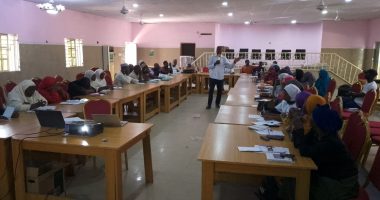
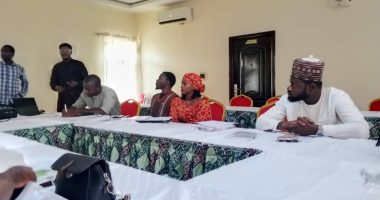
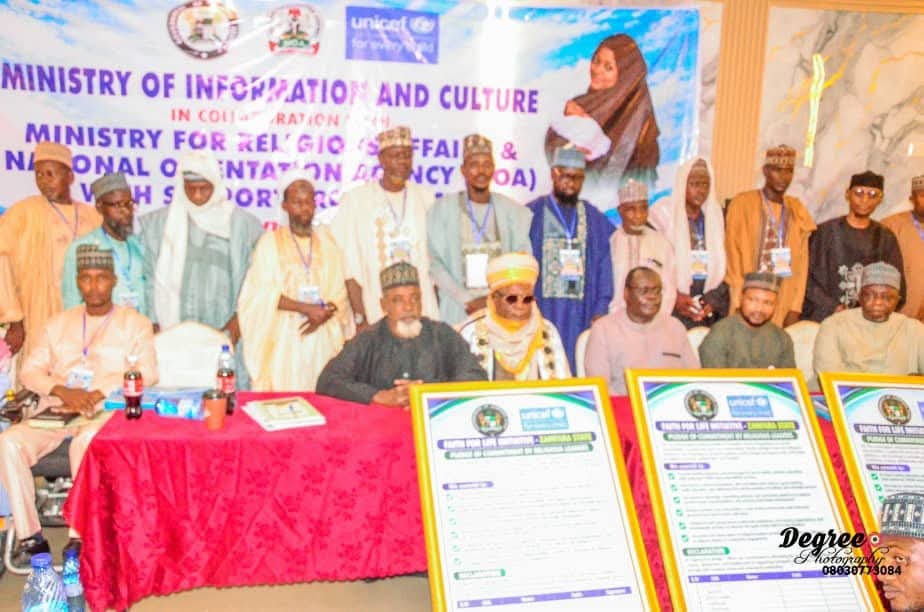
The two-day workshop, organised by the Zamfara State Ministry of Information and Culture in collaboration with the Ministry for Religious Affairs, UNICEF and the National Orientation Agency (NOA), aims to strengthen the capacity of religious leaders to promote children’s health, protection and overall well-being.
During the presentations, participants, particularly Imams and pastors, were educated on the importance of colostrum, the first breast milk produced after childbirth, which provides essential nutrients and antibodies that protect newborns against infections.
They were encouraged to promote early initiation of breastfeeding and educate mothers on the importance of breastfeeding their babies promptly after delivery.
The facilitators also highlighted the relevance of religious teachings in promoting children’s welfare, proper nutrition and healthy development, emphasising the responsibility of parents and communities to protect children from preventable health risks.
A presentation on chapters four and five of the workshop handbook focused on the importance of adequate nutrition in children’s physical and mental development, disease prevention and the reduction of long-term health complications.
Participants were also cautioned against practices involving the transfer of saliva from one person to a newborn baby, which could expose infants to infectious diseases.
The facilitators explained the historical religious context of certain traditional practices, while stressing the need to ensure that cultural and religious observances do not endanger children’s health.
The workshop further addressed common childhood illnesses, particularly malaria, diarrhoea and pneumonia, highlighting their effects on children’s health and survival.
Participants were sensitised on malaria prevention measures, including the use of insecticide-treated mosquito nets and indoor residual spraying, as well as the need to protect pregnant women and children from mosquito bites.
The importance of routine immunisation was equally emphasised as an effective means of preventing vaccine-preventable diseases and reducing child mortality.
Speaking at the workshop, the Zamfara State Commissioner for Religious Affairs, Alhaji Sulaiman Adamu Gummi, urged Islamic and Christian religious leaders to intensify efforts to promote peace, community harmony and maternal healthcare awareness among their followers.
Alhaji Sulaiman Adamu Gummi urged the clerics to use sermons, friday congregational prayers, church services and other religious gatherings to educate their followers on the importance of peace, tolerance and peaceful coexistence.
The commissioner also called on religious leaders to intensify sensitization on maternal healthcare, particularly among pregnant women, encouraging them to attend antenatal clinics regularly and seek appropriate medical attention to reduce preventable maternal and child deaths.
In his remarks, the Chief of UNICEF Sokoto Field Office, Mr. Michael Juma, said religious leaders had an important role to play in promoting integrity and ethical leadership, as well as ensuring that children and women received essential services efficiently.
Mr. Juma acknowledged the efforts of the Zamfara State Government in providing services in education, health, nutrition, water and sanitation, social protection and child protection, but stressed that more needed to be done to accelerate progress in the areas.
He called on religious leaders to strengthen their support for the government by promoting accountability and mobilising communities to increase demand for essential services, particularly in education, healthcare, water and sanitation, and child protection.
Throughout the workshop, facilitators integrated religious teachings with public health information by demonstrating how faith-based messages could complement government health interventions and promote positive social and behavioural change.
The workshop brought together Imams, pastors and other stakeholders to strengthen their capacity to educate their congregations on child welfare, maternal healthcare, nutrition, immunisation and disease prevention.
Editing By Godwin Duru