Writing By Daniel Karlmax, Editing By Godwin Duru
Nigeria, Africa’s most populous nation, stands at the frontline of the global climate crisis.
From severe droughts and advancing desertification to floods, rising sea levels, and intense heat waves, the country faces a multitude of environmental threats that endanger human security, food production, economic growth, and the well-being of millions.
This threat is not unique to Nigeria—it is a growing concern across the African sub-region.
However, due to Nigeria’s size and strategic position, the call to action has become even more urgent.
At last year’s Climate Change Conference, COP29 held in Azerbaijan, global experts emphasized a notable shift in strategy—from solely focusing on mitigation to prioritizing adaptation.
Adaptation is now seen as the most practical and immediate pathway forward.
It involves building resilience, utilizing local technologies, and implementing grassroots strategies that address the crisis in tangible ways.
In Kaduna State, proactive steps are already underway.
The government, in collaboration with the Ministry of Environment, the State Emergency Management Agency (SEMA), the Kaduna State Environmental Protection Authority (KEPA), and other stakeholders, has intensified climate awareness and community engagement efforts.
Yusuf Idris Amoke, Special Assistant to Governor Uba Sani on Climate Change, noted that Kaduna’s adaptation strategies include the installation of solar-powered streetlights, the planting of three million trees, and the training of over five hundred women and youths in alternative energy solutions such as briquettes.
The central idea is clear: when local communities are empowered, climate strategies become more inclusive, effective, and impactful—especially in reducing emissions and strengthening grassroots resilience.
Across northern Nigeria, climate-smart agriculture is gaining ground.
Small holder farmers are being supported with sustainable farming techniques that adapt to shifting weather patterns, increase yields, and reduce greenhouse gas emissions.
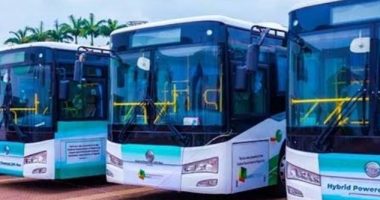
In a landmark move, Governor Uba Sani recently launched 100 BRT buses powered by Compressed Natural Gas (CNG), making Kaduna the second Nigerian state—after Lagos—to adopt this cleaner mode of public transport.
This is part of a broader push toward renewable energy sources like solar and wind, an initiative that not only benefits the environment but also creates jobs and economic opportunities.
Drainage systems and waterways across Kaduna’s metropolitan areas are being disilted, while public sensitization campaigns promote tree planting and discourage construction on water channels—measures confirmed by the State Commissioner for Environment, Abubakar Buba.
Climate change expert Gloria Kasang Bulus, also from Kaduna, emphasized the importance of local innovation and creativity.
“The $300 billion promised by the Global South to the Global North is simply not enough,” she said. “We must bring all hands on deck to confront this global environmental emergency that affects us all.”
At the federal level, Nigeria is not standing still.
Several key policies have been implemented to drive climate action.
These include: National Climate Change Act, National Adaptation Plan (NAP) Framework and the Great Green Wall Initiative: A massive afforestation effort across the Sahel region to combat desertification.
Experts also stress the urgent need to integrate climate education into the national school curriculum—from primary to tertiary levels—so that future generations are equipped with the skills and knowledge to tackle climate change.
In the end, Nigeria’s strength will lie in its ability to act collectively, support local innovation, and forge strong global partnerships—especially in securing financial and technical support from the world’s major polluters.
Daniel Karlmax