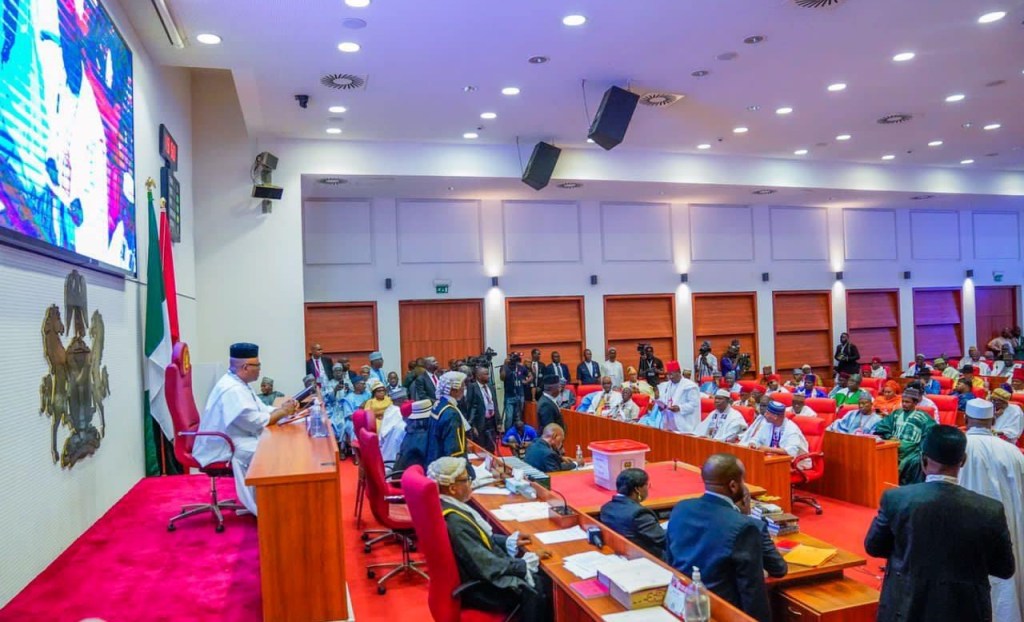

The Senate Committee on Public Accounts has suspended its scheduled meeting with the Nigerian National Petroleum Company Limited NNPCL due to the repeated absence of the Group Chief Executive Officer, Engineer Bayo Ojulari.
Chairman of the Committee, Senator Ahmed Aliyu Wadada, expressed disappointment during Thursday’s session, stating that the NNPCL boss failed to honour the Senate’s invitation despite multiple requests, particularly over ₦210 trillion in financial infractions contained in audit reports from 2017 to 2023.
The committee insisted that Engineer Ojulari must appear in person to respond to the queries and provide explanations regarding the alleged financial discrepancies.
Although the company’s Chief Financial Officer, Mr. Dapo Segun, appeared before the Senate, he was denied the opportunity to make any presentation, with the chairman noting that only the GCEO can provide the needed clarification.
Senator Abdul Ningi criticized the GCEO’s absence, describing it as a disregard for the National Assembly.
He emphasized that the invitation was sent before the GCEO left for the OPEC meeting, and that appearing before the Senate should have taken priority.
Senator Ningi argued that respecting the Senate invitation is a national duty, noting that allowing the CFO to speak in place of the GCEO would undermine the integrity of the committee and the Senate at large.
Also speaking, Senator Adams Oshiomhole reminded the gathering that the Senate has constitutional authority to summon any individual or official, stressing that no one is above the law.
He maintained that the GCEO must appear before the committee or risk facing the Senate’s constitutional sanctions.
Senator Wadada, therefore, stated that a new date will be communicated to NNPCL for the GCEO’s mandatory appearance, reaffirming that the committee’s actions are strictly in line with its oversight responsibilities.
He stressed that the committee holds no personal grudge against any official but is only carrying out its constitutional mandate to ensure accountability in the management of public funds.
COV/Bashir M