
By Aminu Dalhatu
The Sultan Foundation for Peace and Development has called for stronger collaboration among routine immunisation service providers, community-based organisations and other implementing partners to ensure that every zero-dose and under-immunised child in Zamfara State receives life-saving vaccines.
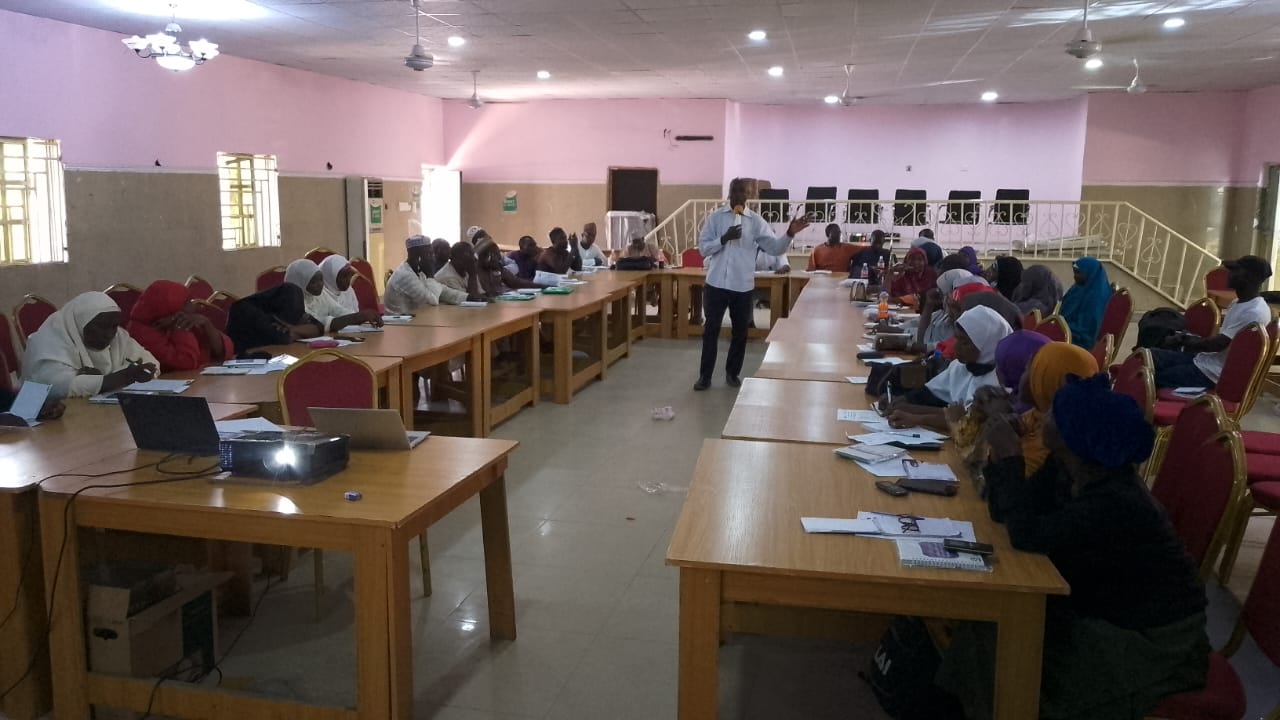
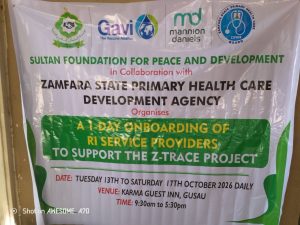
The Head of Programme for the Foundation in Zamfara State, Jamilu Sarkin Gulbi, made the call during a one-day onboarding meeting for routine immunisation service providers organised to support the Zamfara Tracking and Accountability for Equitable Immunisation (Z-TRACE) project.
Sarkin Gulbi said the initiative was designed to address gaps in immunisation coverage by improving the identification, vaccination and tracking of children who had either not received any routine vaccines or had not completed their immunisation schedules.
He identified inaccurate data, difficulties in reaching some communities and weak linkages between health facilities, immunisation service providers and community structures as some of the challenges preventing eligible children from accessing routine immunisation services.
According to Gulbi, the success of the Z-TRACE project depends largely on effective coordination between community-based organisations, community mobilisers and routine immunisation service providers.
He explained that while community-based organisations and mobilisers would identify zero-dose and under-immunised children, health workers would be responsible for administering vaccines, documenting services provided and validating the information collected.
Jamilu Sarkin Gulbi outlined four key areas of focus for the onboarding, including the identification and referral of children, vaccination and reporting, immunisation data validation and quality improvement, as well as accountability mechanisms to ensure that every identified child receives the required vaccines.
He stressed the need for routine immunisation providers to ensure timely vaccination and accurate reporting of children referred from communities, noting that reliable data was essential for effective planning and decision-making.
He urged participants to actively engage in the onboarding, share their field experiences and identify practical ways to improve collaboration among the various stakeholders.
Sarkin Gulbi also expressed appreciation to the Zamfara State Primary Health Care Development Agency and the State Ministry of Health for providing the necessary support and releasing health workers to participate in the initiative.
Earlier, the Director Disease Control and Immunization, Zamfara State Primary Health Care Development Board, Almustapha Alinkulu said the project would involve the engagement of community volunteers, including Community Development Officers (CDOs), to mobilise residents, raise awareness and encourage parents and caregivers to take eligible children to health facilities for routine immunization.
According to him, inadequate awareness of the importance of immunization among community members remains one of the major challenges affecting vaccination uptake in the state.
Alinkulu expressed optimism that the intervention would help bridge the gap by strengthening community sensitization and encouraging more parents to utilise available immunization services.
He said the Zamfara State Government had continued to make vaccines available to protect children against vaccine-preventable diseases, adding that, more than 656 health facilities across the state currently provide routine immunization services.
The director noted that the services were offered daily in some facilities and on designated days in others, urging parents and caregivers to take advantage of the opportunity to ensure their children receive the required vaccines.
He explained that routine immunization was essential for preventing diseases that could cause outbreaks, severe illnesses and deaths among children and other members of the population.
Alinkulu called on community members to support the intervention by participating in awareness campaigns and ensuring that eligible children were presented at designated health facilities for vaccination.
The director emphasised that the cooperation of health workers, community volunteers, parents and other stakeholders was crucial to improving immunization coverage and reducing the burden of vaccine-preventable diseases in Zamfara State.
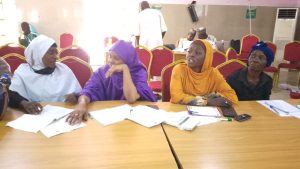
The one-day onboarding brought together routine immunisation service providers, officials of the State Primary Health Care Development Agency, representatives of implementing partners among others.
Similarly, the participants came from various local government areas of the state.
Editing By Yusuf Zubairu