
By Shindong Bala; Editing by Basirat Memudu
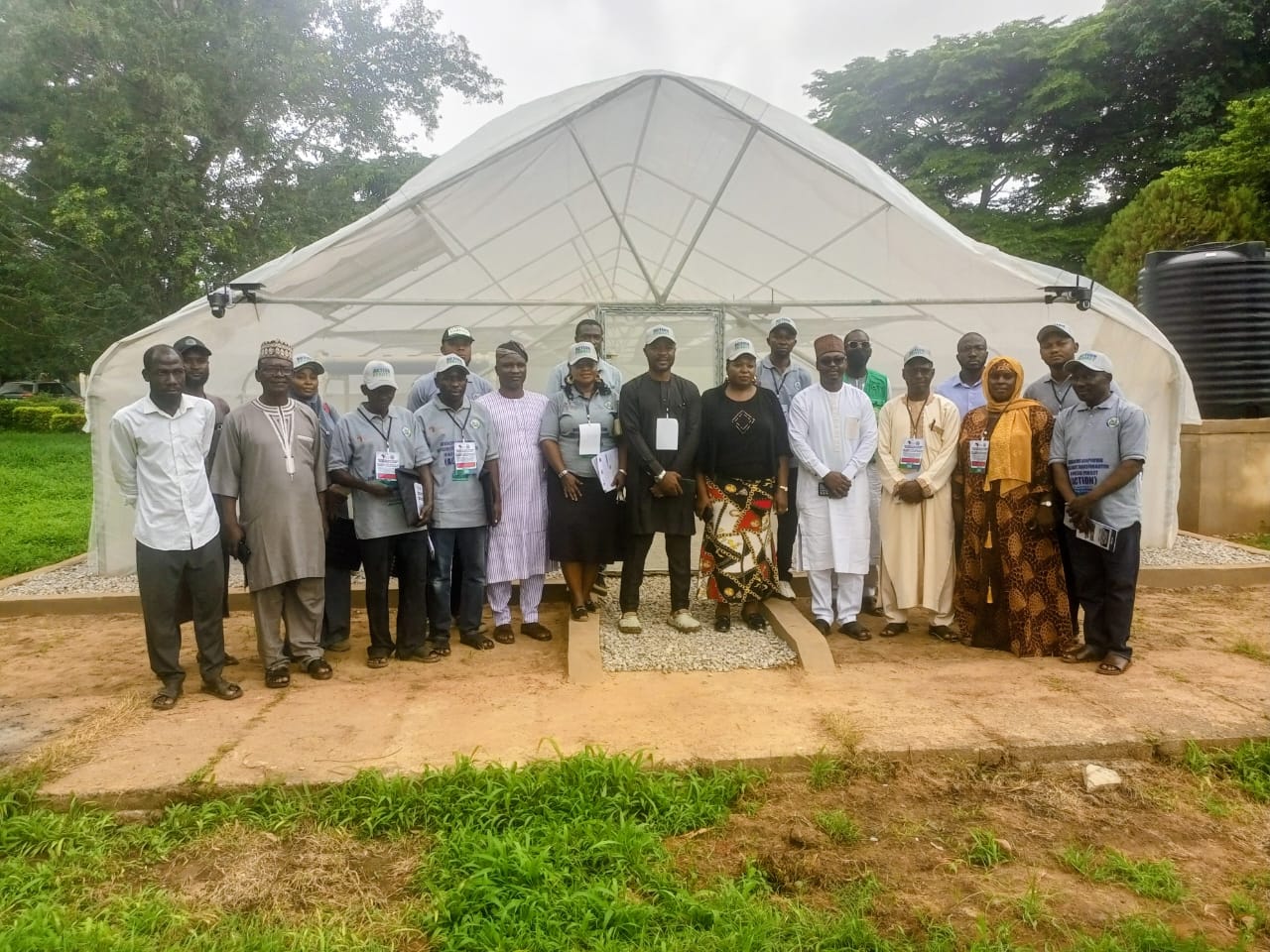
Kaduna State has established the first climate-smart greenhouse in an urban setting in Northern Nigeria, marking a major step towards improving food security and helping communities adapt to the growing effects of climate change.
The greenhouse, which integrates a movable Nutrient Film Technique (NFT) hydroponic system, a trough system and a drip irrigation system, was unveiled during a two-day Training of Trainers on Climate Smart Agriculture organised by the Centre for Policy Research and Development Solutions (CPRDS) in collaboration with the Kaduna State Ministry of Environment and Natural Resources.
Speaking at the training, Project Manager of CPRDS, Dr. Hamza Jakada, said the greenhouse would serve as a Centre of Excellence where government officials, students, farmers and community members would receive practical training on modern farming methods.
He explained that the project was designed to strengthen the capacity of Kaduna State to respond to the challenges of climate change, which continues to affect crop production and food security across the country.
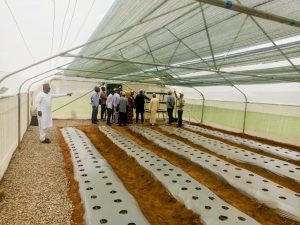
According to him, the greenhouse combines three different farming technologies to give farmers options based on their financial and technical capacity.
“We have constructed a greenhouse that integrates a movable NFT hydroponic system, a trough system and a drip irrigation system. It is the first of its kind in an urban setting in Northern Nigeria,” he said.
Dr. Jakada added that officers of the Kaduna State Ministry of Environment had already been trained and would, in turn, train communities, schools and other groups across the State.
He noted that the project also includes a seedling production unit where farmers can obtain quality seedlings at subsidised rates, while locally available materials such as rabbit urine can be used as nutrients for hydroponic farming to reduce production costs.
KDSG Pledged Expansion of the Initiative
Permanent Secretary of the Kaduna State Ministry of Environment and Natural Resources, Linda Yakubu, described climate change as a reality that is already affecting people’s lives and livelihoods.
She said the greenhouse would serve as a practical training centre where participants would learn modern farming techniques that could be adopted even in homes with limited space.
Mrs. Yakubu said the ministry was committed to working with development partners to promote climate-smart agriculture and ensure that the knowledge gained during the training would be passed on to more people across the State.
She explained that the current training was a pilot programme aimed at building a pool of trainers who would later transfer the knowledge to farmers, youths and other interested residents.
Also speaking, Director of Climate Change in the ministry and Project Coordinator of the Advancing Adaptation and Climate Transformation in Nigeria (ACTION) Project, Mrs. Maureen Oyedoja, said the training was designed to promote sustainable livelihoods and encourage residents to grow vegetables and other crops without relying on large farmlands.
She said climate-smart agriculture offers practical solutions to the challenges of insecurity and shrinking farmland by enabling people to grow food in their backyards, compounds and other small spaces.
Farmers Can Now Make Informed Decisions
Director of Irrigation Services at the Kaduna State Ministry of Agriculture, Shehu Muhammad Dalhat, described climate-smart agriculture as a modern farming approach that enables farmers to make informed decisions based on weather conditions and available technology.
He stressed that demonstration projects and continuous training remained the best way to encourage farmers to embrace modern agricultural practices, adding that although the technology may require higher initial investment, it delivers better yields and greater value in the long run.
CPRDS Committed to Improving Food Security
The organisers expressed optimism that the initiative would strengthen climate resilience, improve food production and support Kaduna State’s efforts to build a more sustainable agricultural sector.
Participants were drawn from the ministry of environment, ministry of agriculture as well as ministry of works who would then cascade the training down to other establishments, groups and individuals within the State.