By Adamu Yusuf
Federal Government says significant progress has been recorded in the implementation of the Agro-Climatic Resilience in Semi-Arid Landscapes (ACReSAL) Project since its inception across the 19 northern states and the Federal Capital Territory.
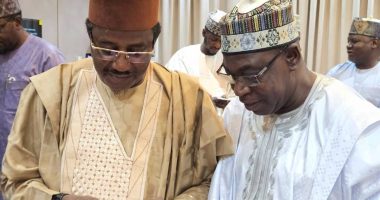
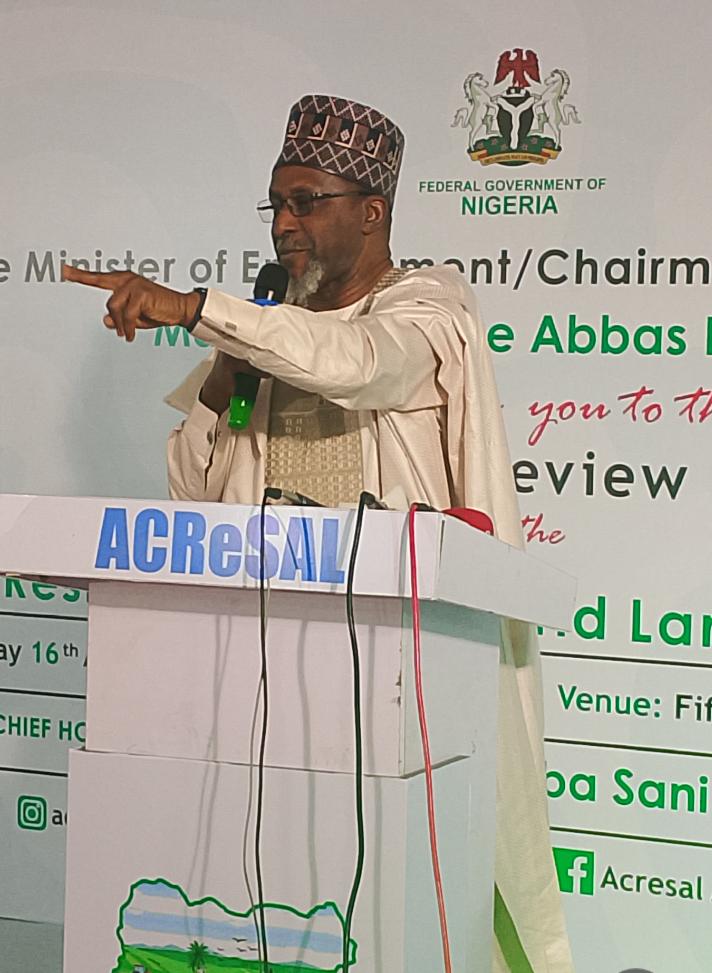
The Minister of Environment, Mallam Balarabe Lawal, disclosed this at the mid-term review of the ACReSAL Project held in Kaduna State.
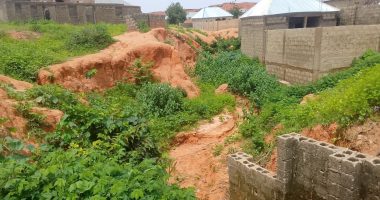
He explained that implementation of the project is progressing steadily, with notable achievements in land restoration, agroforestry, afforestation, watershed rehabilitation, and livelihood support for vulnerable communities.
According to him, the mid-term review was convened to assess progress and ensure the project delivers lasting benefits to both people and ecosystems in Northern Nigeria.
The Minister noted that President Bola Tinubu has demonstrated strong interest in key environmental initiatives, including the Great Green Wall programme, efforts to address land degradation in the Niger Delta, and coastal resilience interventions.
He further stated that steps are underway to reposition Nigeria’s coastal management strategy, particularly along the West African coastline, stressing the urgency of addressing erosion, land loss, and other environmental challenges despite Nigeria’s extensive coastline.
Describing the mid-term review as more than a ceremonial exercise, Mallam Lawal said it represents a critical opportunity for reflection, accountability, and strategic planning.
He added that procurement processes under the project have improved, while thousands of beneficiaries are already experiencing positive impacts from various interventions.
Mallam Balarabe Lawal commended state project teams, technical experts, and participating communities for their commitment, emphasizing that community ownership remains central to the project’s success.
Drawing lessons from other environmental initiatives such as the Hydrocarbon Pollution Remediation Project (HYPREP) in Ogoniland, the Minister stressed the importance of strong community engagement and inclusive participation in achieving sustainable outcomes.
He reminded stakeholders that the project is at its midpoint and not the conclusion, urging participating states and the FCT to accelerate implementation, strengthen monitoring and evaluation systems, and ensure prudent use of resources for maximum impact.
Mallam Lawal called for sincerity, patriotism, and openness in the review process, encouraging stakeholders to highlight achievements while honestly addressing challenges in order to develop practical solutions.
He also appreciated the World Bank for its technical and financial support, describing the partnership as a shared commitment to building climate resilience and combating land degradation in the Sahel region.
According to him, the second phase of the project will require enhanced collaboration, innovation, transparency, and accountability to fully realize its objectives.
He warned that environmental degradation and desertification cannot be delayed, urging stakeholders to act decisively.
The Minister further emphasized the need for sustainability beyond the lifespan of the project, noting that both federal and state governments must establish enduring institutional frameworks to sustain its gains after donor support ends.
He disclosed that the Federal Ministry of Environment has constituted a committee, chaired by the Permanent Secretary, to develop strategies for sustaining ongoing environmental projects and ensuring continuity after donor funding concludes.
Participants at the event included the Ministers of Agriculture and Food Security, Water Resources and Sanitation, a representative of the Governor of Kaduna State, Commissioners of Environment from across the country, as well as officials of the ACReSAL Project, among others.