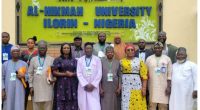
The Adolescent Girls Initiative for Learning and Empowerment (AGILE), a World Bank-assisted project under the Federal Ministry of Education, is significantly transforming the education sector in Zamfara State particularly in improving access and learning outcomes for adolescent girls.
Spearheaded in Zamfara by the State Project Coordinator, Hajiya Sa’adatu Abdu Gusau, AGILE is targeting adolescent girls between the ages of 10 and 20, aiming to close the gender gap in education and promote girls’ empowerment through inclusive learning initiatives.
Tackling Inequality Through Education
Zamfara, like many states, has historically experienced educational disparity, with girls facing greater challenges in accessing schooling.
AGILE is addressing these challenges through strategic advocacy, community engagement, and infrastructure improvement—focusing on rural and underserved communities.
The project promotes a shift in socio-cultural perceptions that act as barriers to girls’ education. This includes targeted campaigns to encourage enrollment, ensure retention, and empower girls through digital literacy and life skills programs.
Multi-Component Implementation
AGILE operates under several strategic components:
Component 1: Infrastructure and Access.
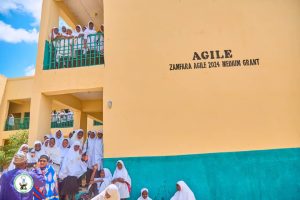
“1.1: Involves environmental and social assessments for 42 proposed school projects, approval by stakeholders, and engagement of consultants for design and supervision. All selected schools have been geo-referenced, cleared by the World Bank, and are ready for construction”
“1.2: Covers categorization and verification of 447 schools, training of zonal quality assurance officers, establishment of 174 Eco-Clubs, and the disbursement of School Improvement Grants (SIGs) to boost teaching and learning environments”
Component 2: Life Skills and Alternative Learning.
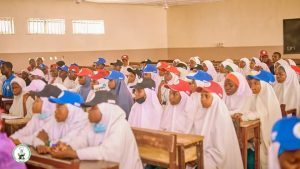
“Focuses on re-enrolling out-of-school girls and young women, offering them opportunities to return to formal education or acquire vocational skills”
“Activities include micro-assessment of market-relevant skills, training of 1,730 girls (1,200 females), and distribution of digital learning devices”
“200 teachers have been trained in content creation for use on remote learning platforms”
According to the AGILE, Component 2.1 is the Community Engagement and e-Learning while Promotes social and behavioral change through communication campaigns, partnerships with traditional rulers, and community-based advocacy”
“Supports the School-Based Management Committees (SBMCs), school monitoring tools, annual sector reviews, and upgrades to the Education Management Information System (EMIS)”
“Solar-powered infrastructure and internet connectivity are being provided to enhance digital access”
“Other key activities in the 1:2 component includin Sensitisation of Zonal quality assurance officers, Engagement of consultant to train SMBCs and SVMCs training, Formation of Eco – eco clubs in schools, Production and distribution of SIP template and Capacity building training of SGRC among others”
It stresses that, Component 2:2B key activities included Procurement and Distribution of resources materials to the centers and Procurement of 3.5 KVA solar power system with accessories, materials and installation at 50 schools.
“Procurement of equipments and provision of 4G network to pilot digital skills training into 50 SSS (Annual Data) to be factored in SIPs”
“Distribution of devices to schools as well as Training of 200 teachers on content creation for usage on available remote learning platform.
LGA-Level Breakdown
AGILE has identified thousands of beneficiaries across the state. For instance, Gusau LGA: 224,121 identified beneficiaries; 2,063 verified.
“Bungudu LGA: 92,150 identified; 1,308 verified, Gummi LGA: 41,203 identified; 386 verified, Kaura Namoda LGA: 6,961 identified; 561 verified, Zurmi LGA: 6,569 identified; no verified beneficiaries yet”
Other LGAs such as Anka, Bakura, Maradun, Shinkafi, and Tsafe have also recorded high beneficiary numbers.
Component 3: System Strengthening and Inclusion
Under Component 3.1, the project has signed MoUs with GBV service providers, and Consulted CSOs and NGOs to improve disability inclusion
It also Hired specialists on gender-based violence (GBV), Developed a Security Management Plan (SMP).
The project has also procured 100 safety kits (helmets, jackets, goggles, gloves, etc.) for stakeholders.
Three ongoing and seven pending activities remain under this component, including the training of GBV focal officers and development of GBV protocols in schools.
Component 3.2 has focused on Procurement of solar equipment and operational vehicles.
“Development of a monitoring and evaluation framework for assessing e-learning progress across the 14 LGAs and Enhancing community data collection tools and processes.
Grievance Redress and Community Training
AGILE also ensures accountability and inclusion through its Grievance Redress Mechanism (GRM).
“So far, 1,372 community members (370 female) have been trained, and GRM manuals, posters, and pamphlets are being translated into local languages.
“Three complaints have been received and are being addressed
According to Hajiya Sa’adatu Abdu Gusau, future focus areas including Training students on waste-to-wealth creation.
“Strengthening school-level GBV response protocols, and Enhancing teacher management systems through Technical Assistance (TA)”
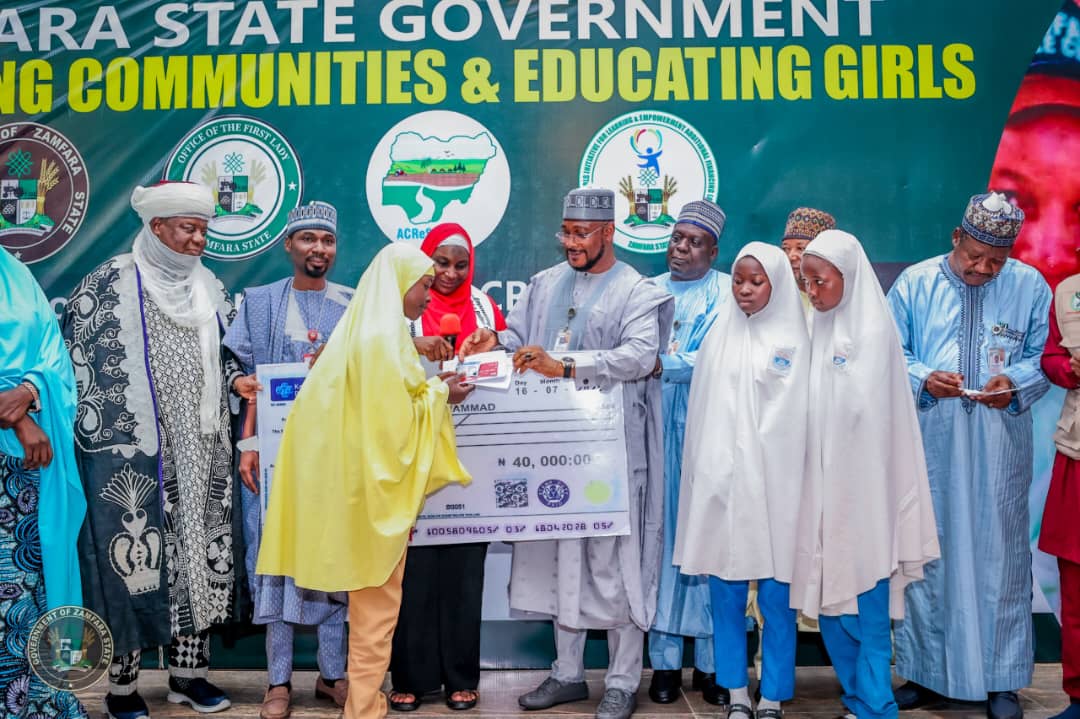
Implementation of the Conditional Cash Transfer for adolescent girls was another milestone in improving and encouraging to acquire sound education.
The AGILE project continues to be a critical lifeline for thousands of girls in Zamfara, offering not only access to quality education but also a path to self-reliance and empowerment—ensuring no girl is left behind in the state’s educational journey..
AMINU DALHATU