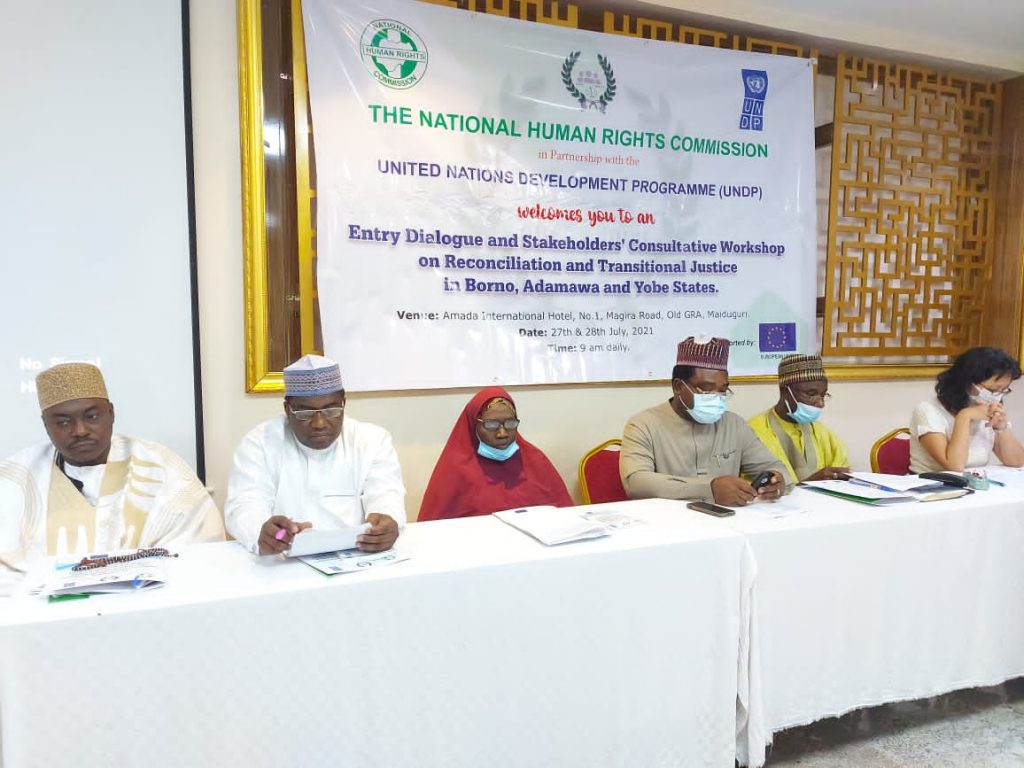

National Human Rights Commission says integrating the formal and traditional justice system is the cornerstone to achieve sustainable peace in conflict-affected areas.
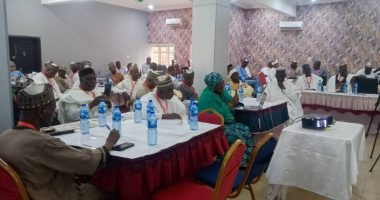
The Executive Secretary Mr Tony Ojukwu stated this during a stakeholders consultative meeting on promoting reconciliation, reintegration and transitional justice in Borno, Adamawa and Yobe states.
Mr Tony Ojukwu remarked that insurgency had seen the worst forms of human rights violations in the history of the county that has brought untold physical, economic, emotional and psychological losses on millions of victims of insurgency and their families.
According to him, military operations alone cannot end the conflict, hence the need to adopt transitional, restitutive and restorative justice in the affected communities to achieve the desired result.
“Resolving the conflicts around insurgents is not only the problem of the Nigerian military alone, but is also not the problem of government alone, but the citizens must also be involved. The military cannot do much without the cooperation of the communities, intelligence gathering look at the beautiful work civilian Joint Taskforce is doing “.
Mr Tony Ojukwu noted that to achieve the outcomes of the project, the National Human Rights Commission is seeking the partnership of state governments, civil society, and traditional authorities to mobilize communities towards reconciliation and building the capacity of partners involved.
He explained that the pilot project would be implemented in the seven most affected communities in Borno, Adamawa and Yobe states.
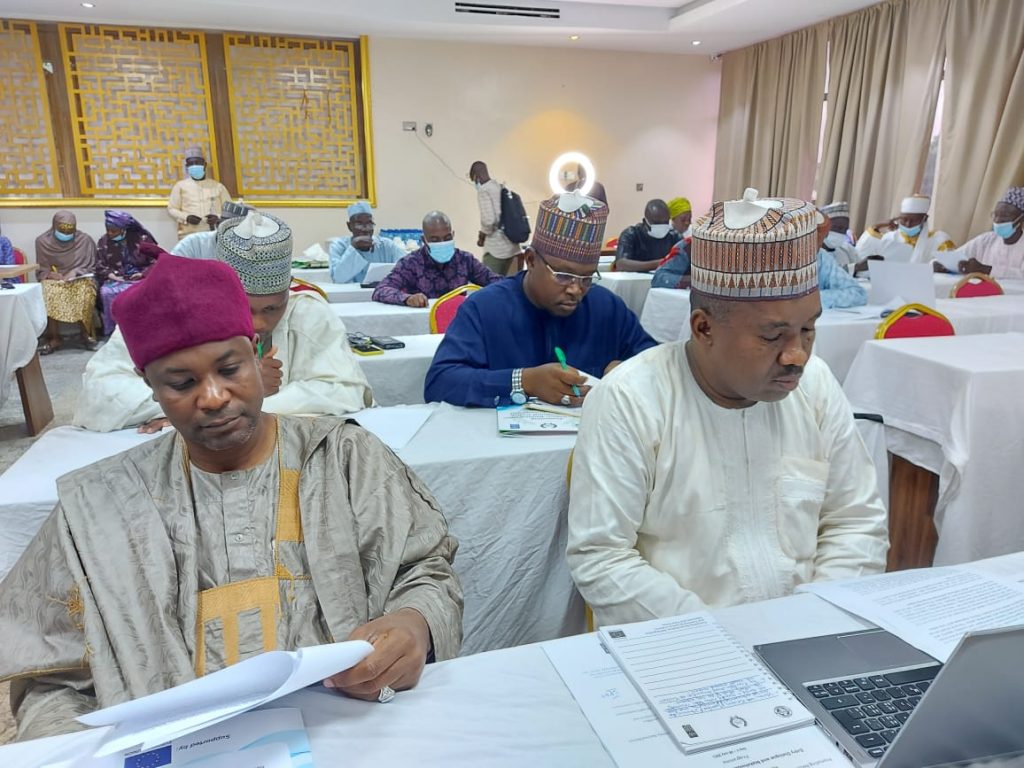
Also speaking, North East Head UNDP Mizuko Yokoi stressed the need for the effective inclusion of women and youths in the peace-building process.
Representatives of the governments of Adamawa, Borno, and Yobe states all promised to put in place policy frameworks for the effective implementation of the project.
The Entry Dialogue on Reconciliation, Reintegration, and Transitional Justice was organized by the National Human Rights Commission in partnership with the United Nation Development Programme UNDP.
Dauda Iliya