
By Aminu Dalhatu
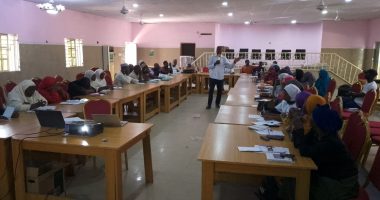
The Sultan Foundation for Peace and Development, in collaboration with the Zamfara State Government, has trained 334 participants under the Z-TRACE project to strengthen efforts to identify, track and vaccinate zero-dose and under-immunised children across seven local government areas of the state.
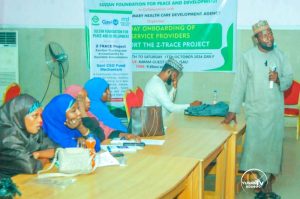
The onboarding exercise, which involved routine immunisation service providers to improve collaboration, data accuracy, monitoring and accountability in the delivery of routine immunisation services.
The participating local government areas are Gusau, Talata Mafara, Bakura, Shinkafi, Anka, Zurmi and Tsafe.
Speaking during the exercise, the State Programme Officer of the Sultan Foundation for Peace and Development, Jamilu Sarkin Gulbi, said the training was designed to clarify the responsibilities of routine immunisation service providers and strengthen coordination between health facilities, community mobilisers and local government authorities.
He explained that the onboarding brought together routine immunisation service providers, Z-TRACE local government coordinators, community-based organisation representatives among others.

Sarkin Gulbi said the training also involved the leadership of the Zamfara State Primary Health Care Management Board, including the Executive Secretary, the Head of Routine Immunisation and representatives of the Emergency Operations Centre.
According to him, the exercise was necessary to strengthen collaboration between community-based organisations and health workers, particularly in identifying children who have never received routine immunisation or have missed some scheduled vaccine doses.
He emphasised that accurate data collection and reporting were critical to measuring the project’s progress and providing evidence of the number of zero-dose children identified and vaccinated in the participating communities.
The programme officer explained that routine immunisation service providers were expected to ensure that every child identified and vaccinated was properly documented, with the information validated and submitted through the established reporting channels.
He noted that the data would be transmitted through the local government monitoring and evaluation structure into the District Health Information Software (DHIS2), where vaccination records would be captured to demonstrate progress in reducing the number of zero-dose children.
Sarkin Gulbi stressed that without accurate documentation and reporting, it would be difficult to establish whether children identified through the project had actually received the required vaccines.
He therefore urged the service providers to ensure that every eligible child reached through the programme was vaccinated, properly documented and reported to enable the government and its development partners to assess the project’s impact.
On monitoring and evaluation, he said the foundation had established mechanisms to track the activities of community mobilisers and routine immunisation service providers.
He explained that the project uses the Open Data Kit (ODK) platform to monitor the number of zero-dose and under-immunised children identified, those followed up by community mobilisers and those subsequently vaccinated by health workers.
According to him, the monitoring and evaluation team provides weekly feedback to community-based organisations to strengthen accountability and ensure that identified children are followed up until they receive the required vaccines.
He added that the foundation was collaborating with relevant immunisation monitoring structures, including the ACASUS team, to monitor the delivery of planned immunisation sessions at health facilities.
Sarkin Gulbi disclosed that, the monitoring mechanism would help identify health facilities that failed to conduct planned sessions and facilitate appropriate follow-up actions.
The programme officer further explained that community mobilisers were expected to hold weekly reconciliation meetings with routine immunisation providers to confirm the availability of health workers and ensure that scheduled vaccination sessions took place.
He said the meetings would strengthen accountability and coordination while helping to prevent children identified by community mobilisers from missing vaccination opportunities.
Sarkin Gulbi called on the participants to maintain effective collaboration, harmonise their activities and demonstrate commitment to achieving the objectives of the Z-TRACE project.
He expressed optimism that coordinated efforts by health workers, community mobilisers, government officials and development partners would significantly reduce the number of zero-dose children across the participating local government areas.
The programme officer also appealed to the media to intensify public awareness campaigns and disseminate information about the project’s objectives and the importance of routine immunisation across Zamfara State and beyond.
He said media support was essential to ensuring that parents and caregivers understood the importance of vaccinating their children and taking them to health facilities for scheduled immunisation.
Sarkin Gulbi particularly highlighted the need for increased public awareness about diphtheria, noting that inadequate vaccination coverage and missed doses of vaccines that protect against the disease could leave children vulnerable to infection.
He urged parents and caregivers to ensure that their children received all recommended vaccine doses to protect them against preventable diseases.
The Z-TRACE project is being implemented by the Sultan Foundation for Peace and Development with support from Gavi, the Vaccine Alliance, to strengthen community engagement, identify zero-dose and under-immunised children and improve routine immunisation coverage.
The initiative is expected to strengthen community-level mobilisation, improve immunisation data quality and expand access to life-saving vaccines for children across Zamfara State.
Editing By Yusuf Zubairu