
By Bello Wakili
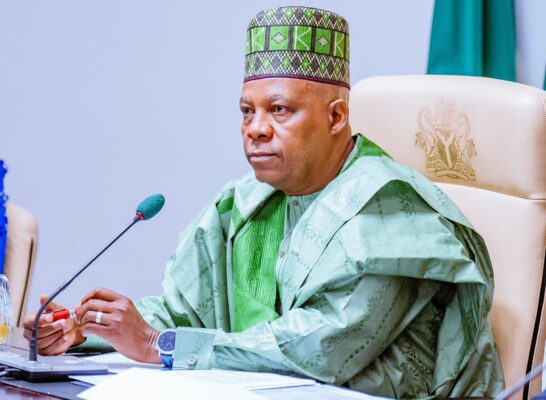
Vice President Kashim Shettima says Nigeria’s admission as an Association Country of the International Energy Agency, IEA, is a major endorsement of the economic reforms and policy choices of the administration of President Bola Ahmed Tinubu.
The Vice President stated this in Abuja during the signing of a Joint Work Programme between Nigeria and the Paris-based International Energy Agency.
The agreement is expected to strengthen collaboration in the development of energy data, policy formulation and investment across Nigeria’s energy value chain.
Senator Shettima, who spoke on behalf of President Tinubu, said Nigeria’s formal admission into the IEA reflects the country’s growing strategic importance in the global energy landscape.
He noted that the partnership would enable Nigeria to benefit from the agency’s institutional knowledge, technical expertise and global reach in developing the country’s vast energy resources.
The Vice President also reaffirmed the Federal Government’s commitment to working with international partners to promote energy security, affordability, sustainability and a fair energy transition.
Leader of the IEA delegation, Dr. Fatih Birol, said the agency would provide Nigeria with policy advice and technical support in critical areas of the energy sector.
He explained that the partnership would cover areas including clean cooking, gas markets and capacity building for Nigerian energy experts.
Minister of State for Petroleum Resources, Gas, Ekperikpe Ekpo, attributed Nigeria’s admission into the IEA to the economic reforms undertaken by the Tinubu administration.
The Minister of State for Foreign Affairs, Ambassador Sola Enikanoaiye, described the partnership as strategically important to Nigeria’s national interest and pledged the commitment of the Ministry of Foreign Affairs to ensuring its success.
Also speaking, the Director-General of the Energy Commission of Nigeria, Dr. Mustapha Abdullahi, expressed optimism that Nigeria’s formal association with the IEA would strengthen cooperation between the two organisations.
The Joint Work Programme is expected to provide a framework for closer technical cooperation and support Nigeria’s drive towards sustainable economic growth and improved energy security.
Editing By Godwin Duru