
The Federal Government has reaffirmed its commitment to supporting farmers and strengthening food security through the launch of the Smallholder Farmers Support and Value Chain Development Programme.
Minister of Agriculture and Food Security, Senator Abubakar Kyari, made this known during the launch of the programme in Zaria, Kaduna State.
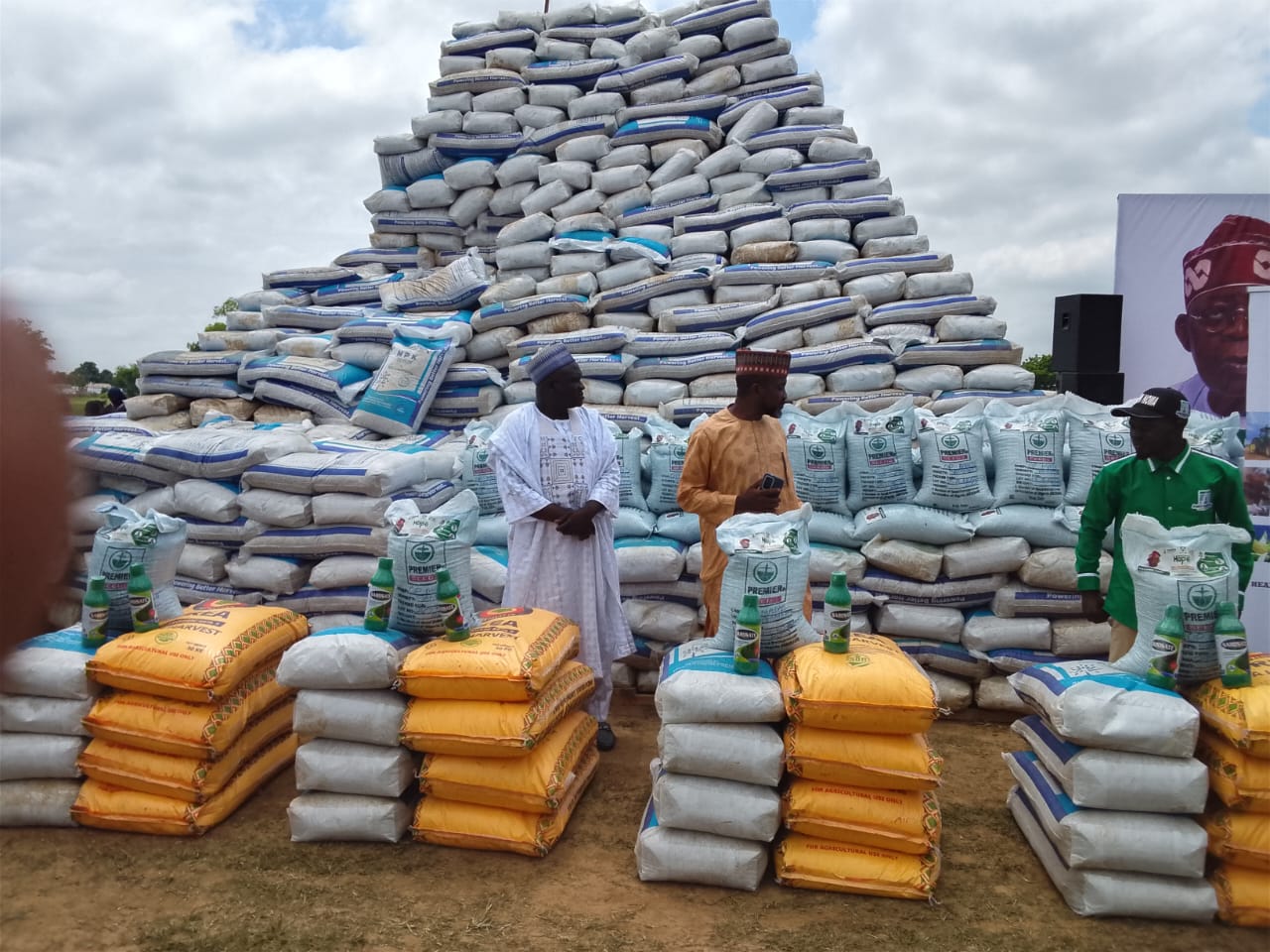
He said about two million smallholder farmers across the country would benefit from the initiative, with more than 10 million bags of fertiliser to be distributed at subsidised rates with minimal administrative charges.
According to the minister, the programme aligns with President Bola Ahmed Tinubu’s commitment to boosting agricultural productivity and ensuring timely support for farmers to increase harvests and enhance national food security.
Senator Kyari noted that the intervention is expected to significantly improve food production and contribute to efforts aimed at reducing food prices across the country.
In his remarks, National President of the All Farmers Association of Nigeria AFAN, Faruq Mudi Kumo, commended the initiative, describing it as a major step towards achieving the objectives of the Renewed Hope Agenda in the agricultural sector.
Also speaking, Group Managing Director of the Bank of Agriculture BoA, Mr. Ayodeji Sotinrin, said the bank, in partnership with Arzikin Noma Africa, would continue to complement government efforts by providing farmers with access to fertilisers, improved seeds and agrochemicals under flexible repayment arrangements after harvest.
He explained that Nigeria’s annual grain output, currently estimated at about 11 million tonnes, is projected to rise to 25 million tonnes under the Federal Government’s new agricultural financing programme.
Mr. Sotinrin said the Renewed Hope Smallholder Agricultural Financing Programme is designed to improve access to affordable farm inputs, boost crop yields and strengthen national food security.
On his part, Group Managing Director of Arzikin Noma Africa, Mr. Adeoluwa Michael Adeshola, stressed that the long-term success of the programme would depend on sustained private sector participation and strict compliance with loan repayment by beneficiaries.
He maintained that while government should provide policy direction and funding support, implementation is best driven by the private sector due to its proximity to farmers and understanding of local agricultural value chains.
Some beneficiaries expressed appreciation for the intervention and pledged to utilise the inputs effectively to improve agricultural production.
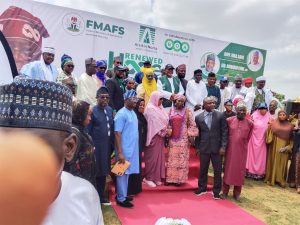
The event was attended by representatives of the Emir of Zazzau, including the Sarkin Noman Zazzau, Alhaji Aliyu Ibrahim Bamalli, as well as agricultural stakeholders, farmer associations and women groups.
Jibrin, Zaria