
Writing by Khadija Aliyu; Editing by Abubakar Hamza.
Heat is a natural part of human existence. It keeps homes warm during cold weather, helps prepare meals, powers industrial activities and even provides comfort in certain conditions.
But when heat becomes excessive and persistent, it transforms from a useful element into a harsh environmental burden that affects health, productivity and general wellbeing.
This is the reality currently confronting residents of Kano, the commercial hub and political nerve centre of Northern Nigeria, where intense heatwaves have made daily living increasingly difficult for millions of inhabitants.
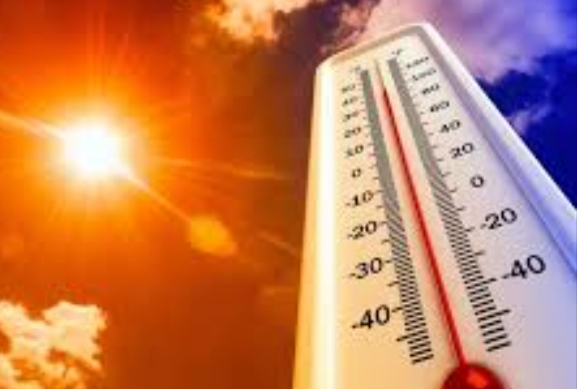
For several days, temperatures in the ancient city have reportedly climbed to nearly 45 degrees Celsius during the daytime, while nights offer little relief as temperatures remain around 30 degrees Celsius before rising again at dawn.
The scorching sunlight, accompanied by humidity and hot winds, has created uncomfortable conditions across markets, offices, schools, roads and residential areas.
Residents move about drenched in sweat as they struggle to cope with the unforgiving weather.
Only a few people are able to find temporary comfort inside air-conditioned vehicles, offices or shopping malls.
For the majority, however, the heat remains an inescapable part of daily life.
As evening approaches, many residents return home hoping for relief, only to face another layer of hardship caused by power outages, poor ventilation, overcrowded living conditions and poorly designed buildings that trap heat.
Women and children are said to be among the worst affected, particularly in densely populated neighbourhoods where access to electricity, ventilation and cooling systems is limited.
Some residents who spoke to Grassroots Nigeria described the situation as exhausting and increasingly unbearable.
A resident, Abubakar Salihu, explained that only a privileged few can afford to run air conditioners through the night, while many others are forced to sleep outdoors or on rooftops in search of fresh air.
According to him, some families spend sleepless nights battling heat and discomfort until the early hours of the morning when cooler breezes occasionally arrive.
Another resident, Grace Tanko, said the intense weather has disrupted her sleep pattern, leaving her constantly tired and physically drained.
“I wake up every morning feeling weak and with body pains because I hardly get enough sleep at night,” she lamented.
For commercial transport operators, the heatwave has also become an occupational challenge.
A tricycle rider, Umar Muhammad, described how he spends long hours moving around the city under the scorching sun.
He noted that the combination of daytime heat and sleepless nights has started affecting his health and overall wellbeing.
Beyond the city centre, rural communities are also struggling to cope with the harsh weather conditions.
Unlike residents in urban areas who sometimes find temporary relief in air-conditioned offices, shopping malls or hotels, many villagers around Kano have very limited options for escaping the heat.
A resident of Tsanyawa village, Halima Baffa, narrated how fear of attacks has forced many villagers to remain indoors despite the unbearable heat at night.
According to her, unlike in the past when residents would sleep outside their homes or in open compounds to enjoy cool night breezes, many families now lock their doors and windows tightly for security reasons.
She explained that insecurity has made it difficult for people to cope naturally with the weather, leaving many households trapped in overheated rooms throughout the night.
Similarly Habibu Saleh said he now prefers enduring sleepless nights caused by extreme heat rather than living with the constant fear of bandit attacks.
According to him, insecurity in rural communities has changed the way people cope with harsh weather conditions, forcing many to remain indoors even when temperatures are unbearable.
“We would rather stay awake all night because of the heat than sleep outside and live in constant fear of bandits,”
Medical experts have warned that prolonged exposure to extreme heat can have serious health implications if precautionary measures are not taken.
The Chief Medical Director who doubles as head of health services Yusuf Maitama Sule Federal University of Education, Kano Dr Uba Sani, noted that prolonged exposure to heat can lead to health complications such as heat stroke, dizzyness,headache and meningitis
He therefore advised residents to increase their water intake to replace fluids lost through excessive sweating, a process medically referred to as rehydration.
Dr. Sani also urged people to avoid prolonged exposure to direct sunlight, ensure proper ventilation in homes and seek medical attention whenever symptoms of heat exhaustion become severe.
As Kano residents continue to endure the harsh weather conditions, many are hoping for rainfall and cooler temperatures that could finally bring relief from the persistent heatwave engulfing the city.