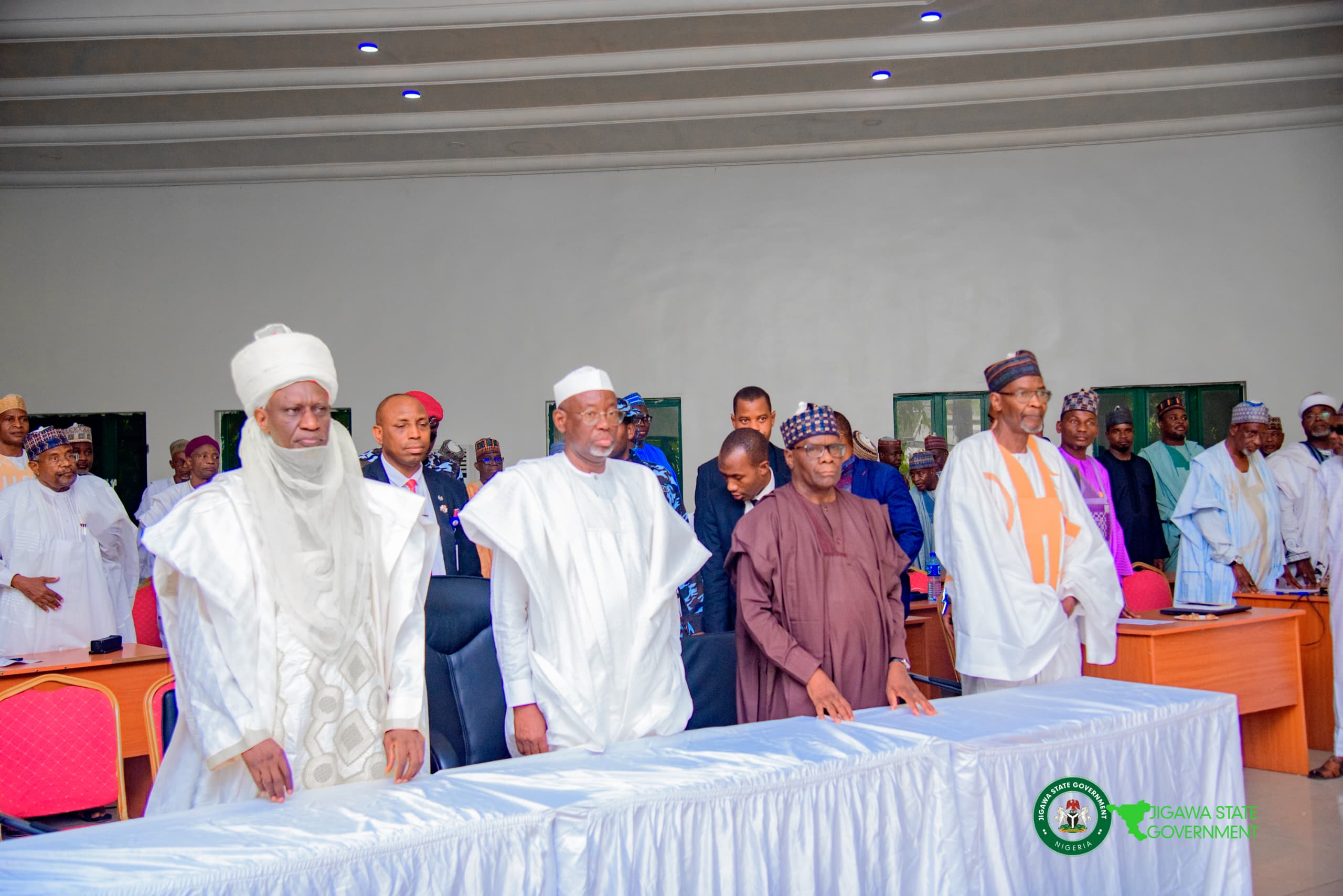

Governor Umar Namadi says Jigawa State is recording significant progress across critical sectors through sustained investments and reforms introduced by his administration.
In a statement by the Chief Press Secretary to the Governor, Hamisu Mohammed Gumel, the governor stated this while speaking at the Jigawa North-East Strategic Development Forum held in Kaduna under the auspices of the Hadejia Emirate Council.
He commended the organisers for creating a platform to discuss developmental challenges affecting the region and identify practical solutions.
Governor Namadi noted that although some socio-economic indices presented at the forum reflected previous realities, many of the figures were already improving due to ongoing government interventions.
“Some of the indices presented reflected previous realities, but many of those figures are already improving because of investments we have made across critical sectors,” he said.
On population growth and human capital development, the governor said his administration was determined to transform the state’s growing population into productive human capital through education, skills acquisition, and empowerment programmes.
Speaking on energy development, Namadi highlighted the impact of the pilot solar electrification project in Kafin Hausa, which he said had provided nearly 24-hour electricity supply and stimulated economic activities in the area.
He disclosed that the success of the project had encouraged the state government to establish a solar panel manufacturing plant to support a proposed 100-megawatt solar power project across the three senatorial zones of the state.
According to him, 40 megawatts would be allocated to Jigawa North-West, while Jigawa North-East and Jigawa Central would receive 30 megawatts each to support industrial and economic growth.
On agriculture, Governor Namadi said the state government had entered partnerships with four Indian companies in seed development, dairy production, poultry, and agribusiness.
He explained that improved maize, rice, and wheat seed varieties tested in Jigawa recorded higher yields compared to many local varieties, adding that the initiative would enhance food production and farmers’ incomes.
The governor also said the administration was promoting dairy development and agribusiness as part of efforts to reduce farmers-herders conflicts, improve livelihoods, and encourage value addition in agricultural production.
On education, Namadi disclosed that under the Danmodi Students Care Initiative, 131 out of 150 students from educationally disadvantaged local governments secured admission requirements into tertiary institutions after intensive coaching programmes.
He added that the beneficiaries would study nursing and midwifery in health institutions within Jigawa and later return to strengthen healthcare delivery in underserved communities.
Governor Namadi further stated that the administration was integrating Islamic and conventional education through accelerated programmes for Qur’anic teachers, while also expanding youth empowerment initiatives through vocational training and agricultural programmes aimed at creating sustainable livelihoods.