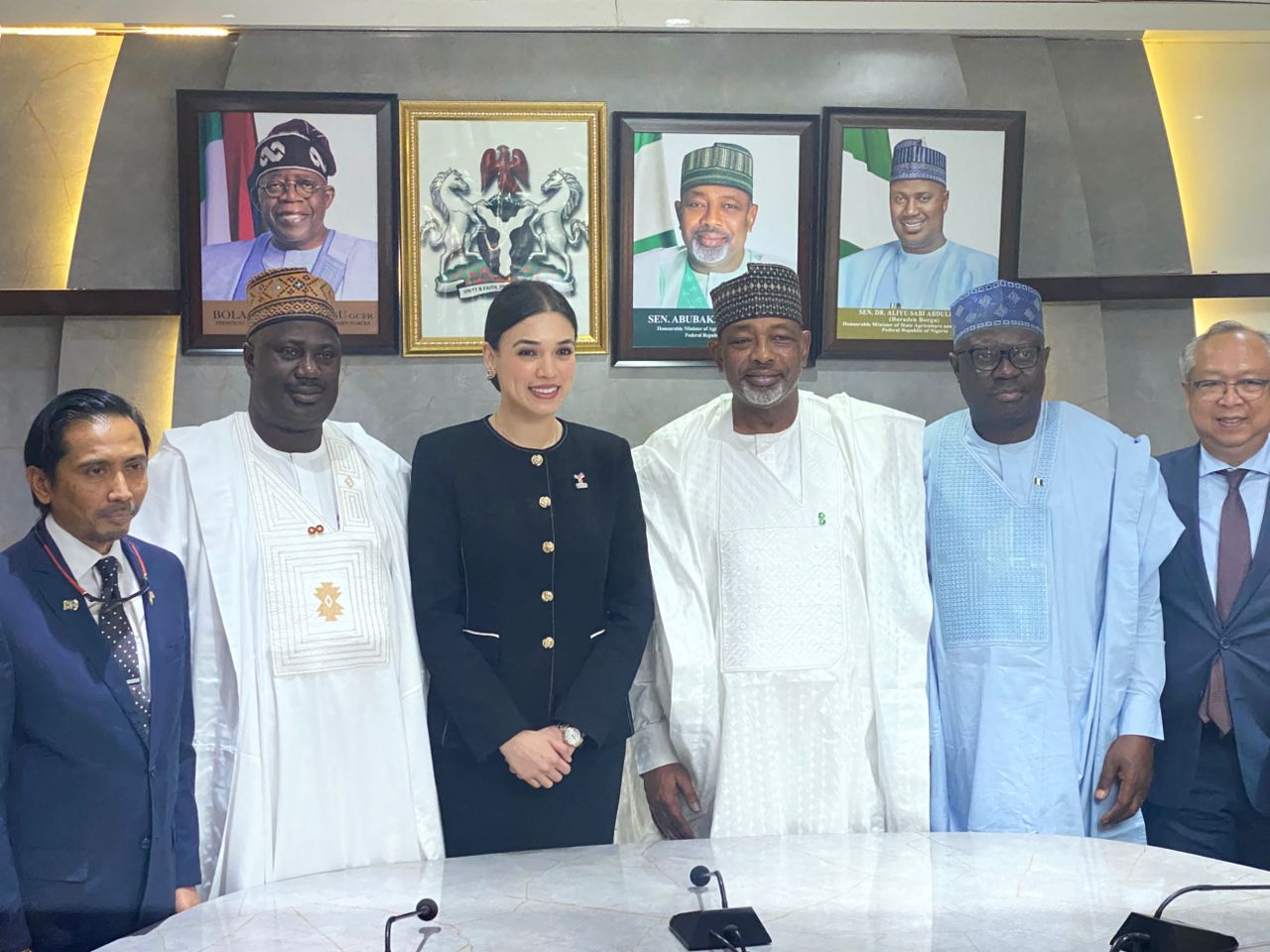

Nigeria is set to transition from observer status to full membership of the Council of Palm Oil Producing Countries (CPOPC), following high-level talks between the Council’s leadership and the Federal Ministry of Agriculture and Food Security in Abuja.
The Secretary-General of CPOPC, Miss. Izzana Salleh, led a delegation to the Ministry, stating that Nigeria’s observer status, which commenced at the end of 2024, will expire in November 2026.
She said the visit was aimed at ensuring a seamless transition to full membership before the expiration date.
Miss. Salleh, explained that the Council, established 10 years ago by co-founding members Indonesia and Malaysia, serves as an intergovernmental platform representing palm oil producing nations.
The Director of Sustainability and Smallholders at the Council, Mr. Antonius Triantoro, highlighted ongoing training programmes in member countries, including Papua New Guinea and the Democratic Republic of Congo, with plans to extend similar initiatives to Nigeria upon full membership.
Speaking on behalf of Nigeria as the country’s focal person to the Council, Ambassador Alphonsus Inyang, said Nigeria is currently the fifth largest palm oil producer globally and the largest in Africa, producing about 1.4 million metric tonnes annually, but consuming approximately 3.2 million metric tonnes, resulting in significant imports valued at over 600 million dollars yearly.
He noted that Nigeria once accounted for up to 60 per cent of global palm oil production and exports before 1964, but lost its dominance following the oil boom.
Mr. Inyang, however, added that membership of the Council would enhance access to improved high-yielding planting materials, technical support and global market advocacy.
The Minister of Agriculture and Food Security, Senator Abubakar Kyari, who welcomed the delegation, recalled previous engagements with the Council and confirmed that a technical committee was established in 2024 to develop a roadmap for Nigeria’s transition to full membership.
Other member countries include Papua New Guinea, Honduras and the Democratic Republic of Congo, while Nigeria, Ghana and Colombia currently serve as observers.
RN