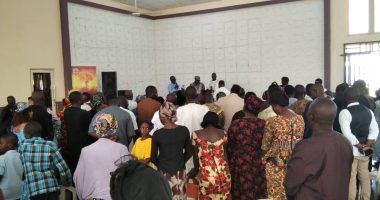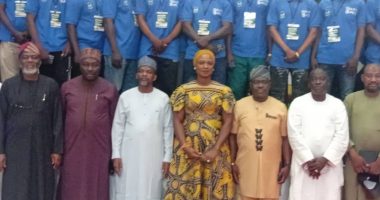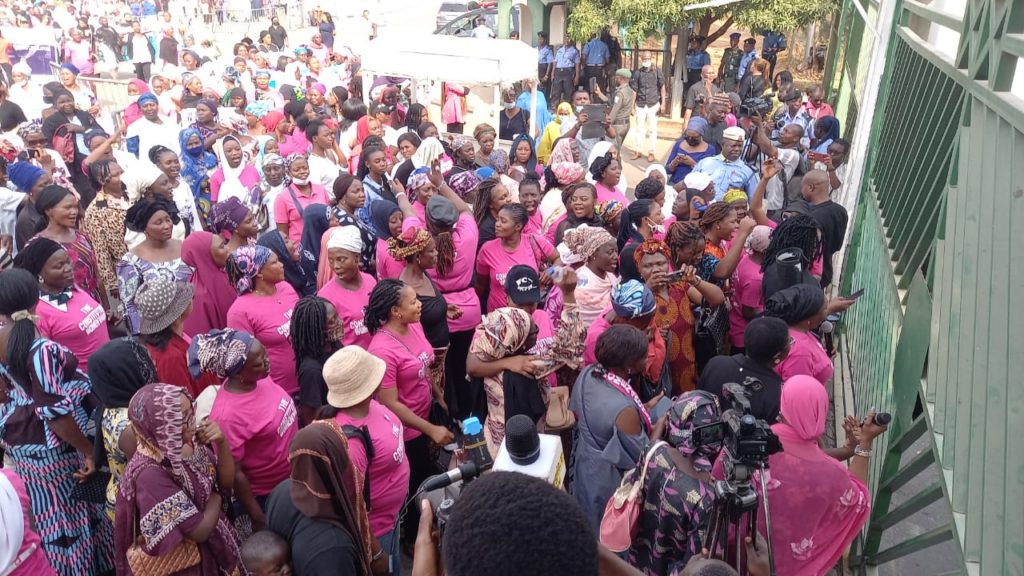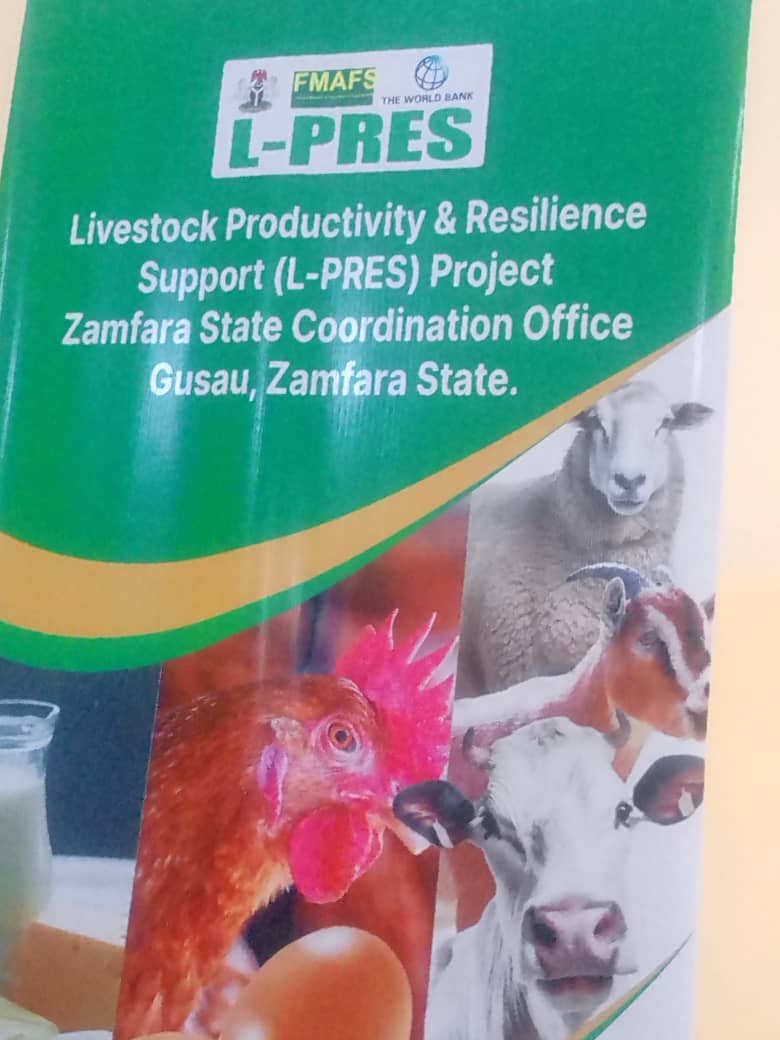
The Livestock Productivity and Resilience Enhancement Support Services (L-PRESS) project in Zamfara State has commenced a two-day capacity-building training for 200 livestock farmers on ruminant feed formulation, production, and marketing.
The Coordinator of the L-PRES Project in the State, Alhaji Nasiru Mohammed while speaking at the flagging-off ceremony, revealed that, the training for livestock farmers is aimed at enhancing good animal husbandry practices across the state.
Alhaji Nasiru said the training targets 200 active livestock farmers drawn from various parts of the state.
“Our goal is to improve productivity, commercialization, and resilience of targeted livestock production systems in Nigeria,” he said.
He emphasized that with proper and balanced feeding, animals can attain better health and higher productivity, which in turn boosts the nutritional value of livestock.
Alhaji Nasiru explained that the training is divided into two segments, the first day focuses on theoretical knowledge while the second day is dedicated to practical sessions.
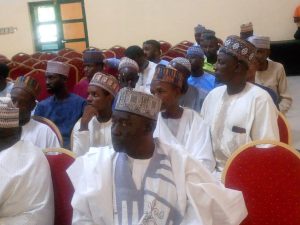
“Today, we have covered all the theoretical aspects of the training,” he noted”
Also contributing, the Monitoring and Evaluation Officer of the L-PRESS Project, Dr. Kabiru Muhammad, said the training is part of efforts to boost livestock productivity, improve resilience, and promote commercialization of key livestock value chains.
He explained that L-PRESS is a World Bank-assisted program jointly supported by the Federal Government of Nigeria and participating states, aimed at enhancing productivity and commercialization in the livestock sector.
Dr Kabir Muhammad revealed that, Zamfara State has four key value chains under L-PRESS—dairy, beef, sheep and goats, and poultry.
“These areas are where we have a comparative advantage, and each participating state has its own unique focus,” Dr. Kabiru said.
“Participants will learn how to formulate feed for ruminants like cattle, goats, and sheep, with the aim of increasing productivity and enhancing the commercial viability of their livestock businesses,” he noted.
Also speaking at the training, Professor Minka Silas of Ahmadu Bello University, Zaria, emphasized that feed costs account for the bulk of expenses in animal husbandry. The training, he said, seeks to introduce affordable and innovative feeding practices using locally available resources.
“We’re focusing on how to reduce feeding costs by leveraging local materials for feed production. This way, farmers can raise healthier animals at lower costs,” Professor Silas stated.
He noted that the two-day training is expected to equip the 200 participants with practical knowledge to improve livestock management and scale up their farming activities.
The L-PRESS project is one of the strategic interventions aimed at improving livelihoods in rural communities through sustainable livestock farming and commercialization.
COV/AMINU DALHATU