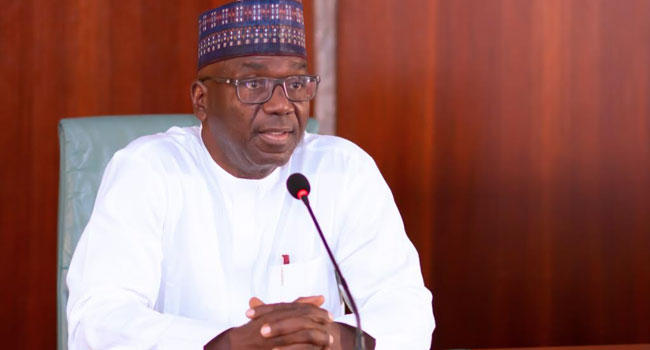

Jigawa State Governor Malam Umar Namadi has shared the successes, challenges, and innovations of his administration’s ‘Kantin Sauki’ Palliative Shop Programme during a keynote address at the launch of Sokoto State’s similar initiative, ‘Shagon Sauki Na Ahmadun Alu’.
Speaking as a special guest of honour at the event hosted by Governor Ahmed Aliyu, Namadi described the initiative as a “laudable and timely intervention” to ease the burden of inflation on vulnerable citizens, especially civil servants and pensioners.
He recalled that Jigawa’s Kantin Sauki was launched in July 2024 by Vice President Kashim Shettima as a targeted response to declining purchasing power caused by economic shocks, noting that it started with a focus on civil servants and pensioners with fixed incomes.
The governor explained that the program operates as a cashless, ICT-driven platform linked to beneficiaries’ Personal Subhead Numbers (PSNs), allowing them to purchase food items at subsidized rates and pay in three monthly installments.

Governor Namadi emphasized that the scheme has now expanded to all 287 political wards in Jigawa State and is being institutionalized under the Ministry of Special Duties, Emergency, and Humanitarian Services, replacing the initial task force model.
While highlighting the program’s impact on food security and worker welfare, he also addressed challenges such as initial technology delays, security concerns at distribution points, and the threat of reselling subsidized items in open markets, and advised Sokoto to adopt a phased rollout for better results.
Namadi also noted Jigawa’s plan to include wider payment options, such as POS machines that accept all ATM cards, to allow broader citizen participation beyond public sector workers.
In his closing remarks, he congratulated Governor Ahmed Aliyu on adopting the initiative and pledged Jigawa’s technical support, expressing hope that the Sokoto model would promote transparency, accountability, and economic relief for vulnerable households.
Usman Mohammed Zaria