
By Khadija Kubau
The Kaduna State Government and development partners have reaffirmed their commitment to sustaining and institutionalising the gains recorded under the IntegratE Project, which has expanded access to family planning and primary healthcare services through Community Pharmacists (CPs) and Patent and Proprietary Medicine Vendors (PPMVs).
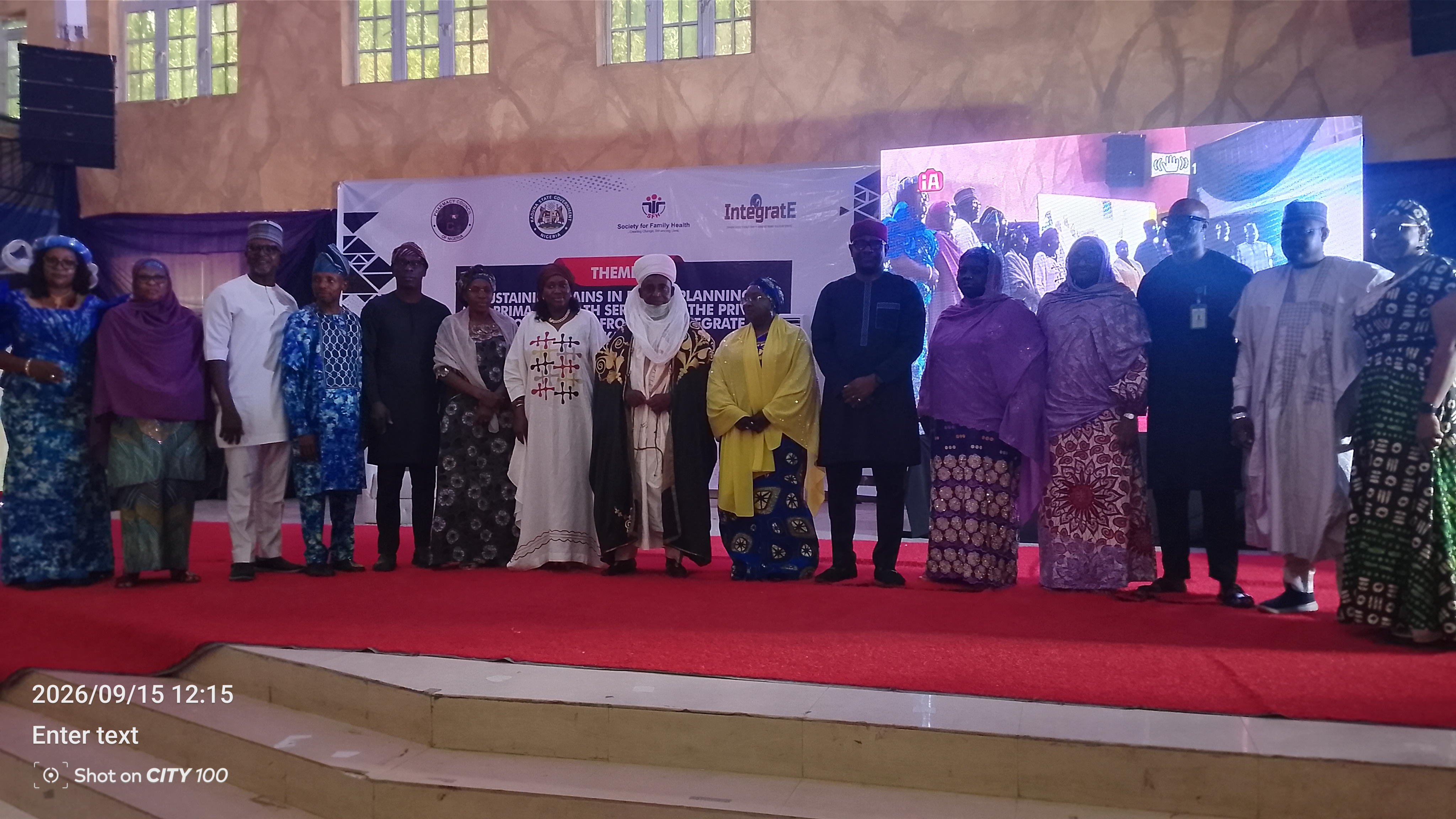
The stakeholders made the commitment on Tuesday at the high-level dissemination and close-out event of the IntegratE Project held in Kaduna.
The event, themed “Sustaining Gains in Family Planning and Primary Health through the Private Sector: Lessons from the IntegratE Project in Kaduna State,” brought together government officials, development partners, professional associations, healthcare providers, traditional and religious leaders and other stakeholders.
Speaking at the event, the Deputy Governor of Kaduna State, Dr. Hadiza Sabuwa Balarabe, said the project had generated important evidence on how government and private healthcare providers could work together to bring essential health services closer to the people.
She said approximately 995 Community Pharmacists and PPMVs had been trained, accredited and competency-certified under the project to provide family planning and primary healthcare services.
According to her, the trained providers delivered family planning services to 347,703 women, while 178,125 children under five received treatment for childhood illnesses, including malaria, diarrhoea, pneumonia and malnutrition.
Dr. Balarabe said the project demonstrated that properly trained, accredited, supervised and regulated private providers could deliver family planning services at a quality level comparable to providers in public primary healthcare facilities.
She described the private sector as an important extension of the state’s primary healthcare system, particularly for people living in underserved communities.
The Deputy Governor disclosed that the state had also expanded public provision of family planning services from an initial 255 designated facilities to more than 1,000 public healthcare facilities across Kaduna State.
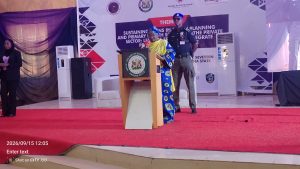
She said the state government was committed to sustaining the IntegratE model beyond the lifespan of the project through stronger regulation, supportive supervision, improved referral systems and the integration of private-sector health data into the state’s health information system.
Dr. Balarabe also called for greater collaboration with the Pharmacy Council of Nigeria (PCN) and relevant professional associations to strengthen regulatory frameworks, including the formalisation of the three-tier accreditation model tested under the project.
Earlier in her welcome remarks, the Kaduna State Commissioner for Health, Hajiya Umma K. Ahmad, said the IntegratE Project aligned with the state’s commitment to Universal Health Coverage and improved maternal, newborn and child health outcomes.
She noted that Community Pharmacists and PPMVs were often among the first points of contact for healthcare, particularly in underserved communities.
The Commissioner said the project’s achievements demonstrated the importance of appropriately training, accrediting, regulating and supporting private healthcare providers to complement government health facilities.
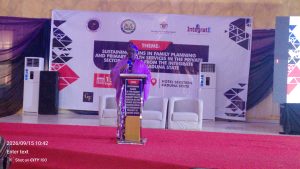
She urged stakeholders to focus on concrete actions that would ensure the institutionalisation, sustainability and scale-up of the gains recorded under the project.
In his goodwill message, the Executive Secretary of the Kaduna State Primary Health Care Board (KSPHCB), Prof. Bello Yusuf Jamoh, who was represented at the event by the Director of Family Planning, Hajiya Habiba Aliyu, commended the IntegratE Project for its contribution to expanding access to quality, affordable and client-centred family planning services.
He appreciated the Society for Family Health, development partners, service providers, Community Pharmacists, PPMVs and other stakeholders for their commitment to improving health outcomes in the state.
Prof. Jamoh urged stakeholders to remain committed to sustaining and institutionalising the interventions within the health system, stressing the importance of ensuring that women, men and young people have access to quality family planning services.
The Deputy Director, Family Health, Gates Foundation, Mrs. Rodio Dialo, commended the Kaduna State Government for its leadership and commitment to the project.
Mrs. Dialo said the IntegratE Project was designed to test, integrate and expand quality family planning and primary healthcare services through community pharmacies and PPMVs, particularly because many people in rural and underserved communities rely on these providers for basic healthcare needs.
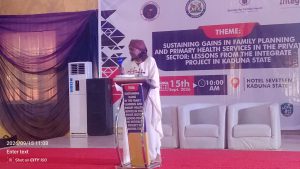
She recalled that Kaduna was the first state to embrace the initiative, describing the project as an important demonstration of what could be achieved through effective public-private partnership.
She urged the state government to sustain integrated supportive supervision for Community Pharmacists and PPMVs and provide the necessary support for continuous training and quality improvement.
Also speaking, the Group Director, Society for Family Health (SFH), Pharmacist Emeka Okafor, commended the Kaduna State Government, Ministry of Health, Primary Health Care Board, Pharmacy Council of Nigeria, professional bodies, community pharmacists, PPMVs and other partners for their collaboration.
He said the IntegratE Project commenced in Kaduna in 2017 as a proof-of-concept initiative to demonstrate the capacity of community pharmacies and PPMVs to provide an expanded scope of family planning and primary healthcare services.
Okafor explained that the project first mapped community pharmacies and PPMVs across the state’s 23 Local Government Areas to understand the private-sector service delivery landscape.
He said 995 providers were subsequently trained, enabling them to reach 347,703 women with family planning services, with 36 per cent of the beneficiaries accessing family planning services for the first time.
He added that approximately 178,000 children were reached with primary healthcare interventions, including malaria testing and treatment and management of acute diarrhoea and pneumonia.
According to him, the project’s achievements were supported by regulatory waivers, accreditation pathways, government-led integrated supportive supervision, strong data systems and effective partnerships.
He, however, stressed that the close-out of the project should not mark the end of the interventions but should provide a foundation for government ownership and sustainability.
Among the recommendations presented to the state government and partners were the expansion of integrated supportive supervision to include Community Pharmacists and PPMVs, provision of budgetary support for continuous training and supervision, and the formal adoption of the accreditation and task-sharing framework for PPMVs within state policy and regulation.
Stakeholders also called for stronger referral linkages between private providers and public health facilities and the integration of private-sector service data into the state’s health information system.

The event also featured a colourful cultural display and entertainment, adding a celebratory atmosphere to the dissemination and close-out ceremony while showcasing Kaduna’s cultural heritage.
The IntegratE Project stakeholders agreed that the experience had demonstrated the potential of strategic public-private partnerships to expand healthcare access and strengthen primary healthcare delivery.
They expressed optimism that the lessons and evidence generated through the project would guide policy decisions and support the transition from donor-supported interventions to sustainable, government-owned systems across Kaduna State.