
By Khadija Kubau
The Kaduna State Government has commenced the process of adapting and domesticating the National Ward Development Committee (WDC) Operational Guideline to strengthen community participation, accountability and service delivery in Primary Health Care across the state.
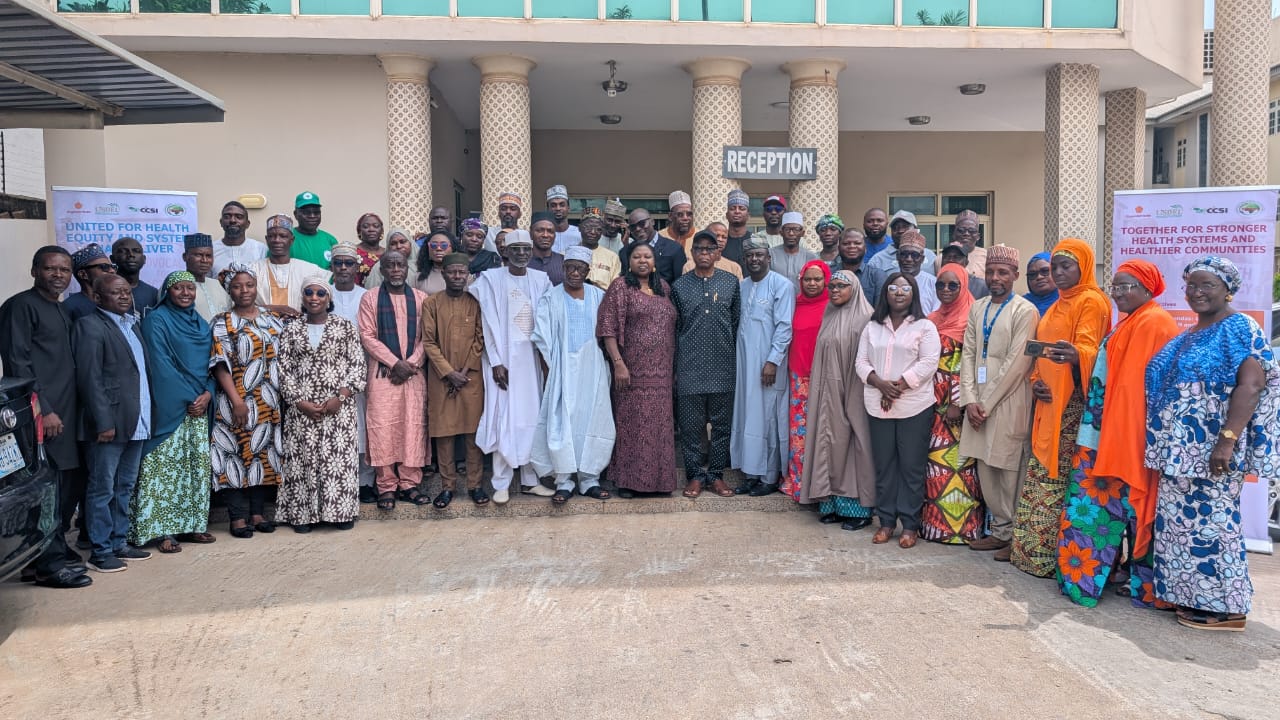
The initiative is being driven by the Kaduna State Primary Health Care Board (KSPHCB) in partnership with EngenderHealth and consortium partners through a three-day stakeholders’ co-creation workshop held in Kaduna.
The workshop brought together representatives of the Kaduna State Ministry of Health, local government authorities, development partners, civil society organizations, traditional and religious leaders, academics, healthcare implementers and community representatives to review the national guideline and develop a Kaduna-specific framework for WDC operations.
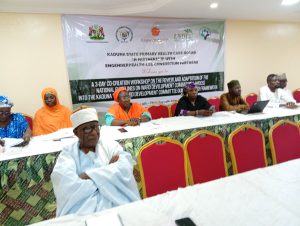
Speaking at the opening ceremony, the representative of the Executive Secretary of the Kaduna State Primary Health Care Board, Director Community Health Services, Nafisa Musa Isah, described Ward Development Committees as one of the most important platforms for community participation in Primary Health Care.
She noted that WDCs have played significant roles in mobilizing communities for immunization, supporting malaria and maternal health interventions, promoting accountability and strengthening the link between health facilities and the communities they serve.
According to her, evolving realities within the health sector have made it necessary to further clarify the roles of WDCs, strengthen their capacities and establish a more structured framework to guide their operations.
“This workshop presents a unique opportunity for stakeholders to collectively review the national guideline and adapt it to the realities of Kaduna State. Over the next three days, we will draw from our experiences, lessons learned and best practices to develop a practical guideline that strengthens community ownership, improves accountability and enhances service delivery at the ward level,” she said.
Mrs. Nafisa reaffirmed the commitment of the Kaduna State Ministry of Health and the Kaduna State Primary Health Care Board to support the validation, adoption and implementation of the outcomes of the workshop.
She added that the exercise aligns with the healthcare development agenda of Governor Uba Sani’s administration, particularly efforts aimed at improving human capital development under the SUSTAIN Agenda.
Declaring the workshop open on behalf of the Commissioner of Health, Hajiya Umma Ahmad, Dr. Danga Sule Emmanuel described the initiative as timely and strategic, noting that community participation remains a critical pillar for sustainable healthcare delivery.
He stressed the need to strengthen structures that promote accountability and community ownership in healthcare programmes, adding that the domestication of the national guideline would provide a stronger foundation for Ward Development Committees to effectively discharge their responsibilities.
A lead facilitator of the workshop, Professor Clara Ejembi, identified governance, operational and systemic challenges as major issues affecting the functionality of Ward Development Committees across communities.
She noted that while the National WDC Operational Guideline provides a broad framework for implementation, Kaduna State’s experiences over the years demonstrate the need for contextual adaptation to address local realities and emerging challenges.
Professor Ejembi urged stakeholders to contribute actively towards developing a practical and responsive guideline capable of improving community engagement and accountability in healthcare delivery.
During discussions, the Chairman of Kaduna South Local Government Area and ALGON Chairman, Hon. Rilwan Hussain, highlighted the importance of properly constituted Ward Development Committees in strengthening community participation.
He explained that assessments conducted in some communities revealed that several committee members lacked the influence and credibility needed to effectively mobilize residents and support healthcare interventions.
According to him, local authorities responded by reconstituting committees through inclusive processes involving councillors, religious leaders and community stakeholders.
“We discovered that investments by government and development partners could not achieve maximum impact without strong community structures. Once credible and respected individuals became part of the committees, we began to see significant improvements in community participation and support for health facilities,” he said.
Participants also emphasized the need to address demand-side challenges in healthcare utilization.
Stakeholders observed that while the government has substantial control over healthcare service delivery through the provision of drugs, medical equipment, health facility revitalization and personnel training, it has limited control over whether caregivers and community members utilize available services.
They agreed that Ward Development Committees remain critical in bridging that gap through community sensitization, awareness creation and mobilization.
Several goodwill messages were delivered during the opening session.
Speaking on behalf of the Maternal Accountability Mechanism in Kaduna Initiative (KADMAM) and the Kaduna Health Advocacy and Media Alliance (KADHAMA), Chairman Garba Mohammed commended the Kaduna State Primary Health Care Board and its partners for organizing the workshop.
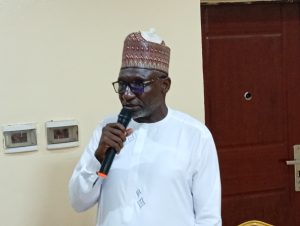
He described the initiative as timely and strategic, noting that a context-specific guideline would strengthen accountability, community ownership and Primary Health Care service delivery across Kaduna State.
Similarly, the Chairman of the Health Sector Reform Coalition (HSRC), Dr. Muhammed Lecky, highlighted lessons from the Social and Citizen Accountability for Primary Health Care Performance (SCAPP) Project implemented in Kaduna State with support from the Gates Foundation.
He disclosed that one of the key recommendations from a recent National Stakeholders’ Engagement Meeting was for Kaduna State to domesticate the National WDC Operational Guideline.
Dr. Lecky commended the Kaduna State Ministry of Health, KSPHCB, EngenderHealth and development partners for taking practical steps toward implementing the recommendation.
Goodwill messages were also delivered by representatives of the National Primary Health Care Development Agency (NPHCDA), Society for Family Health (SFH), Lafiya Foundation, academia, traditional institutions, local government authorities and civil society organizations.
The workshop is expected to produce a Kaduna State Ward Development Committee Guideline that will establish clearer governance structures, strengthen accountability mechanisms, improve coordination among stakeholders and enhance community participation in Primary Health Care service delivery across the state.
Participants expressed optimism that the domesticated guideline would further strengthen Primary Health Care systems and contribute to improved health outcomes for communities throughout Kaduna State.