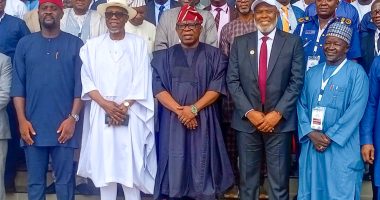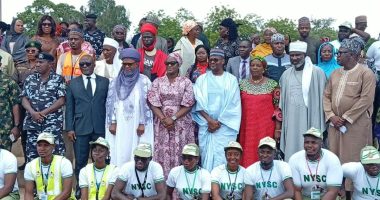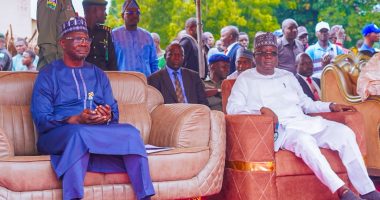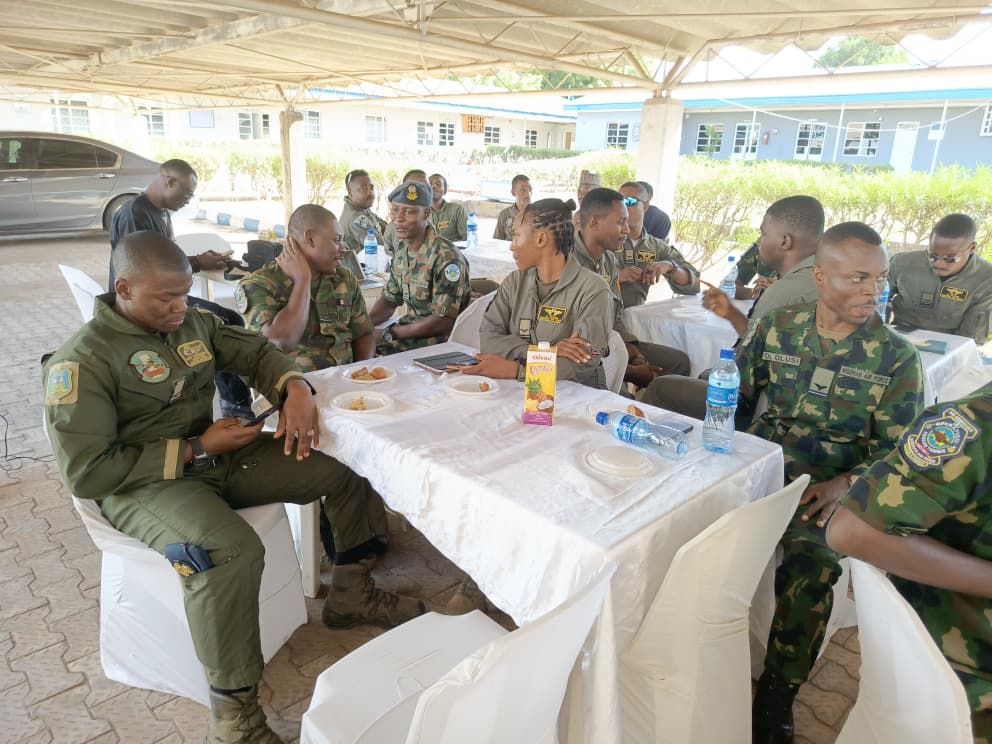

The Nigerian Air Force (NAF) has organised a Sallah luncheon for frontline troops in Kaduna, reaffirming its commitment to improving personnel welfare and operational efficiency.
Chief of the Air Staff, Air Marshal Sunday Aneke, gave the assurance during the event hosted by the Air Component of Joint Task Force, North-West Operation Fansan Yamma Sector 1, at the NAF base in Kaduna.
Represented by the Chief of Communication and Information System, Air Vice Marshal David Pwajok, Aneke said ongoing policies and initiatives were aimed at boosting morale and reducing operational strain among personnel.
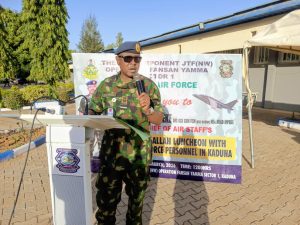
He noted that the revival of welfare packages reflects the Air Force’s determination to support its personnel both administratively and emotionally, thereby enhancing overall effectiveness.
Aneke said the NAF would continue to prioritise personnel welfare, strengthen operational readiness, and adopt intelligence-driven operations. He added that efforts were also being made to deepen training, build capacity, and sustain platforms through predictive maintenance and efficient logistics.
According to him, recent reforms to improve aircraft serviceability, expand unmanned aerial vehicle (UAV) capacity, institutionalise civilian harm mitigation, and enhance operational safety demonstrate the force’s commitment to becoming more effective and responsible.
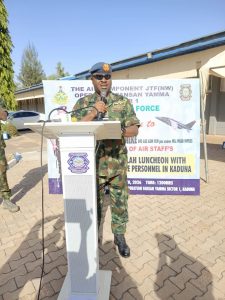
The Air Chief described the Sallah season as a reminder of sacrifice, obedience, faith, and devotion—values he said align closely with the military profession.
He commended the troops for their dedication and service, assuring them that their sacrifices are recognised and valued in the ongoing efforts to ensure national security.
Earlier, the Air Component Commander, North-West Operation Fansan Yamma Sector 1, Air Commodore Okechukwu Okpara, said NAF operations have significantly curtailed terrorist activities in the region.
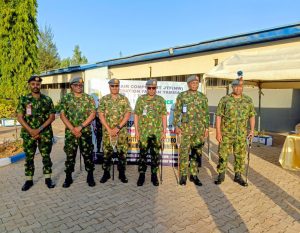
He said precision strikes, sustained intelligence surveillance, and rapid mobility operations have degraded insurgents’ capabilities and denied them freedom of action.
Okpara added that sustained air dominance has forced terrorists out of their strongholds, limiting their ability to operate freely or threaten communities.
He assured that the air component would continue to support broader efforts to combat terrorism and criminal activities in the region.
Usman Sani