
Writing By Daniel Karlmax Editing By Godwin Duru
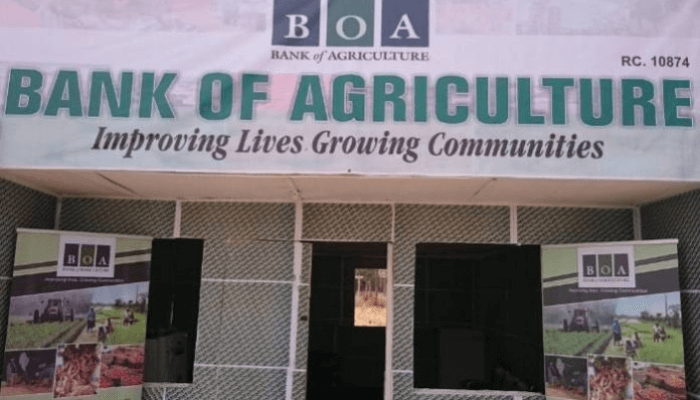
For more than five decades, the Bank of Agriculture, BOA, Nigeria’s pioneer agricultural development finance institution—has stood at the centre of national efforts to support farmers, strengthen food production, and build rural prosperity.
As the institution marks its 53rd anniversary, it is important to reflect on its origins, the challenges that stalled its progress, and the renewed drive to transform it into a modern engine for Nigeria’s food security goals.
The journey of the Bank of Agriculture dates back to 1972, when it was established as the Nigerian Agricultural Bank and became operational in 1973.
Over the years, the bank headquartered in Kaduna—has evolved through a series of mergers and name changes: from the Nigerian Agricultural and Cooperative Bank, to the Nigerian Agricultural Cooperative and Rural Development Bank, and finally, in 2010, the Bank of Agriculture, BOA.
Despite these transitions, its mission has remained consistent: providing financial support to farmers who often lack access to credit from commercial banks.
However, the decades have not been without difficulties.
One of the major challenges has been the burden of non-performing loans.
Billions of naira issued to farmers and cooperative groups were never recovered, weakening the bank’s financial stability and reducing the funds available for new lending.
Poor governance, weak loan monitoring structures, and inadequate technological systems all contributed to these setbacks.
Beyond loan defaults, BOA has long struggled with under-capitalization.
As agriculture expanded and farming practices modernized, the bank’s financial base failed to match the scale of Nigeria’s agricultural needs.
Many rural farmers continued to face difficulties accessing credit, while the bank itself remained under pressure—caught between its development mandate and the realities of limited resources.
Today, however, the story is shifting.
Under the leadership of the newly appointed Managing Director, Ayo Sotinrin, the Bank of Agriculture is entering a new era of restructuring and modernization.
The MD has pledged a transition toward what he describes as “smart banking”—a model driven by technology, robust farmer data, digital loan tracking, and efficient service delivery.
This new direction aims to reduce waste, improve loan recovery, and ensure that funds reach the farmers who need them most.
At the heart of this transformation is an ambitious capitalization agenda.
The Federal Government has reaffirmed its commitment to significantly strengthen BOA’s capital base, enabling the bank to lend more widely and at more affordable rates.
According to the Minister of Agriculture and Food Security, Senator Abubakar Kyari, plans include a major capitalization package worth over one trillion naira, as well as a dedicated window for small holder farmers—ensuring that more rural communities gain access to credit for seeds, fertilizers, machinery, and other essential inputs.
Beyond financial investment, the current administration is aligning the bank’s revival with national food security priorities.
New initiatives focus on strengthening agricultural value chains—including cocoa, ginger, rice, and maize—while supporting mechanization programmes, training centres, and digital farmer-registration systems.
As the Bank of Agriculture marks its 53rd year, it stands at a critical turning point.
Its legacy is rich, but its future hinges on effective reforms, strong governance, and the successful implementation of its re-capitalization plan.
For millions of farmers across the country, a revitalized BOA could mean the difference between subsistence and prosperity—and for Nigeria, a significant step toward achieving lasting food security.
Daniel Karlmax