By Khadijah Aliyu
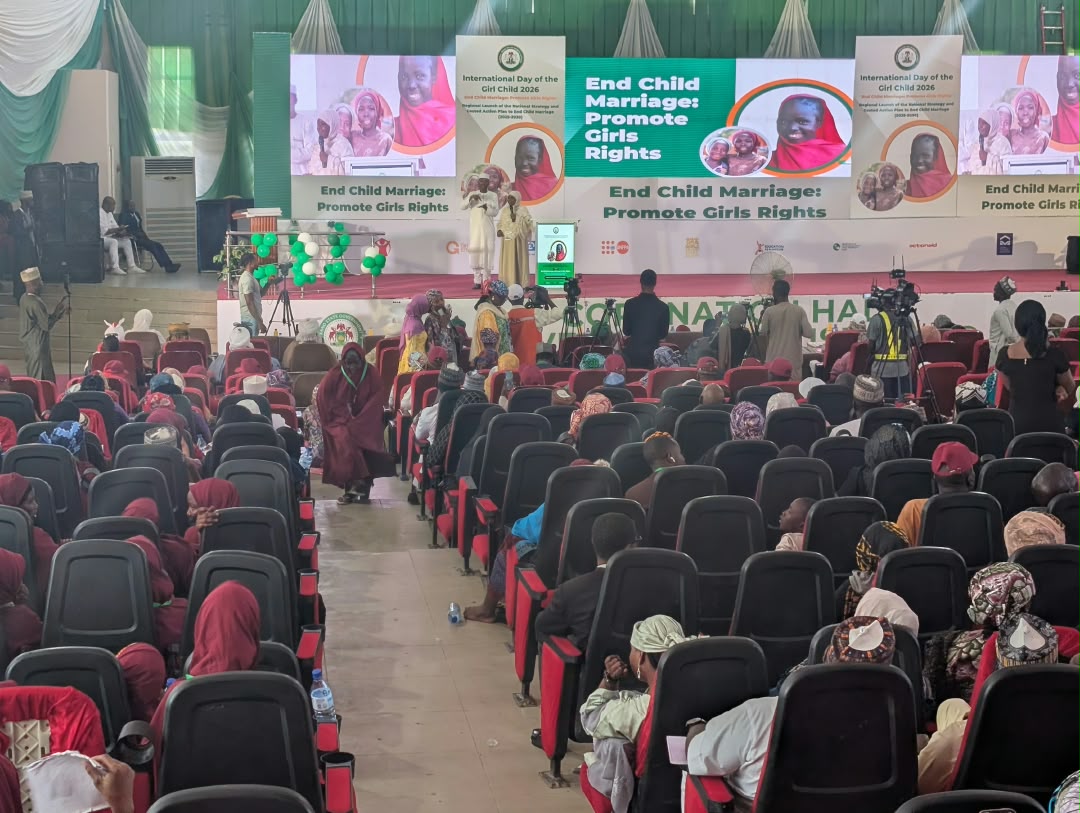
The Federal Government has launched the National Strategy and Costed Action Plan on Ending Child Marriage in Nigeria (2025–2030) for the North-West and North-East zones to protect girls and promote access to education.
The launch, organised by the Federal Ministry of Women Affairs and Social Development, took place in Kano as part of activities marking the 2026 International Day of the Girl Child.
The Minister of Women Affairs, Hajiya Imaan Sulaiman-Ibrahim, said child marriage disrupts girls’ education, exposes them to early pregnancy and health risks, and limits their economic independence.
She identified poverty, insecurity, gender discrimination, harmful traditional practices and inadequate social protection as major factors contributing to the practice.
The Kano State Commissioner for Women Affairs, Hajiya Amina Sani, highlighted government initiatives supporting girls’ education and called on parents, traditional and religious leaders to support efforts to end child marriage.
The Chief of UNICEF Field Office in Kano, Mr Shafeeq Ur-Rehman, said approximately one in three young women nationwide, and nearly one in two in the North-West and North-East, were married before the age of 18.
He urged state governments to translate the strategy into adequately funded programmes, stronger support services and measurable results.
The Country Director of Save the Children, Duncan Harvey, also called for collective action to protect girls’ rights and eliminate child marriage.
Editing By Safiyah Abdulkadir