
By Khadija Kubau
The Kaduna Health Media Alliance (KADHAMA) has reaffirmed its commitment to promoting solution-driven journalism, strengthening healthcare advocacy, and improving public awareness on health-related issues across Kaduna State.
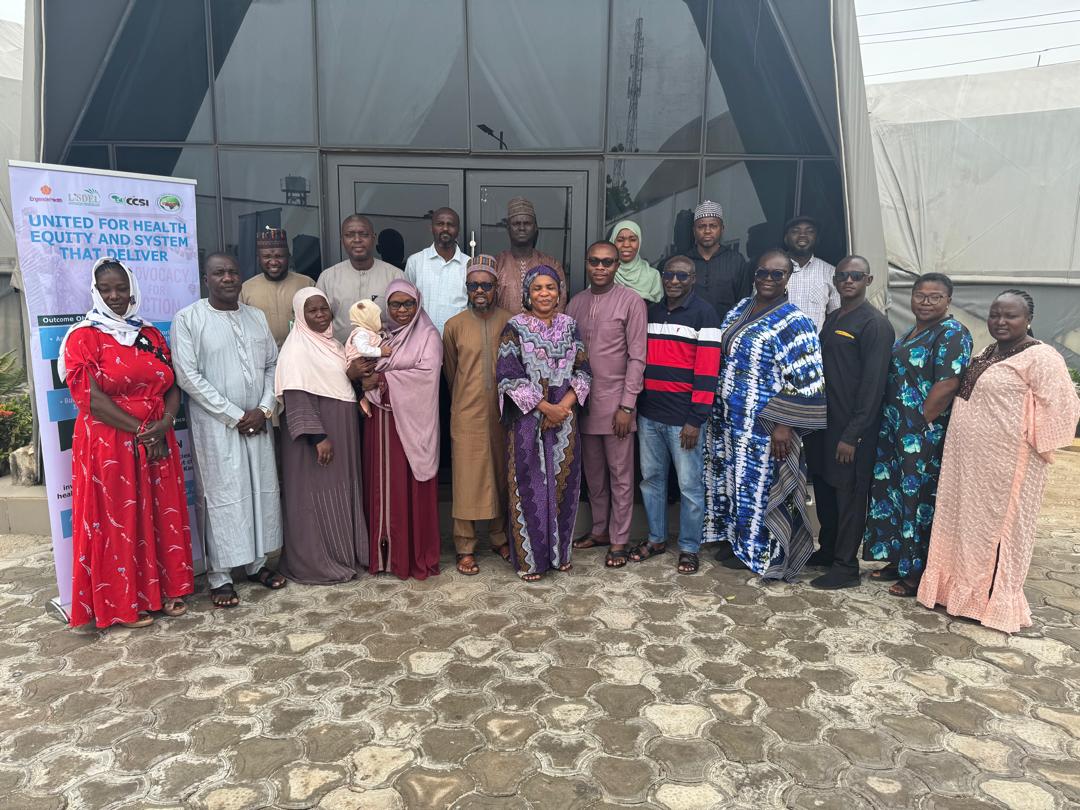
This was part of the resolutions reached during a strategic meeting attended by journalists, media professionals, development partners, government representatives, and civil society actors committed to advancing healthcare communication and accountability in the state.
In opening remarks delivered on behalf of the Chief Executive Officer of ISMPH, Moji Makanjuola, Mr. Philip Chukwunonso emphasized the importance of collaboration among media practitioners, development partners, and government institutions in strengthening healthcare delivery and public access to accurate health information.
He noted that effective health communication plays a critical role in addressing healthcare challenges, promoting accountability, and improving public trust within the health sector.
Philip also reaffirmed ISMPH’s commitment to supporting KADHAMA and other media-driven advocacy initiatives aimed at improving public participation, strengthening grassroots engagement, and advancing solution journalism across Kaduna State.
The meeting, chaired by KADHAMA Chairman Garba Mohammed, focused on expanding community-based health reporting, improving stakeholder collaboration, and positioning the alliance as a strong platform for health advocacy and responsible journalism.
Participants stressed the need for journalists to intensify visits to healthcare facilities and rural communities to document challenges, engage frontline health workers, and amplify community voices on healthcare delivery.
According to members, many impactful health stories exist within underserved communities and should be properly documented to drive public discourse and policy response.
Discussions during the meeting also centered on increasing KADHAMA’s visibility through consistent activities, strategic partnerships, and effective use of television, radio, newspapers, blogs, and social media platforms.
Members emphasized that the alliance’s growth and visibility would depend largely on commitment, volunteerism, and professionalism rather than financial incentives.
Participants encouraged members to actively participate in advocacy visits, investigative reporting, and public sensitization activities without waiting for sponsorship or transport allowances.
As part of efforts to strengthen coordination, the alliance resolved to institutionalize regular virtual meetings to improve communication, reduce operational costs, and sustain collaboration among members.
The Secretary of the alliance was also encouraged to regularly share weekly health themes, international health observances, and topical health issues to guide members’ reporting and advocacy efforts.
Suggested focus areas include maternal health, immunization, antenatal care, family planning, and preeclampsia awareness.
The meeting further highlighted the need for stronger partnerships with key stakeholders, including the Ministry of Health, Ministry of Information, Primary Healthcare Board, development partners, traditional institutions, faith-based organizations, and People Living with Disabilities (PWDs).
Participants disclosed that advocacy letters had already been submitted to relevant government agencies, while further engagements with the Ministry of Health and other stakeholders are expected after the Salah celebrations.
A major highlight of the meeting was the discussion on ethical reporting and solution journalism.
Health stakeholders urged journalists to avoid sensationalism and instead adopt balanced reporting that highlights both challenges and positive developments within the healthcare system.
Responding to the concerns, members maintained that KADHAMA was established not to attack government institutions, but to promote accountability, constructive engagement, and improved healthcare delivery through responsible journalism.
The alliance adopted the principle of “reporting challenges while promoting solutions” as a guiding approach for future engagements.
Participants also proposed expanding KADHAMA’s membership to include journalists and correspondents from Southern Kaduna, Zaria, Kafanchan, and other rural communities to strengthen grassroots reporting and statewide representation.
The meeting also featured discussions on organizational growth, with members recommending the development of a formal constitution, membership criteria, and subcommittees to guide the alliance’s future expansion and coordination.
The meeting ended with renewed commitment from participants to strengthen healthcare communication, expand public health awareness, improve stakeholder collaboration, and advocate for better healthcare services across Kaduna State.