
By AMINU DALHATU; Editing by BASIRAT MEMUDU
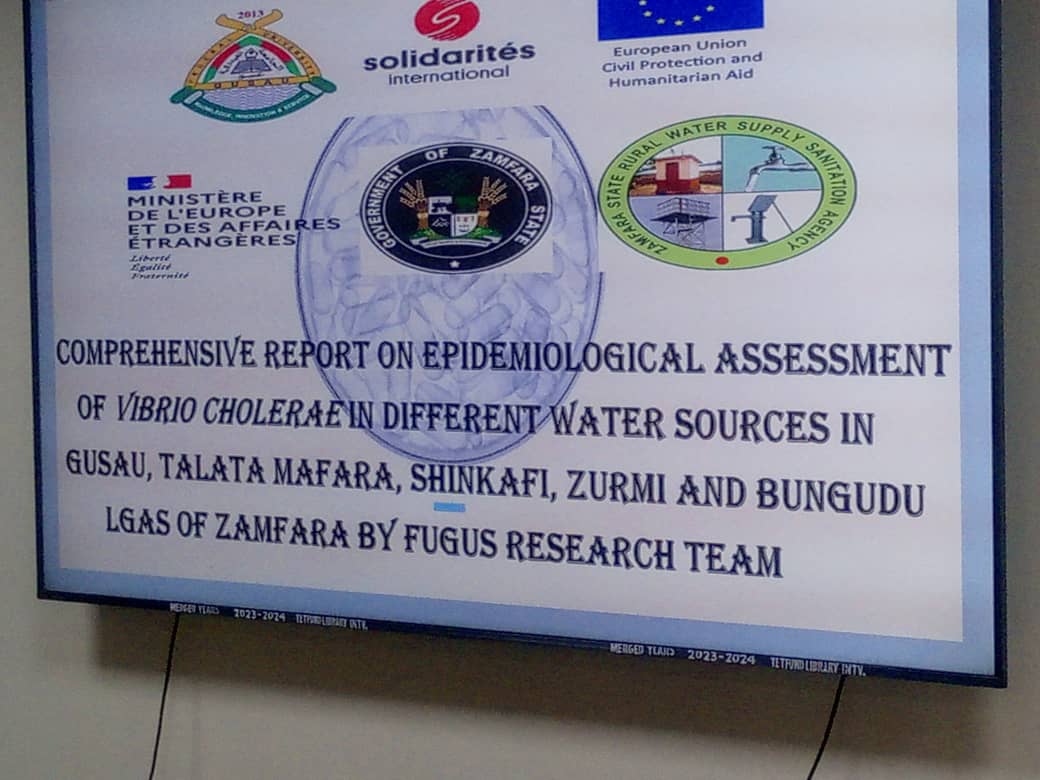
An epidemiological study conducted after last year’s cholera outbreak in Zamfara State has revealed the presence of Vibrio cholera in various water sources across the state, raising serious concerns over water safety and public health.
The research was carried out by the Department of Microbiology, Federal University Gusau, with support from Solidarités International, was presented during a stakeholders’ engagement held at the university in Gusau.
Presenting the findings, the Principal Researcher, Dr.Oluchukwu Abba, said the study covered five Local Government Areas of Bungudu, Shinkafi, Zurmi, Gusau, and Talata Mafara.

She disclosed that the bacteria were detected in all sampled water sources, including tap water, boreholes, wells, rivers, and sachet water.
According to her, Talata Mafara recorded the highest number of positive samples, with 10 out of 29, followed by Zurmi with nine, Bungudu five, Shinkafi four, while Gusau recorded only one positive case.
Dr. Oluchukwu Abba attributed the relatively low incidence in Gusau to ongoing interventions at the time of the study, noting that, such measures may have helped reduce contamination.
She explained that, a total of 142 water samples were collected across the affected areas, while 250 respondents were surveyed to assess behavioural factors influencing cholera transmission.
According to Dr. Abba, the findings also revealed the presence of three serotypes of Vibrio cholera among the confirmed isolates, including 22 cases of O1, one case of O139, and six cases of non-O1/non-O139 strains.
Highlighting the scale of the previous outbreak, she revealed that as of October last year, Zamfara recorded over 14,000 cholera cases and 191 deaths, warning that the actual figures might be higher due to underreporting.
Dr. Oluchukwu Abba however, cautioned that water may not be the only transmission route, stressing that food and environmental factors could also contribute to the spread of the disease.
She emphasized the need for proactive measures, including improved access to potable water and sanitation, to break the chain of transmission.
The researchers called for stronger collaboration among relevant agencies, including the Ministries of Health, Environment, and Water Resources, as well as NAFDAC, particularly in regulating and monitoring water production.
Dr Oluchukwu Abba also recommended chlorination of water sources in high-risk areas and the provision of sanitation facilities in communities lacking toilets and urged the Zamfara State Government to enforce public health laws and ensure routine inspection of sachet water factories.
She stressed that with the rainy season approaching, urgent preventive action is necessary to avert another outbreak.
Earlier, the Vice-Chancellor of Federal University Gusau, Professor Tukur Adamu, called on stakeholders to prioritize preventive measures in addressing recurrent cholera outbreaks.
Professor Adamu urged stakeholders to ensure access to safe drinking water and intensify public health education, particularly against open defecation, which he identified as a major contributor to cholera transmission.
He reiterated the university’s commitment to impactful research addressing critical challenges such as public health, food security, and insecurity.
In a remark, the Director of Public Health, Zamfara State Ministry of Health, Dr. Yusuf Haske, pledged the Ministry’s commitment to strengthening interventions in line with the study’s recommendations.
Dr. Haske attributed the high prevalence in Talata Mafara to poor sanitation practices, especially open defecation, despite claims of improved sanitation.
He, however, noted that the state maintains an effective response system, with rapid response teams deployed to contain outbreaks.
According to him, the major challenge remains behavioural practices and stressed the need for intensified public enlightenment and community engagement.
He added that the Ministry would scale up health education and sensitization campaigns across all Local Government Areas.
Also speaking, the Zamfara State Coordinator of NAFDAC, Abduljalal Manzo, dismissed claims linking cholera outbreaks to the consumption of approved sachet water.
He stated that available data does not establish any connection between NAFDAC-certified sachet water and the disease.
Manzo emphasized the need for stronger collaboration among key stakeholders to effectively tackle the outbreak.
He also called for stricter enforcement of public health laws, particularly against open defecation and the consumption of unregulated water products.
While commending the organizers of the engagement, he stressed the importance of accurate research and proper verification processes, urging researchers to utilize NAFDAC-accredited laboratories.
Manzo further disclosed that the agency has intensified enforcement against illegal producers of unregistered sachet water, although insecurity continues to hinder operations in some areas.