
By Adamu Yusuf
The Federal Ministry of Water Resources and Sanitation says women and girls are among those most affected by floods, droughts, water-related illnesses, and the burden of water scarcity in Northern Nigeria.
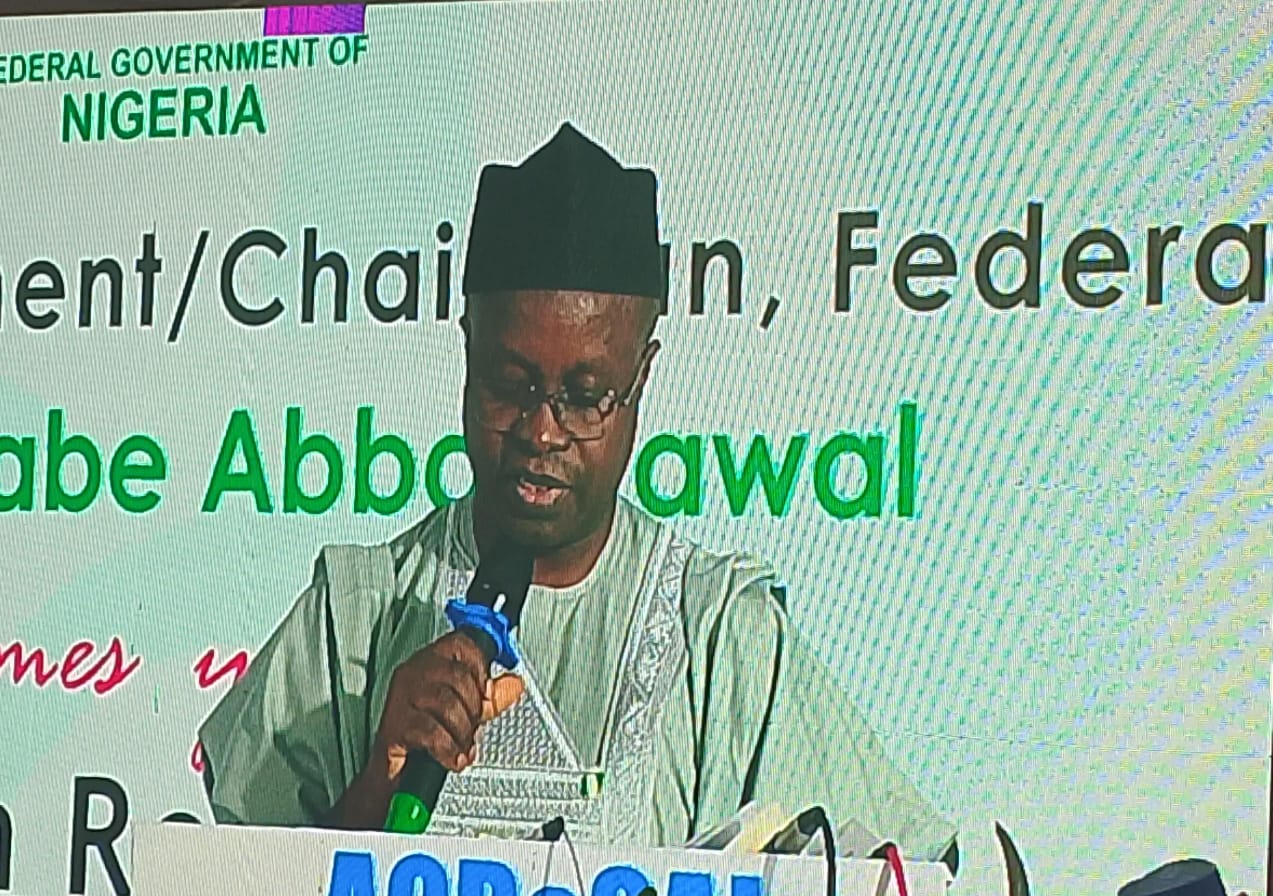
The Minister of Water Resources and Sanitation, Prof. Joseph Utsev, stated this during the Agro-Climatic Resilience in Semi-Arid Landscapes (ACReSAL) Project Mid-Term Review held in Kaduna.
Prof. Utsev stressed that women must be placed at the centre of water governance and project implementation, noting that reducing their burden and ensuring their meaningful participation are critical to the long-term sustainability of the ACReSAL project.
According to him, these include the construction and rehabilitation of water harvesting structures, protection of riparian corridors, and restoration of degraded catchments.
The minister observed that while progress has been encouraging, project targets remain ambitious.
He said the mid-term review provides an opportunity to assess whether key water-related interventions such as small-scale irrigation, sand-dune stabilisation, and gully erosion control are being implemented at the required pace and quality to achieve expected outcomes.
Prof. Utsev also called for greater integration of water resources management into land-use planning at the state level, stronger community water governance systems to sustain project assets beyond the lifespan of the programme, and the use of data and remote sensing tools to improve the precision of watershed interventions.
In his remarks, the Minister of State for Agriculture and Food Security, Senator Aliyu Sabi Abdullahi, said the ACReSAL project directly supports the productivity and livelihoods of millions of smallholder farmers across the 19 Northern states. He stressed that healthy land, reliable water supply, and food security are closely interconnected.
He expressed satisfaction with the early gains recorded in areas where implementation has progressed as planned, including improved soil conditions, increased vegetation cover, and the adoption of more resilient farming systems by local farmers.
Senator Abdullahi said the achievements reflect the transformation envisioned when the project was approved, but cautioned that greater efforts are still required to meet the programme’s ambitious targets.
He called for increased focus on scaling up climate-smart agricultural interventions, strengthening farmer training and extension services, improving access to climate-resilient seeds, inputs, and technologies, and ensuring that women and youth are fully integrated into the project.
The host governor, Uba Sani of Kaduna State, represented by the Commissioner for Environment, Alhaji Abubakar Buba, disclosed that more than 22,435 hectares of degraded land have been identified for restoration and reforestation in the state.
He explained that through integrated interventions such as afforestation, soil conservation, and ecosystem restoration, Kaduna State has improved biodiversity while enhancing agricultural productivity in targeted communities.
Governor Uba Sani also announced that the state had secured approval from the World Bank and the national office to tackle urban flooding through a major drainage restoration project covering over 20 kilometres in Kawo, Rigasa, Zaria, and other densely populated areas.
He described the initiative as a major step toward addressing climate-related flooding challenges in the state.
On livelihood support, the governor said Kaduna State has trained more than 500 women, youths, and school feeding vendors in the production of biomass briquettes.
He noted that the initiative provides a sustainable alternative to firewood, helps reduce deforestation, and creates economic opportunities for vulnerable groups.
He further revealed that the state has desilted over 160 kilometres of drainage networks across flood-prone communities, adding that the intervention aligns with global disaster risk reduction frameworks and is already delivering measurable results.
Describing ACReSAL as a cornerstone of Kaduna State’s environmental sustainability agenda, Governor Uba Sani said the project demonstrates what can be achieved through strong partnerships, visionary leadership, and shared commitment to development.