Global Peace Foundation (GPF) and prominent Nigerian faith leaders have warned that Nigeria risks deeper instability if urgent and coordinated action is not taken to address escalating insecurity across the country.
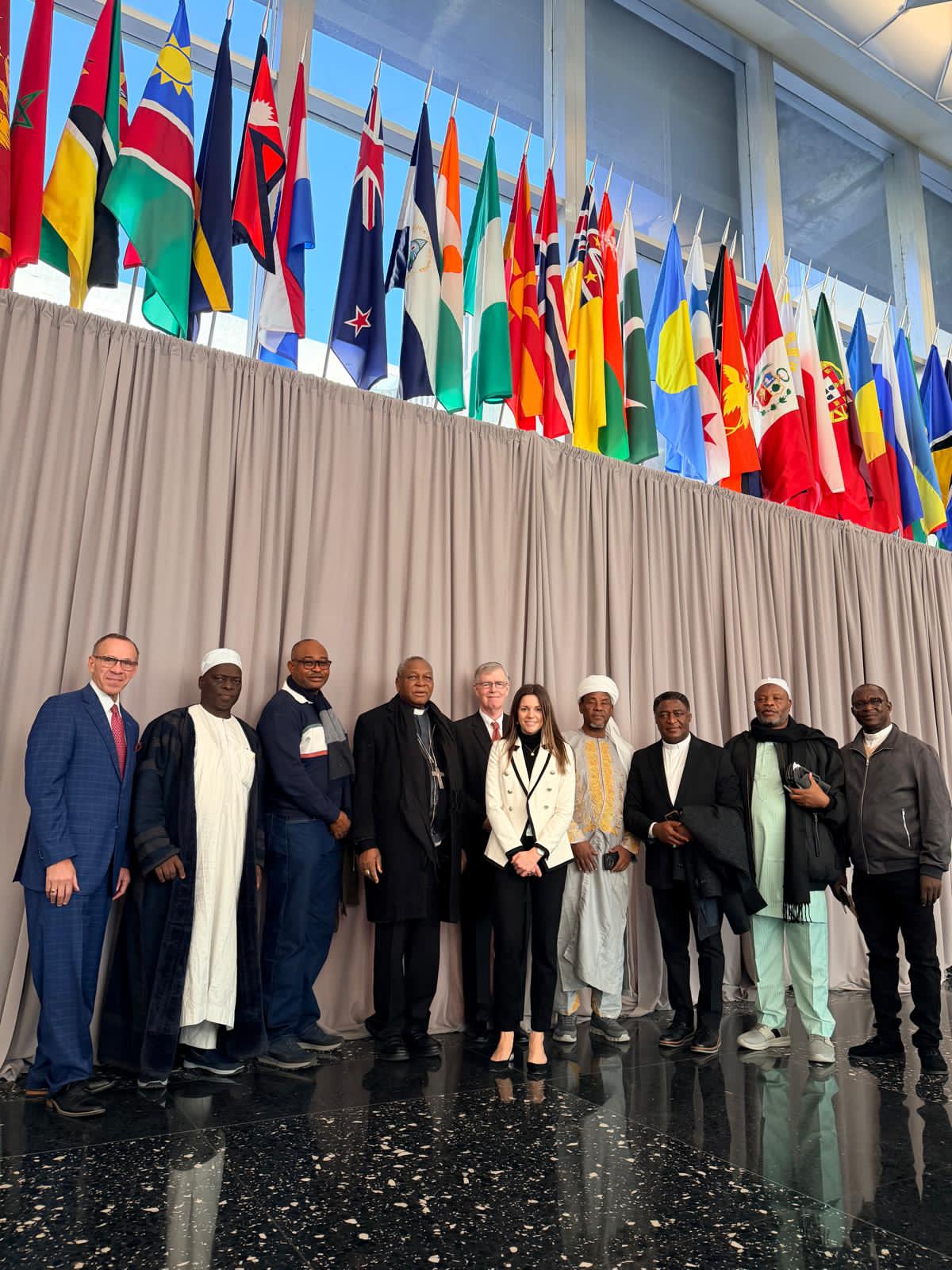
The warning was issued at a high-level security and peace forum held at Pepperdine University in Washington, D.C.
The meeting brought together senior Christian, Muslim and traditional leaders to deliberate on the worsening security situation and its implications for national unity and regional stability.
Participants described the crisis as a direct threat to Nigeria’s sovereignty, citing the activities of armed gangs, terrorist networks and insurgent groups.
They noted that since the insurgency by Boko Haram began in 2009, more than 40,000 lives have been lost, with millions displaced and communities destroyed.
Director of African Peace Initiative and Engagement at GPF, Reverend Father Canice Chinyeaka Enyiaka, said religious institutions remain Nigeria’s most trusted social structures and possess the moral authority to promote unity and peace.
He stressed that a united interfaith voice could drive meaningful national change.
Speaking at the forum, John Onaiyekan attributed many of Nigeria’s challenges to leadership failures, urging public office holders to translate moral conviction into responsible governance.
Former General Secretary of Evangelical Church Winning All (ECWA), Reverend Yunusa Nmadu Jnr, called for stronger interfaith collaboration through joint community programmes.
Sheikh Muhammad Abubakar Sadeeq highlighted the need to empower women and youth, warning that unemployment and exclusion fuel recruitment into violent groups.
The forum also raised concerns over what it described as the near collapse of state authority in some rural communities, where armed groups allegedly impose illegal taxes and operate parallel systems of governance.
International Vice President of GPF for Religious Freedom Initiatives, Dr. Paul Murray, and former United States Ambassador-at-Large for International Religious Freedom, Sam Brownback, emphasised the need for practical and sustained action to prevent further deterioration of Nigeria’s stability.
The Washington meeting followed an earlier consultation in Abuja in December 2025, where faith leaders recommended the establishment of a Joint Interfaith Advocacy Committee and structured documentation of violence and hate speech.
They maintained that without immediate reforms anchored on moral responsibility and institutional strengthening, Nigeria’s security crisis could further undermine national unity and development.
Teddy Daniel


