The Emir of Birnin Gwari, Alhaji Zubairu Jibril Maigwari has commended the success of the peace process initiated in the area about ten months ago, noting that it has restored relative calm and encouraged farmers to return to their fields.
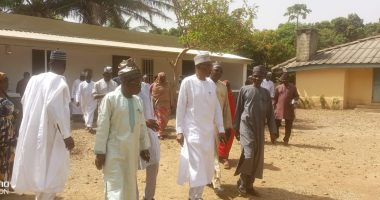
Speaking during a fact-finding visit to assess the implementation of the Birnin Gwari peace model, the Emir said the peace agreement—brokered with the involvement of the National Security Adviser (NSA), the Kaduna State Government, security agencies, and representatives of armed groups—has significantly reduced insecurity in the area.
He explained that while isolated cases of bandit attacks still occur, particularly the confiscation of farm machinery, the situation has greatly improved compared to previous years.
The monarch revealed that during meetings with community leaders, farmers were advised to return to their farmlands despite challenges, even if it meant resorting to local manure in the absence of fertilizer. According to him, many farmers heeded the advice, leading to a rebound in agricultural activities.
Alhaji Zubairu Maigwari emphasized that by next year, more farmers are expected to return fully to their farms as peace continues to take root.
In an interview, the Danmasanin Birnin Gwari, Alhaji Zubairu AbdurRauf, stressed that the peace process has created opportunities for coexistence, with both herders and farmers working together to protect the fragile truce.
Alhaji Zubairu AbdurRauf, noted that economic activities are gradually picking up in Birnin Gwari, adding that communities themselves are playing a key role in sustaining peace.
He also called on the Federal and Kaduna State Governments to expand the peace model to other troubled areas, especially border communities prone to infiltration from neighboring states.
He maintained that replicating the Birnin Gwari model would help curb insecurity in border regions and consolidate ongoing peace efforts across the country.
Meanwhile, a fact-finding assessment of the western part of Birnin Gwari—including Fagoma Dam, Sabon Layi, Gagumi, Kakangi, and Randagi—was conducted to evaluate how farming activities have resumed.
As part of the agreement, former bandits and local communities are expected to resist and collectively confront any attempt to breach the peace process.
PR: Adamu Yusuf