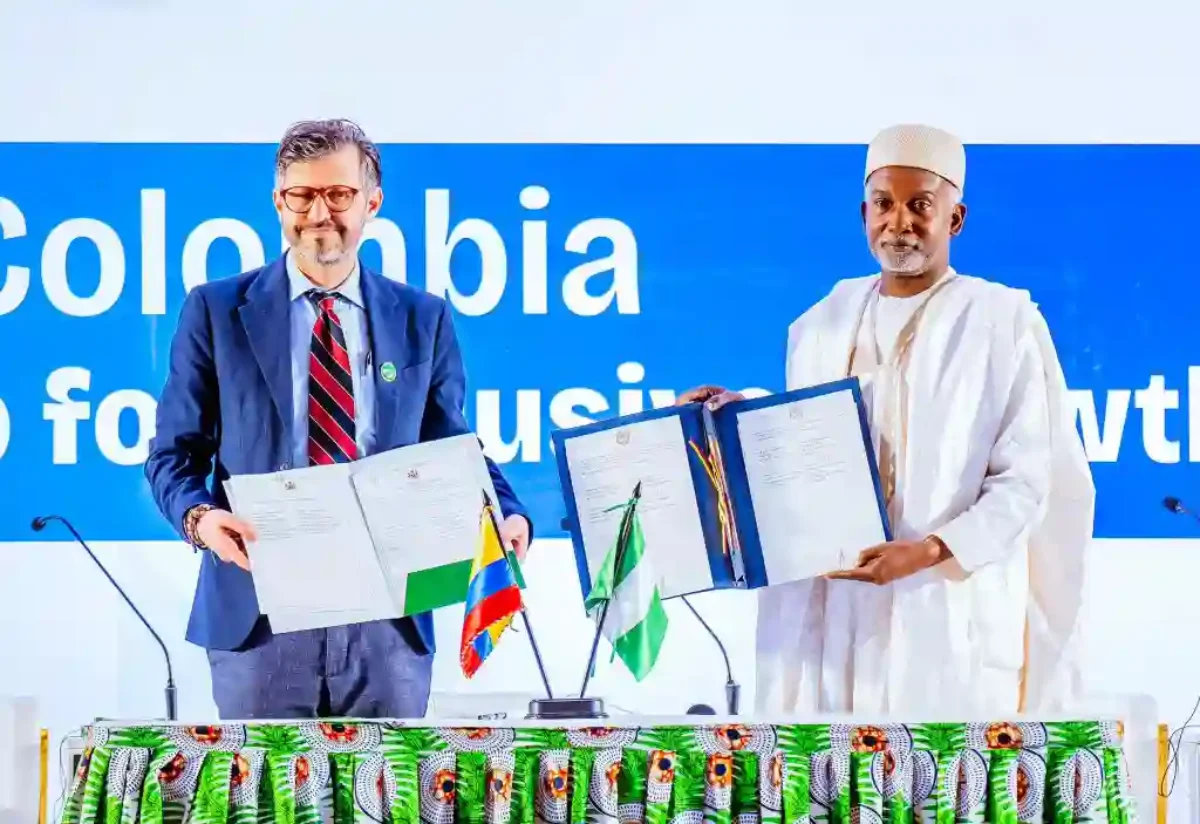
Nigeria and Colombia on Monday signed a historic Memorandum of Understanding (MoU) on political consultations to deepen bilateral relations, strengthen economic cooperation, and expand cultural exchange.
The agreement was signed during the Nigeria-Colombia Bilateral Meeting and Business Forum at the Presidential Villa by Nigeria’s Minister of Foreign Affairs, Yusuf Tuggar, and Colombia’s Deputy Minister of Multilateral Affairs, Mauricio Jaramillo Jassir.
Jassir said the MoU would facilitate frequent political dialogue and ease visa approvals for Colombian diplomats visiting Nigeria.
Speaking at the forum, Vice President Kashim Shettima urged both countries to transform their abundant resources into tangible economic benefits through strong private sector participation.
“The private sectors of our two nations are therefore urged to take advantage of the abundant potential of our countries and transform them into tangible economic gains,” Shettima said.
He stressed that Nigeria is committed to diversifying its economy beyond crude oil by prioritizing agriculture, minerals, and manufacturing, while warning against the risks of relying on a narrow economic base.
“The tariffs that confront our exports in other parts of the world are a reminder of the danger of dependence on a narrow base,” he said, adding that partnerships with Colombia in agriculture and energy would be vital.
Focus Areas: Agriculture, Energy, Culture
The Vice President identified agriculture, energy, and manufacturing as priority sectors for collaboration, highlighting shared strengths in cocoa, coffee, tropical fruits, and renewable energy.
He also called for greater cultural and creative industry cooperation, saying:
“Culture is a bridge for innovation, economic development, and mutual prosperity. Reinforcing our connections in culture, education, science, and technology is fundamental for building a globally competitive creative economy.”
Colombian VP: Nigeria a Strategic Market
Colombian Vice President Francia Márquez described Nigeria as a strategic market for Colombia, pledging stronger ties in renewable energy, higher education, and trade.
“We will work together for social development, social justice, peace, and security for our people,” she said, noting that Colombia already exports leather to Nigeria.
She also expressed interest in boosting cooperation in technology and services and extended condolences on the passing of former President Muhammadu Buhari.
Investment Opportunities Highlighted
The Deputy Director of the Nigerian Investment Promotion Commission (NIPC), Emmanuel Longza, showcased Nigeria’s investment opportunities, citing its 250 million population, vast natural resources, and government incentives, including tax waivers.
He said Nigeria has 34 million hectares of arable land, with only 46% currently cultivated, creating massive potential for agribusiness. Other opportunities include solid minerals, energy transition, and technology.
Nigeria’s Minister of Industry, Trade and Investment, Dr. Jumoke Oduwole, noted that reforms such as subsidy removal and exchange rate unification have restored investor confidence, adding that Nigeria is now a continental leader in fintech and digital trade under the African Continental Free Trade Area (AfCFTA).
Bello Wakili