
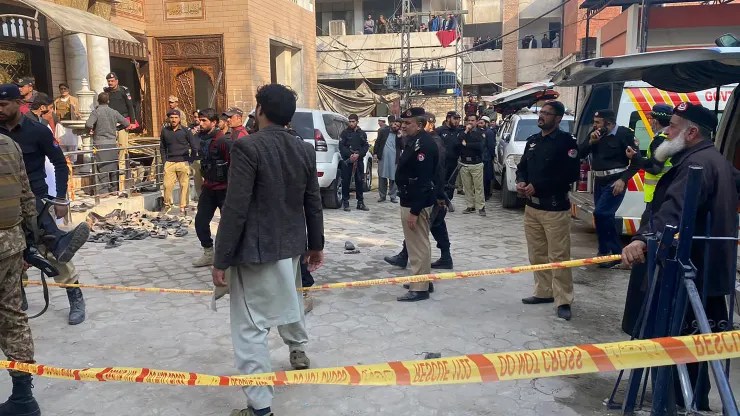
A suicide bomber on Monday struck inside a mosque within a police compound in the north-western Pakistani city of Peshawar, killing at least 28 people and injuring as many as 150 worshippers, most of them policemen, officials said.
The bombing drew nationwide condemnation from opposition political parties and government officials.
Most of the casualties were policemen and police officers as the targeted mosque is located within a sprawling compound, which also serves as the city’s police headquarters.
Police between 300 to 350 worshipers were inside the mosque when the bomber detonated his explosives.
No one immediately claimed responsibility for the bombing, said Saddique Khan, a senior police official in Peshawar, but the Pakistani Taliban have been blamed in similar suicide attacks in the past.
The police compound is located in a high-security zone in Peshawar, along with several government buildings, and it was unclear how the bomber managed to penetrate so deep inside the zone unnoticed.
The impact of the explosion collapsed the roof of the mosque, which caved in and injured many, according to Zafar Khan, a local police officer.
Prime Minister Shahbaz Sharif in a statement condemned the bombing, and ordered authorities to ensure the best possible medical treatment to the victims while he also vowed “stern action” against those who were behind the attack.
Peshawar has been the scene of frequent militant attacks. The Pakistani Taliban, are known as Tehreek-e-Taliban Pakistan or TTP, and are separate group but also a close ally of the Afghan Taliban, who seized power in neighboring Afghanistan in August 2021 as US and NATO troops were in the final stages of their pullout from the country after 20 years of war.
The TTP has waged an insurgency in Pakistan over the past 15 years, fighting for stricter enforcement of Islamic laws in the country, the release of their members who are in government custody and a reduction of the Pakistani military presence in the country’s former tribal regions.
Pakistan has witnessed a surge in militant attacks since November when the Pakistani Taliban ended their cease-fire with government forces.
Shahbaz Sharif’s government came to power last April after Imran Khan was ousted in a no-confidence vote in Parliament.
RN