By Khadijah Aliyu
Participants in the Haske Term Two programme have described it as a major catalyst for improving the quality of education in Tsangaya schools through the integration of basic literacy, numeracy, science and personal hygiene.
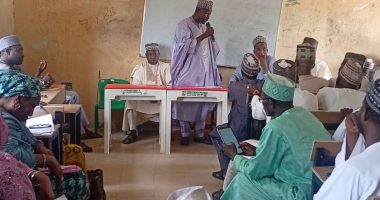
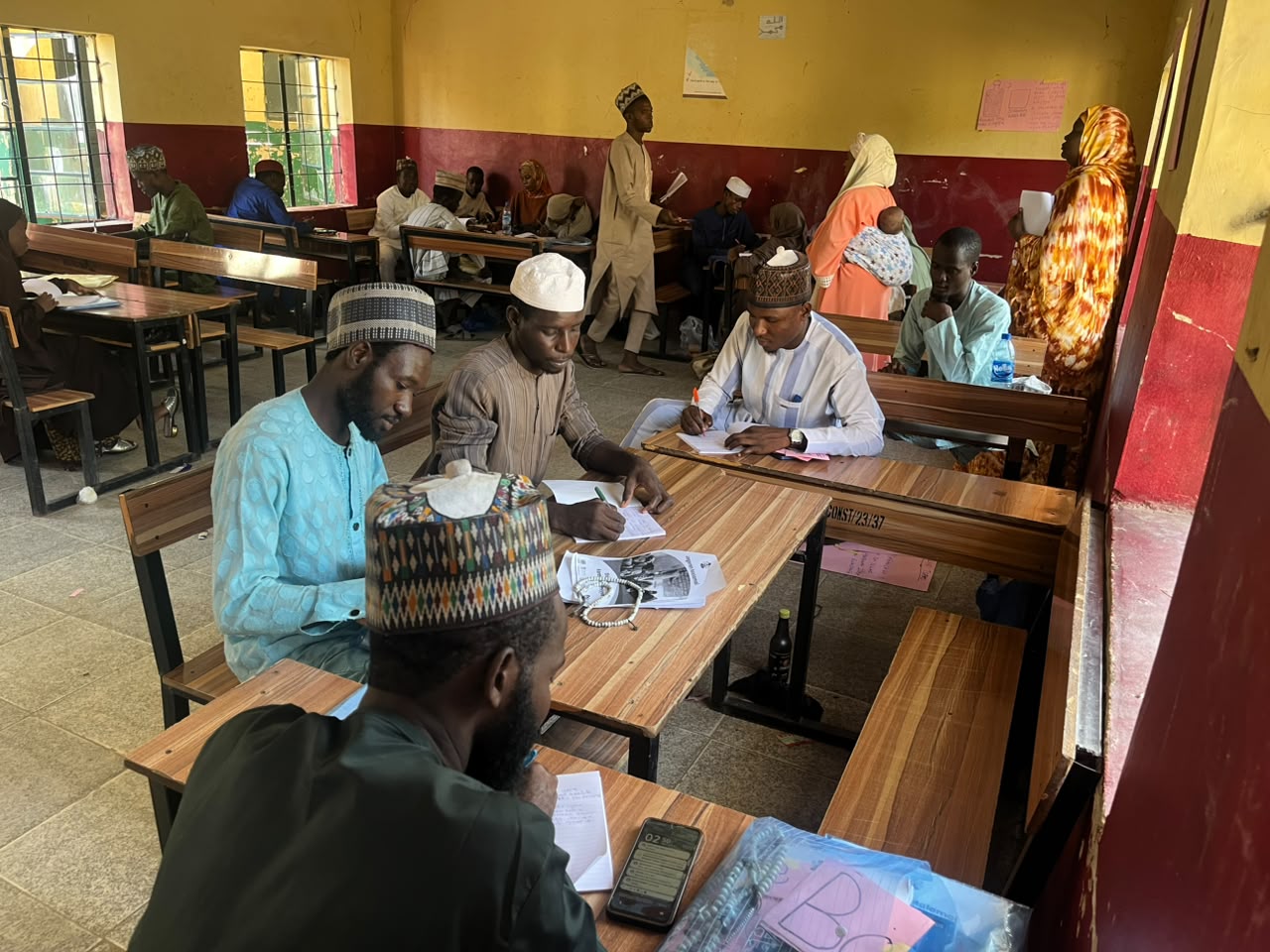
The participants made this known during a training session at the Gwale Dukawuya Centre in Kano State.
The programme is designed to provide Tsangaya students with second-chance learning opportunities by equipping them with essential educational skills to enhance their social development.
The training was organised by the Kano State Qur’anic and Islamiyya Schools Management Board (QISMB), in collaboration with UNICEF, and support from the European Union under the Global Partnership for Education.
One of the participants, Asama’u Hadi Tijjani of Tsangayar Malam Maikula’uzai Ayagi, said the programme had exposed students to english, mathematics, science and personal hygiene.
She explained that the lessons would improve students’ literacy and numeracy skills while helping them adopt healthier practices in their daily lives.
Another participant, Babangida Abdulhadi Muhammad of Tsangayar Malam Abdulhadi Muhammad Dausayi, said the training would improve learning outcomes among Tsangaya students.
He called for the expansion and sustainability of the programme to enable more learners to benefit.
Speaking on the implementation of Haske Term Two, a master trainer, Mansur Lawal Abdullahi, explained that the second term builds on the achievements of the previous year, with lessons covering mathematics, literacy and science.
According to him, mathematics is taught over twelve weeks, literacy over ten weeks, while science runs for two weeks.
Mansur said the programme uses Hausa as the language of instruction to facilitate understanding, particularly in reading, writing and calculations.
He added that the lessons also cover personal hygiene, healthy eating habits and other practices that help students protect their health.
However, he identified late arrival by some participants as a challenge at the Gwale Dukawuya centre.
According to him, the timing of the training sometimes conflicts with the morning routines of Tsangaya teachers, who attend to their students before leaving for the sessions.
He also identified inadequate classrooms as another major challenge facing the programme in some Tsangaya schools.
Mansur explained that while some classes are conducted under trees or in available rooms, others have to wait until regular Tsangaya lessons end before commencing their sessions.
The centre coordinator, Idris Garba Aminu, said participants were drawn from fifteen Tsangaya schools across Gwale Local Government Area.
Idris added that some beneficiaries of the Haske programme had progressed to tertiary institutions, demonstrating the potential of second-chance education to expand learning opportunities for Tsangaya students.
He commended the Director of Planning, Research and Statistics, who also serves as the QISMB focal person, Kamsuludeen Abdulhadi, for his efforts towards the successful implementation of the programme.
Radio Nigeria reports that one hundred and twenty Tsangaya schools were selected for the programme across ten local government areas of Kano State: Dala, Gwale, Dambatta, Dawakin Tofa, Gezawa, Kano Municipal, Nasarawa, Makoda, Sumaila and Tudun Wada.
Editing By Godwin Duru