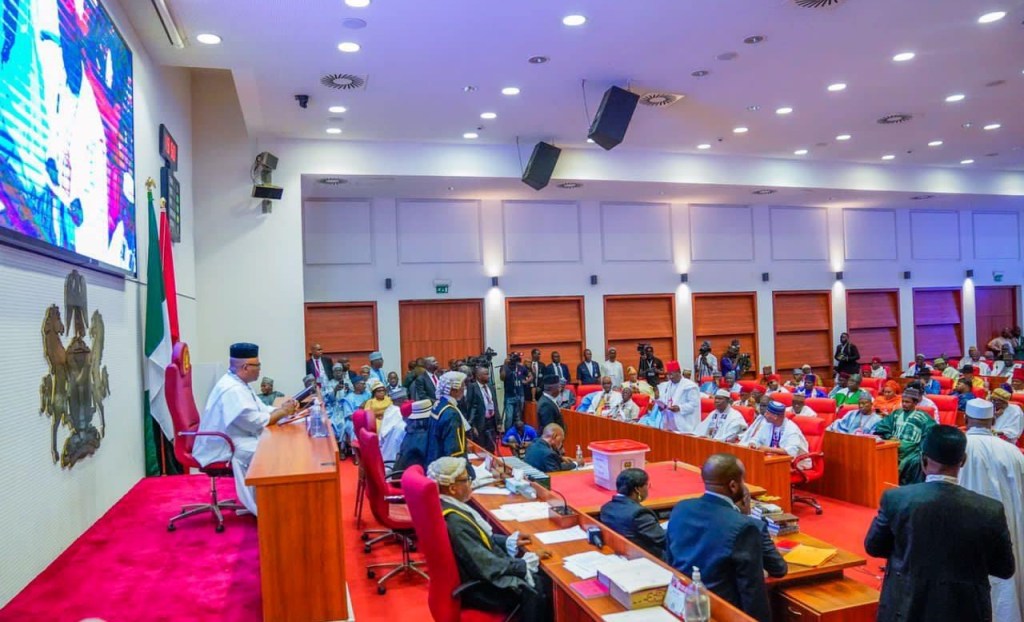

Senate has urged the Ministry of Health, through relevant agencies and regulatory bodies, to develop and enforce national guidelines prescribing minimum stock levels of essential antidotes and emergency medicines in selected public and private hospitals across the country.
This followed the adoption of prayers of a motion on the urgent need for the Federal and State Governments to ensure adequate stocking, availability, and access to life-saving antidotes and emergency medicines in public and private hospitals nationwide.
Presenting the lead debate, the sponsor of the motion, Senator Idiat Oluranti Adebule (Lagos West), said Nigeria continues to record rising cases of medical emergencies, including snakebites, scorpion stings, poisoning, drug overdoses, and other forms of envenomation.
She noted that such emergencies require the immediate administration of specific antidotes and emergency medicines in both public and private hospitals to prevent avoidable deaths.
Senator Adebule also expressed grave concern over the tragic and avoidable death of Miss Ifunanya Nwangene, who reportedly died following a snakebite in Abuja, a development she said exposed serious gaps in emergency preparedness and antidote availability in Nigeria’s healthcare system.
The Senate also urged the Federal Ministry of Health, in collaboration with the National Agency for Food and Drug Administration and Control (NAFDAC), to ensure the procurement, quality assurance, proper storage, and nationwide availability of safe, effective, and affordable antivenoms and critical antidotes for use in public and private hospitals, with priority attention to high-risk regions.
Senator Idiat Oluranti further explained that the World Health Organization (WHO) classifies snakebite envenoming as a neglected tropical disease and underscores the critical importance of timely access to safe and effective antivenoms in public and private hospitals, particularly in countries such as Nigeria where snakebite incidents remain prevalent.
Section 17(3)(d) of the 1999 Constitution of the Federal Republic of Nigeria (as amended) mandates the State to ensure the provision of suitable and adequate medical and health facilities for all persons, while Section 14(2)(b) affirms that the security and welfare of the people shall be the primary purpose of government.
These obligations extend to the regulation, supervision, and standard-setting for public and private hospitals.
The Senate, however, called on State Governments, through their Ministries of Health and Hospital Management Boards, to conduct immediate audits of public and private hospitals within their jurisdictions to ascertain compliance with approved antidote-stocking and emergency preparedness standards.
The Senate also directed the Federal Ministry of Information and the National Orientation Agency (NOA) to implement nationwide public sensitization campaigns on the importance of prompt hospital presentation following snakebites, poisoning, and other forms of envenomation, as well as the dangers associated with delayed medical treatment.
Cov/BashirM