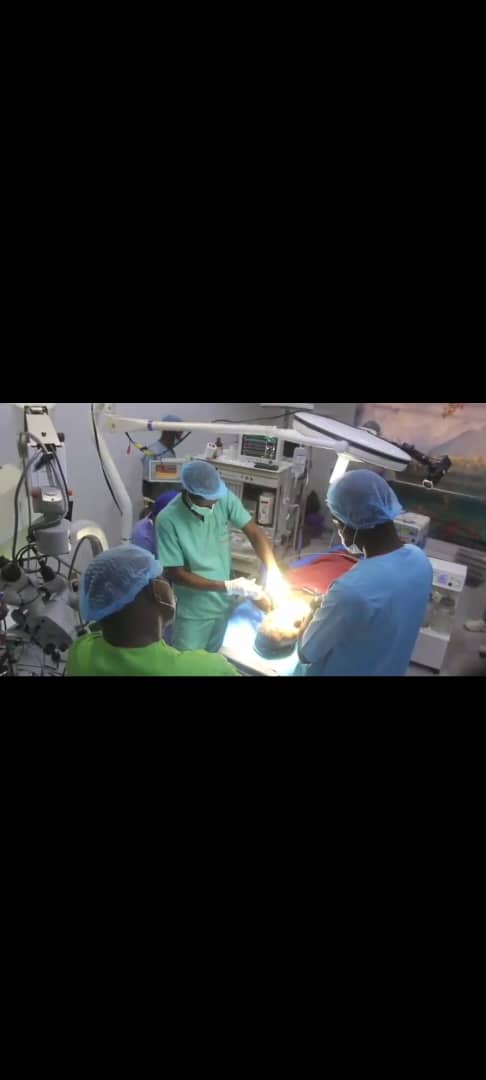

A team of Nigerian surgeons, led by renowned ear, nose and throat specialist, Professor Muhammad Mainasara, has successfully restored the hearing of ten patients in Kaduna State through cochlear implant surgeries.
The exercise was carried out at the 44 Army Reference Hospital, Kaduna, marking a major milestone in advanced hearing care in the state.
Speaking during the exercise, Professor Muhammad Mainasara explained that the procedures were cochlear implant surgeries conducted in collaboration with Cornedal Electric Company of Australia.
According to him, the surgeries were aimed at restoring hearing in patients who had completely lost their ability to hear, giving them a renewed chance at normal communication and improved quality of life.
He explained that a cochlear implant is a specialized medical device that works by bypassing the damaged parts of the ear and directly stimulating the auditory nerves.
This allows sound signals to be sent to the brain, enabling patients who are profoundly deaf to perceive sound once again.
Professor Mainasara noted that the surgeries were performed on both adults and children.
The Team Leader emphasized that for children, especially those born with hearing loss or who lose their hearing early in life, cochlear implants are crucial not only for hearing but also for speech development. With early intervention, such children can develop speech, integrate better into society, and live normal, productive lives.
Another member of the surgical team, Professor Rabihu Isa Muhammad explained that hearing loss can either be congenital or acquired later in life due to illness, infections, or other medical conditions.
He advised parents and guardians to pay close attention to their children’s hearing and speech development, stressing that early detection and treatment of hearing problems are key to ensuring healthy development and overall wellbeing.
The successful surgeries highlight the growing capacity of Nigerian medical professionals to carry out complex and life-changing procedures within the country, reducing the need for patients to seek such treatments abroad.
PR: Adamu Yusuf