
Rising cost of sanitary pads in Nigeria is threatening menstrual hygiene management, particularly among low-income women and girls across the country.
This growing concern has reignited conversations around period poverty and the urgent need for government action and public awareness to address the crisis.
In recent months, the price of sanitary pads has surged, with an average pack now selling for between ₦800 and ₦2,000—almost double the previous cost in many areas. As a result, many women and girls, especially those in rural and underserved communities, are turning to unsafe alternatives such as rags, tissue paper, or even leaves.
Seventeen-year-old student Bilkisu Bello shared her experience:
“Sometimes I stay home from school during my period because I can’t afford pads.”
Aisha Bashir, another affected woman, added:
“I used to buy a pack for ₦500. Now I can’t find any for less than ₦1,000.”
Healthcare professionals warn that poor menstrual hygiene can lead to serious health complications, including infections, reproductive health issues, and long-term psychological effects. It also contributes to school absenteeism and workplace disruptions, exacerbating gender inequality.
A 2023 report by the United Nations Population Fund (UNFPA) revealed that over 37 million Nigerian women and girls of reproductive age lack adequate access to menstrual hygiene products and services.
“Menstrual hygiene is a human right, not a luxury,” said Dr. Fatima Hassan, a public health advocate.
“When sanitary pads become unaffordable, it’s not just a health issue—it becomes a social and economic one.”
She explained that while some resort to makeshift alternatives, the use of unclean rags, tissue, or leaves can lead to infections, especially if they are not properly washed and dried in the sun.
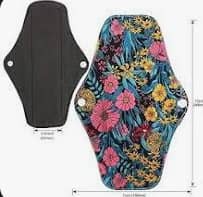
Dr. Fatima advocated for the use of reusable pads as a safer, more sustainable solution—provided they are regularly washed and dried properly.
“A reusable pad can last long, but must be changed frequently, washed thoroughly, and dried under sunlight. Damp pads can cause serious infections,” she emphasized.
Activists and NGOs are calling on the federal government to remove taxes on sanitary products and support local production to reduce dependence on costly imports.
Some state governments and civil society groups have begun distributing free reusable pads and launching menstrual hygiene education campaigns in schools.
In Kano State, Population Services International Nigeria (PSI-Nigeria) has launched the Menstrual Hygiene Now (MH-NoW) project, targeting over 200,000 women and girls.
According to Amina Sabi’u, the PSI State Support Officer in Kano, the initiative is aimed at adolescent girls and women aged 10 to 24, focusing on underserved communities.
“In Kano, we’re active in 15 communities across Ghari, Tsanyawa, and Nasarawa Local Government Areas,” she said.
She warned that without urgent, coordinated action, millions of Nigerian girls and women would continue to suffer in silence over a natural, biological process.
Meanwhile, the Kano State Ministry of Women Affairs, Children, and Disabled has pledged to collaborate with NGOs and stakeholders to combat menstrual poverty through education and training on reusable pad use.
According to Alhaji Zubair Abdulmumin Zubair, Deputy Director of Research and Statistics at the Ministry, proper use of reusable pads can significantly reduce menstrual poverty and help restore dignity and confidence among girls.
By Khadijah Aliyu