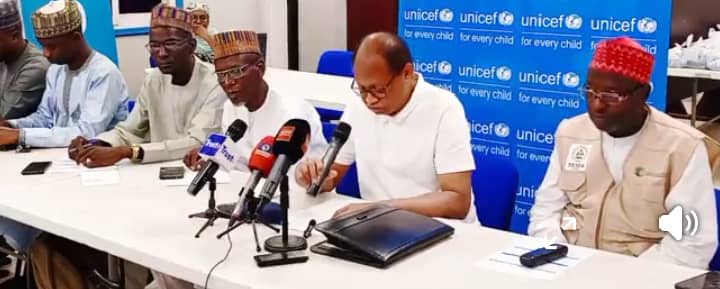

The United Nations Children’s Fund (UNICEF) has called on Kano State Government to urgently increase investment in child-focused sectors including health, education, and nutrition to secure the state’s future.
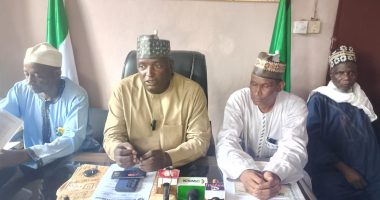
Speaking during a media dialogue on Child-Sensitive Budgeting and Planning in Kano, Mr. Rahma Rihood Muhammad Farah, Chief of UNICEF Field Office in Kano, expressed deep concern over the alarming statistics affecting children in the state.
According to Mr. Farah, Kano is home to over 6.5 million children under the age of 18, many of whom suffer from high mortality rates, malnutrition, poor immunization coverage, and lack of access to quality education and healthcare.
He cited data from the 2021 Multiple Indicator Cluster Survey (MICS), which revealed that 143,000 children under five die annually in the state, while nearly 2.9 million are not fully immunized. Additionally, 4 million children live in multidimensional poverty, and over 2.3 million school-aged children are out of school.
Farah stressed that despite ongoing reforms, social sector allocations in the state remain inconsistent and inadequate. He noted that child-sensitive budgeting should be seen not as a charitable gesture, but as a strategic investment for economic growth and poverty reduction.
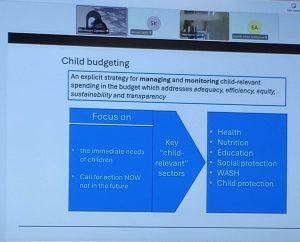
He identified major gaps in Kano’s budgeting process, including the invisibility of child-specific allocations, underfunding of key programs such as nutrition, inefficiencies in service delivery, and poor inter-ministerial coordination.
In his remarks, Deputy Speaker of the Kano State House of Assembly, Hon. Muhammad Bello Butu Butu, reaffirmed the legislature’s commitment to ensuring full implementation of budget allocations to ministries, departments, and agencies (MDAs).
However, Butu Butu lamented that several MDAs are underperforming due to weak follow-up on fund disbursement and poor utilization of appropriated resources, despite the state government’s efforts to release funds.
He pointed out that about 35% of Kano’s annual budget is currently allocated to health and education, which shows the government’s intent to improve child welfare and reduce the number of children on the streets.
At the end of the dialogue, stakeholders including journalists, CSOs, and government officials jointly urged the Kano State Government to institutionalize child-sensitive budgeting, increase funding for children’s programs, and improve accountability and transparency in budget implementation.
COV/Khadijah Aliyu