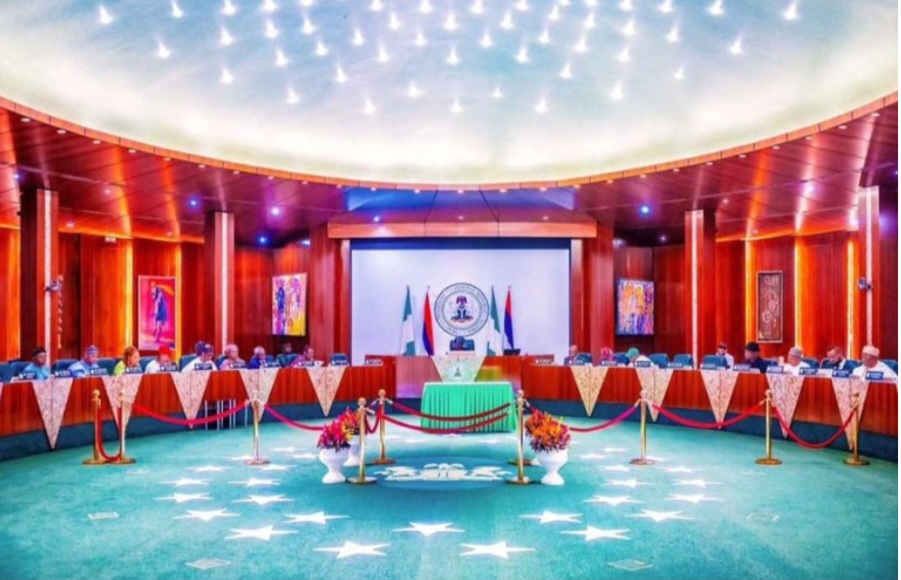

Federal Executive Council (FEC) has approved a series of landmark initiatives aimed at bolstering public servant welfare, unlocking economic potential in the creative and tourism sectors, and strengthening fiscal discipline and infrastructure development in Nigeria.
At the forefront of these decisions is the renewal of the Group Life Insurance Scheme for the 2025/2026 policy year, underscoring the Tinubu administration’s commitment to the well-being of federal employees.
The Head of the Civil Service of the Federation, Didi Walson-Jack, emphasized that the scheme guarantees financial support to the families of public servants who die in active service.
The policy will cover top government officials, including the president, vice president, ministers, and staff of federal ministries, agencies, the military, and paramilitary bodies.
Seventeen underwriters have been appointed to manage the cover, which becomes effective upon premium payment, in line with the ‘no premium, no cover’ principle.
Minister of Art, Culture, Tourism, and the Creative Economy Hannatu Musawa announced a groundbreaking initiative aimed at generating $100 billion by 2030 through the strategic monetization of cultural assets.
The plan, developed in partnership with the Ministry of Finance Incorporated (MOFI), includes the identification, securitization, and commercialization of tangible and intangible heritage, such as artifacts, landmarks, indigenous textiles like Adire, and culinary items like Ijebu garri. The initiative is also projected to create over two million jobs by 2027.
In other areas of socio-economic reform, the FEC approved a revised National Employment Policy. According to Minister of Labour and Employment Alhaji Maigari Dingyadi, the updated policy aligns with current economic realities and provides a framework for sustainable job creation and poverty reduction.
He disclosed that the new strategy would be showcased at the upcoming International Labour Organization meeting in Geneva as a model of employment-focused reform.
Further enhancing governance and efficiency, the FEC approved an adjustment to the national procurement threshold, aimed at eliminating bureaucratic delays. Minister of Information and National Orientation Alhaji Muhammad Idris explained that the updated threshold will reduce the frequency of project submissions to the council, fast-tracking procurement processes.
Additionally, the Council reaffirmed its commitment to public-private partnerships, directing Ministries, Departments, and Agencies—especially the Ministry of Works—to deepen collaboration with private investors for infrastructure delivery.
On fiscal matters, the minister disclosed that Nigeria had fully repaid the $2.4B IMF loan secured during the COVID-19 pandemic, a move he described as evidence of the administration’s fiscal responsibility and a signal of confidence to international investors.