
The National Economic Council (NEC) has approved the establishment of a Cotton, Textile and Garment Development Board, alongside new strategies for agribusiness expansion and livestock transformation projected to generate up to $90 billion in economic value by 2035.
Other initiatives approved by the council included the establishment of the Green Imperative Project (GIP) national office in Abuja and regional offices across the six geopolitical zones, as well as addressing the crises fueled by the current system of animal husbandry in the country.
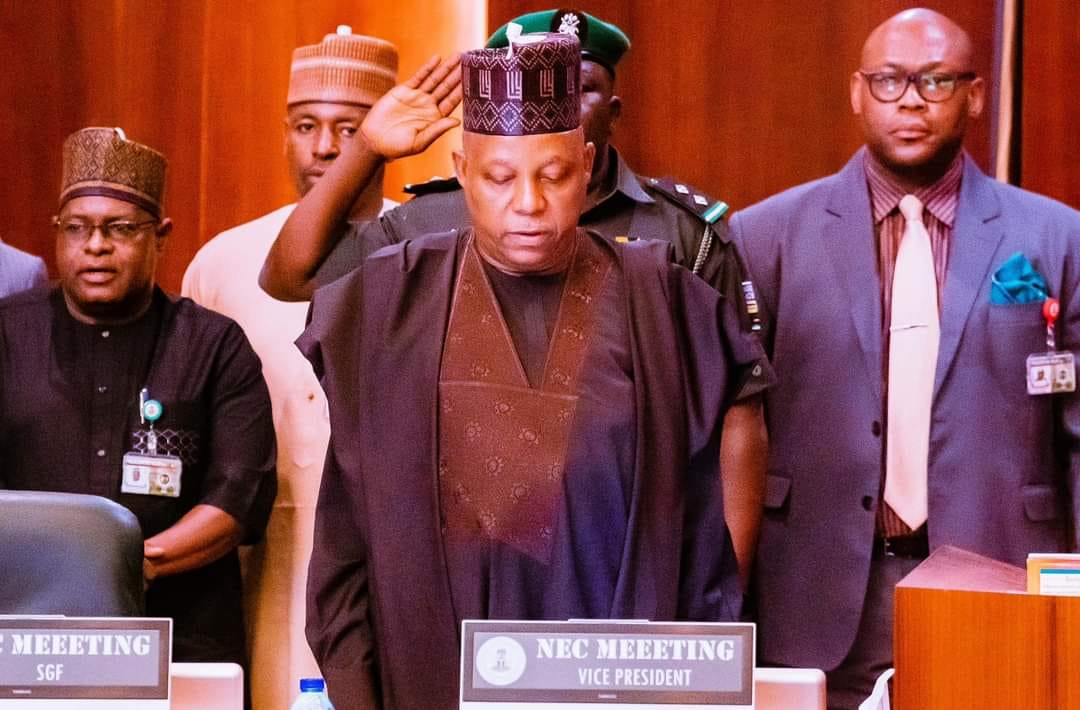
At its 149th NEC meeting at the Presidential Villa, Abuja, the Council also observed a minute of silence for victims of the recent killings in Benue and Plateau States, while expressing its condolences to the people and governments of the affected states.
The NEC, chaired by Vice-President Kashim Shettima, with Governors of the 36 states of the federation, the Governor of the Central Bank of Nigeria (CBN), the Minister of Finance, and other co-opted government officials as members, approved the proposal for the establishment of the Cotton, Textile and Garment Development Board.
As the regulatory body for the cotton, textile and garment sector of Nigeria, the Board will have governors representing the six geo-political zones, with Ministers of Agriculture and Food Security, Budget and Economic Planning, and Industry, Trade and Investment as members.
Stanley Nkwocha, the Senior Special Assistant to the President on Media and Communications, Office of the Vice-President, said in a statement that the board will be domiciled in the Presidency, private sector-driven, with representation of the relevant public sector stakeholders, and funded from the Textile Import Levy being collected by the Nigeria Customs Service (NCS).
On the establishment of a Cotton, Textile and Garment Development Board, the Vice-President said it aligns with the economic revival agenda of President Bola Tinubu, recalling that the initiative “is a call to resuscitate a sector that once clothed the people and powered the nation’s economy.
“Nigeria is a nation where cotton can thrive in 34 states. Yet our production level remains a fraction of our potential. We currently produce only 13,000 metric tons, while we continue to import textiles worth hundreds of millions of dollars. This is not just an economic imbalance. It is an invitation to act,” he said.
On strengthening the nation’s food security, the Vice-President said even though it is a vital follow-up to the Nutrition 774 Initiative, it is also basically about building an inclusive, efficient and sustainable national food economy.
RN