
Writing By Khadijah Aliyu; Edited By Godwin Duru
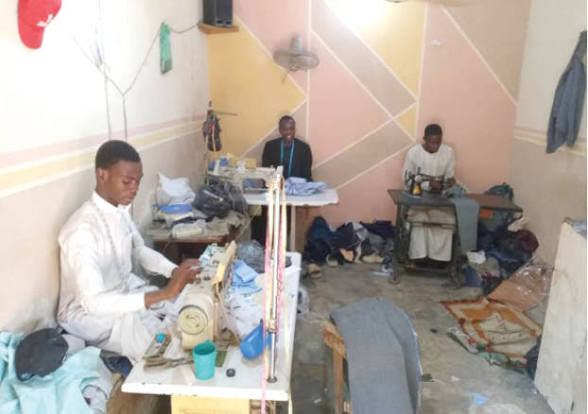
Tailoring has remained one of the oldest and most respected trades in Kano State, serving as both a cultural heritage and a major source of livelihood for thousands of people.
From the popular Kantin Kwari and Sabon Gari to neighbourhood tailoring shops across the metropolis, the industry continues to thrive despite economic challenges and changing fashion trends.
For decades, Kano has been recognised as a centre for textile trading and garment production in northern Nigeria.
The state’s rich history in textile manufacturing and traditional embroidery has created a vibrant tailoring industry that employs men and women, while providing apprenticeship opportunities for thousands of young people.
Today, tailoring in Kano has evolved beyond sewing traditional attire.
Many tailors now produce corporate wear, school uniforms, wedding outfits, casual clothing and customised fashion designs to meet the growing demands of customers.
One of the tailors, Ummulkairi Shuaibu, said modern sewing machines, computerised embroidery equipment and social media marketing have transformed her tailoring business into a competitive fashion enterprise.
She explained that, apart from offering tailoring services, she operates a training centre and a ready-to-wear clothing business where she mentors women and girls, equipping them with skills that promote financial independence and entrepreneurship.
Despite the sector’s contribution to employment generation, Ummulkhairi Shuaibu said the industry faces numerous challenges.
According to her, the rising cost of fabrics, sewing materials, electricity and transportation has significantly increased production costs, while frequent power outages compel many tailors to rely on petrol-powered generators, reducing their profit margins.
Another tailor, Umar Habib, identified the influx of imported second-hand clothes and cheap ready-made garments as a major threat to local tailoring businesses.
He noted that many customers now prefer purchasing inexpensive imported clothing instead of patronising local tailors, a trend he said has negatively affected business.
Umar Habib also identified limited access to finance as another major obstacle.
He stressed that improved access to affordable credit would enable tailors to acquire modern equipment, employ more workers and increase production.
Radio Nigeria sampled the opinions of some Kano residents on their preferences and the affordability of tailoring services.
Zainab Bashir said the high cost of sewing discourages her from taking fabrics to local tailors.
On her part, Saratu Muhammad said she spends a huge amount on tailoring to keep up with the latest fashion trends.
A resident of Jogana ward Gezawa LGA Muhammad Sani, said many local tailors still charge affordable prices depending on the complexity of the design requested by customers.
However, his neighbour, Malam Dalhat Musa, said the combined cost of purchasing fabrics and paying for sewing has become a heavy financial burden on his large family.
Stakeholders believe that with improved access to financing, stable electricity supply and policies that support local garment production, the tailoring industry can expand further and create more employment opportunities for young people.
As Nigeria seeks to diversify its economy, the tailoring industry in Kano remains a clear example of how traditional skills can generate sustainable livelihoods, preserve cultural heritage and contribute meaningfully to economic development.