By Khadijah Aliyu
The Nigeria Revenue Service (NRS) says the new tax requirements do not, authorise automatic deductions from personal bank accounts, stressing that tax collection and recovery must follow applicable laws and established procedures.
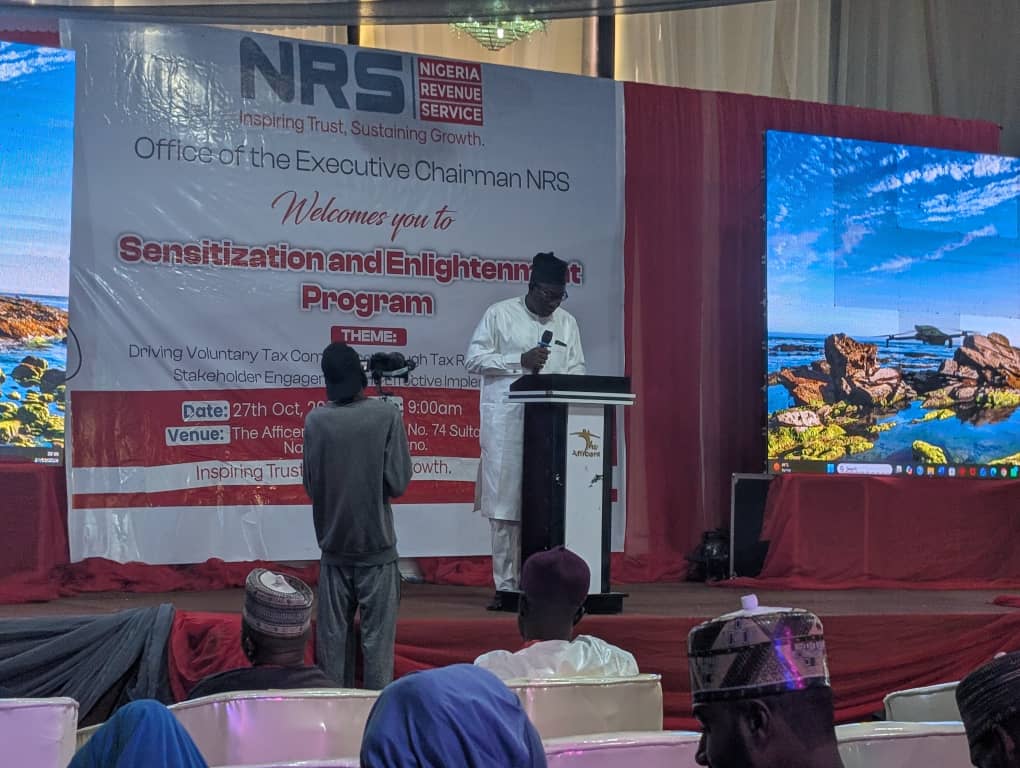
The Administrator of the NRS for Jigawa, Kano and Katsina states, Isma’il Abdullahi, stated this during a stakeholder engagement and tax reform sensitisation programme organised by the service in Kano.
He said the reforms had generated questions and concerns among individuals, business owners and state governments, particularly regarding bank account deductions, the taxation of personal transfers and loans, Value Added Tax (VAT), and revenue allocation to subnational governments.
According to him, many Nigerians want assurances that their money will remain safe, their businesses will remain viable and governments will continue to receive the resources needed to provide essential services.
Abdullahi described the new tax regime as a major catalyst for building public confidence, improving voluntary compliance and strengthening tax administration in the country.
He clarified that the standard VAT rate remains 7.5 per cent, noting that concerns about additional burdens on small businesses could be addressed through proper communication and public sensitisation.
The NRS administrator said efforts were being made to address public concerns by explaining the provisions of the law and how the new tax framework operates.
He gave the example of a trader who receives a loan of 500,000 naira, explaining that the amount should not automatically be treated as sales revenue or profit.
He emphasised the importance of keeping appropriate records and supporting documents to establish the nature of financial transactions and prevent misunderstandings during tax assessments.
In a paper titled Overview of Nigeria’s Tax Reforms and Implications for Taxpayers*, Senior Manager of Tax, Abba Sani, said the reforms were designed to encourage voluntary compliance by making the tax system simpler and more user-friendly.
He explained that the system had transitioned from manual processes to digital operations, noting that the previous arrangements were characterised by multiple taxation, particularly at the state level.
Sani stressed the need for continuous stakeholder engagement to improve public understanding of the reforms and promote a culture of voluntary tax compliance.
He highlighted taxpayers’ responsibilities and rights under the new framework, including record-keeping, filing tax returns, and the right to raise objections, pursue appeals and submit complaints where necessary.
The NRS official urged taxpayers to provide accurate information, maintain proper records and fulfil their obligations within the stipulated time, while calling on the service to provide clear guidance and accessible support.
Radio Nigeria reports that the programme, themed Driving Voluntary Tax Compliance Through Tax Reform Awareness, attracted a large turnout of participants from different sectors.
Editing by Khadija Kubau