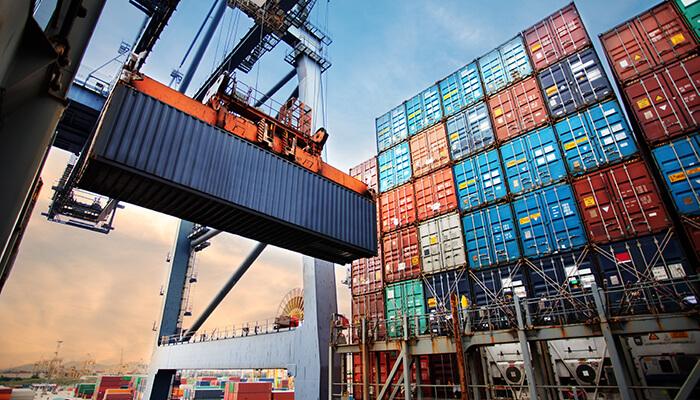

The planned sale of empty shipping containers in United States dollars by a shipping company operating at Tin Can Island Port has sparked widespread criticism from maritime stakeholders, who described the move as harmful to Nigeria’s economy and the naira stability drive.
The company is reportedly offering a 40-foot empty container for 2,000 dollars, while a 20-foot container is priced at 1,600 dollars.
Reacting to the development, President of the African Association of Professional Freight Forwarders and Logistics of Nigeria, Frank Ogunojemite, condemned the practice, describing it as a direct affront to Nigeria’s economic stability and the Federal Government’s Renewed Hope Agenda.
According to him, it is troubling that a foreign company operating within Nigeria would choose to denominate local transactions in a foreign currency at a time when the Federal Government is intensifying efforts to stabilise the economy and strengthen the naira.
Chief Ogunojemite argued that there is no justification for pricing locally stationed assets in dollars, insisting that the practice amounts to economic distortion and undermines local content policies.
Other stakeholders who spoke on the issue also criticised the development, saying the sale of empty containers located within Nigeria should not be conducted in foreign currency. They warned that continued dollarisation of local transactions could weaken national financial sovereignty and disrupt economic stability.
However, the National Public Relations Secretary of the Association of Nigerian Licensed Customs Agents, Emmanuel Ojeme, offered a different perspective, saying such transactions are common within the maritime sector.
He explained that the process usually involves inspection, invoicing in dollars, payment through domiciliary accounts and eventual release of the containers.
Ojeme added that much of the maritime industry already operates largely in foreign currency, citing freight payments and some regulatory charges that are often denominated in dollars.
The stakeholders have therefore called on the Federal Government, the Central Bank of Nigeria and the Nigerian Shippers’ Council to urgently intervene and enforce compliance with the naira-based transaction policy in the maritime sector.
RN