
By Adamu Yusuf
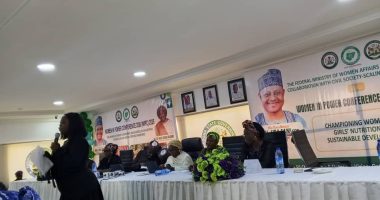
The National Commission for Nomadic Education (NCNE) has organized a capacity-building programme for its staff on data cleaning, analysis, and report writing as part of efforts to address the growing number of out-of-school children among nomadic communities in Nigeria.
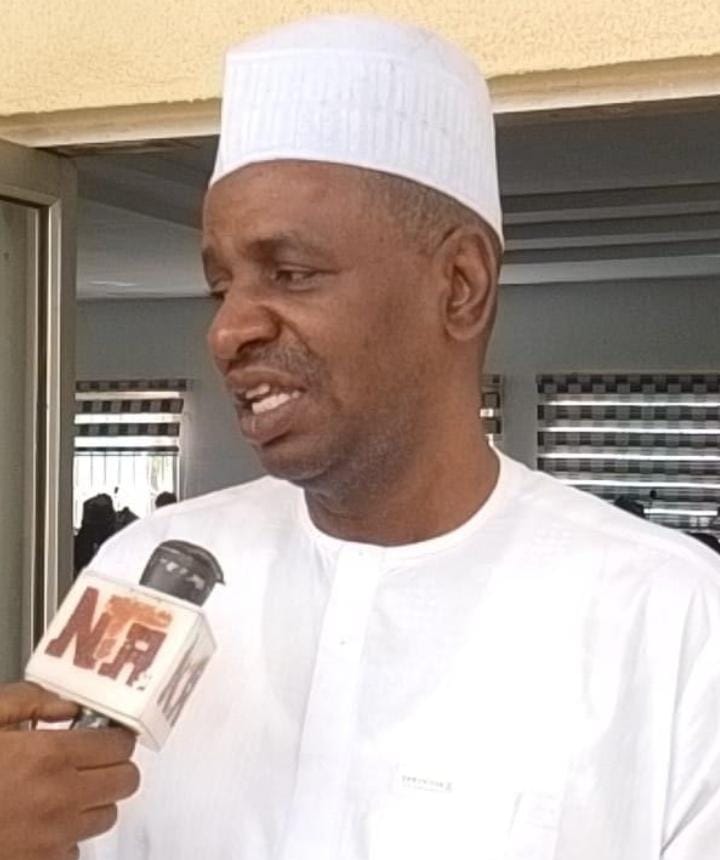
The Director of Extension Education and Skills Development at the Commission, Dr. Abdu Umar Hardo, disclosed this at the flag-off of the training held at the Commission’s headquarters in Kaduna.
Dr. Hardo explained that the training is being conducted under a collaborative initiative involving the Federal Ministry of Education, the National Commission for Nomadic Education, the Universal Basic Education Programme, the National Commission for Al-Majiri Education, and the National Commission for Mass Education.
He noted that the programme is aimed at equipping staff with the necessary skills to properly analyze and manage data gathered from field activities in order to support effective planning and implementation of educational interventions.
According to him, the Commission has been assigned the responsibility of significantly reducing the number of out-of-school children among nomadic populations, including pastoralists, migrant fishermen, and migrant farmers across the country.

Dr. Hardo said available statistics indicate that about 5.5 million children from nomadic backgrounds are currently out of school, while only about 1.5 million are enrolled, leaving a significant gap that the programme seeks to address.
He added that the Commission recently conducted a mapping exercise in six states and the Federal Capital Territory, including Jigawa, Gombe, Nasarawa, Enugu, Cross River, and Oyo, where about 660,000 out-of-school children and youths were identified.
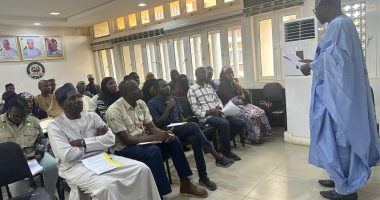
In his presentation at the programme, a consultant and development expert with the African Institute for Solution Development, Professor Aminu Abdullahi Bichi, said the training focuses on developing strategies to bring out-of-school nomadic children back to the classroom through the Accelerated Basic Education Programme (ABEP).
Professor Bichi explained that the Commission recently gathered credible data across the six states and the Federal Capital Territory to better understand the categories of out-of-school children within nomadic communities and the factors responsible for the situation.
He noted that analysis of the data revealed that about 62 percent of nomadic out-of-school children have never attended school, while 32 percent dropped out at the primary level.
According to him, 3.2 percent left school during junior secondary education, while 1.2 percent dropped out at the senior secondary level.
Professor Bichi said the findings highlight the magnitude of the problem and underscore the need for targeted, evidence-based interventions to ensure that children from nomadic backgrounds have access to education.
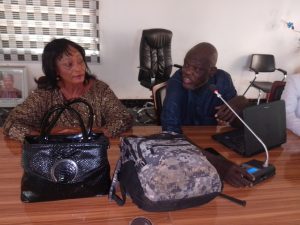
He added that the capacity-building programme is designed to reorient staff of the Commission on the implementation of the Accelerated Basic Education Programme and how it can be used to address the different categories of out-of-school children.
In an interview with Radio Nigeria, the Director of Planning, Research and Statistics of the Commission, Dr. Rose Nkechi Nwaji, said the adoption of the Accelerated Basic Education Programme will help reduce the rising number of out-of-school children, particularly among nomadic communities.
Dr. Nwaji explained that the programme, introduced by the Federal Ministry of Education and approved by the National Council on Education, provides accelerated learning opportunities for children who missed formal schooling, enabling them to catch up academically and integrate into the formal education system.
She added that the Commission will continue to collaborate with relevant stakeholders to expand access to education and reduce the number of out-of-school children across the country.
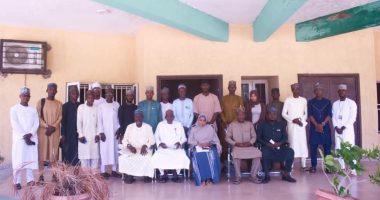
Participants at the training are expected to analyze and aggregate the data collected to support policy formulation and guide the enrolment of affected children through the Accelerated Basic Education Programme (ABEP).
The capacity-building programme is also designed to strengthen staff knowledge in strategic planning, enabling them to develop short-, medium-, and long-term strategies for implementing interventions aimed at reducing the number of out-of-school children among nomadic communities in Nigeria.