By Adamu Yusuf
Governor Uba Sani has launched a large-scale education expansion program in Kaduna State, starting the construction of 102 new schools and renovating 170 existing schools and learning centers across the state’s 23 Local Government Areas.
This important initiative, part of the Reaching Out-of-School Children (ROOSC) Project, represents a significant step toward ensuring every child in Kaduna State has access to quality education.
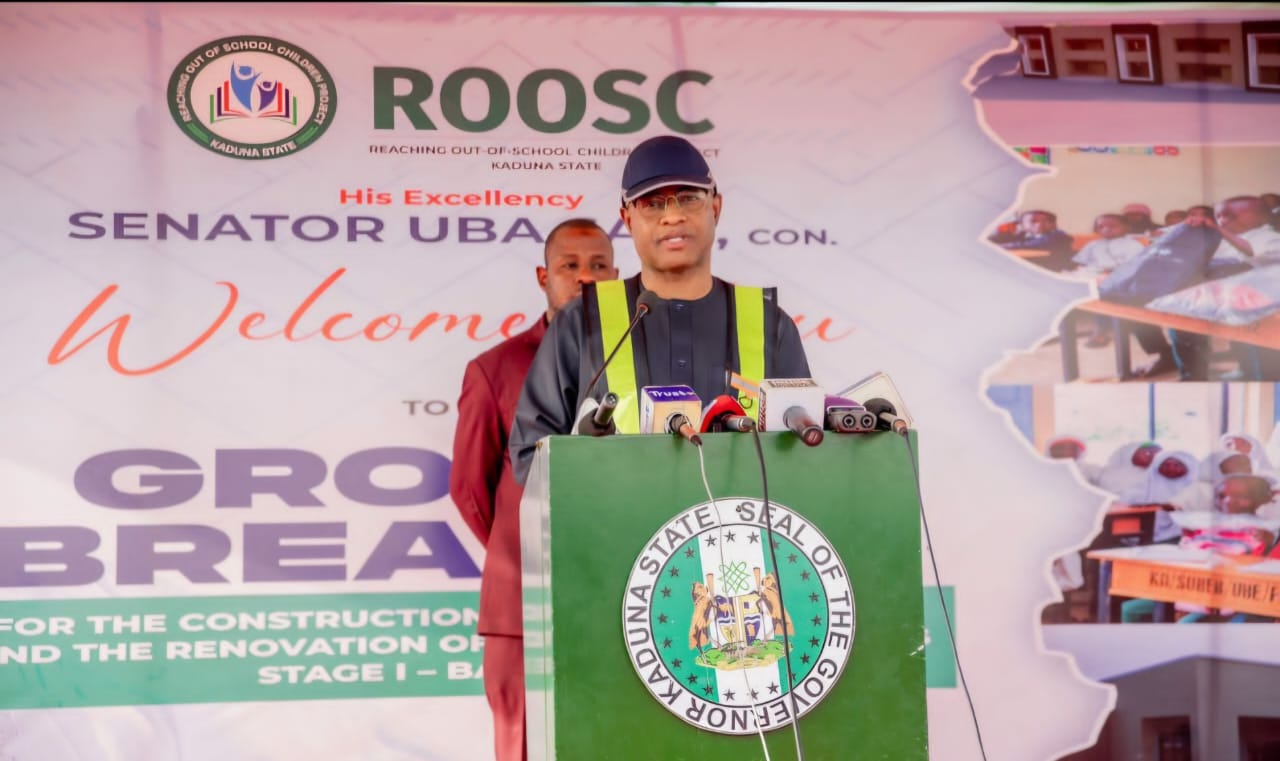
During the groundbreaking ceremony, Governor Uba Sani said the project is about more than just building infrastructure; it reflects his administration’s strong commitment to expanding educational access and removing barriers that have kept thousands of children out of school.
“Since assuming office on May 29, 2023, our administration has prioritized education in Kaduna’s development agenda because it remains the most powerful tool for social mobility, economic growth, and long-term stability,” he stated.
Governor Uba Sani also announced that his administration aims to achieve zero out-of-school children within the next year, building on the significant progress already made.
He credited this success to strong partnerships with global development agencies, including the Islamic Development Bank, the Kuwait Fund for Arab Economic Development, the Global Partnership for Education, Education Above All, and Save the Children International.
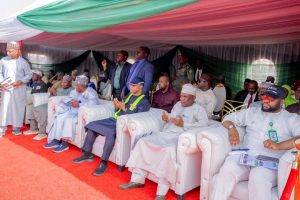
The governor praised traditional rulers, community leaders, civil society groups, and development partners for their ongoing collaboration, which he said continues to strengthen Kaduna’s efforts to build an inclusive education system.
“With the continued support of our partners and communities, we remain resolute in building an education system that leaves no child behind,” he emphasized.
“The ROOSC project is regarded as one of the most ambitious education expansion efforts in Kaduna’s recent history, placing the state at the forefront of Nigeria’s efforts to end the out-of-school children crisis.
In his address, the Project Coordinator of the Reaching Out-of-School Children (ROOSC) Project, Mr. Ezra Angai, stated that the project aims to increase access to equitable and inclusive education for out-of-school children and adolescents, including boys, girls, and children with disabilities.
He explained that the project is designed to improve the quality of learning and strengthen the education system across the state.
“We are deliberate in ensuring that the schools reflect both durability and inclusiveness,” he said.
The coordinator added that the school buildings feature climate-resilient elements, such as concealed roofing systems and steel trusses to prevent roof damage. Reinforced concrete has been used in the structures to ensure long-term durability.
He also noted that the facilities include proper sanitation and accessible infrastructure for children with disabilities, creating a safe, inclusive, and conducive learning environment for everyone.
The Commissioner for Education, Professor Abubakar Sani Sambo, commended Governor Uba Sani for his unwavering support and dedication to educational reform.
“We are grateful to our development partners for their collaboration and support,” he said.
“The Uba Sani administration has also made significant investments in education, including the construction of 62 new secondary schools across the three senatorial zones, with work already underway on 50 additional schools to meet the rising demand for quality education”.
Furthermore, the government has renovated hundreds of classrooms, supplied over 81,000 pieces of furniture, upgraded school water and sanitation facilities, and established vocational training centers to equip young people with practical skills.
Kaduna State has made remarkable progress in its efforts to reduce the out-of-school children population, which has dropped from about 550,000 to 187,720 in just two years.
The governor’s initiative has received widespread praise from stakeholders, who view it as a crucial step toward providing quality education for all in Kaduna State.
The ROOSC project is expected to significantly impact the state’s education sector, and the government remains committed to its successful implementation.
As the project progresses, Governor Uba Sani has urged all stakeholders to support the effort, saying, “Together, we can build a brighter future for our children and our state.”