By Adamu Yusuf
The National Commission for Nomadic Education (NCNE) has described the Accelerated Basic Education Programme (ABEP) as a critical intervention for improving girl-child enrolment and strengthening nomadic communities across Nigeria.
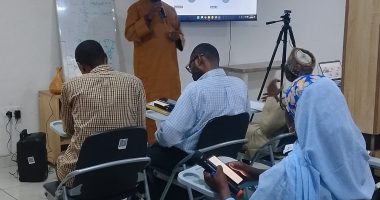
Speaking on the second day of the capacity building workshop in Kaduna, the Director and Head of the Department of Social Mobilisation and Women’s Development at NCNE, Hajiya Halima Othman Yoman, said cultural and religious misconceptions remain major barriers to girl-child education in nomadic communities.
She explained that many parents believe educating girls does not benefit the family or community, a perception she described as incorrect and harmful to development.
According to her, educating girls has a direct impact on family wellbeing, health, hygiene, and child upbringing, stressing that women play a central role in childcare and home management in most nomadic households.
Hajiya Halima Yoman said the introduction of ABEP by the Federal Government provides a flexible learning opportunity that would encourage the enrolment and retention of girls who previously had no access to education.
She emphasised that Islam encourages both males and females to seek knowledge, adding that there is no religious basis for denying girls access to education.
The Director expressed optimism that with sustained government support, ABEP would significantly reduce the number of out-of-school children, especially among nomadic populations.
In an interview with Radio Nigeria Kaduna, the Director of Quality Assurance at the Commission, Bimbi Tahir Adamu, said the training was designed to acquaint staff with the Accelerated Basic Education Programme recently developed by the Federal Government.
According to him, the initiative is one of the key strategies aimed at reducing the number of out-of-school children across the country.
He explained that as one of the agencies responsible for implementing basic education in Nigeria, the Commission must integrate ABEP into its system to ensure effective delivery.
Bimbi Tahir Adamu noted that the capacity-building focused on the concept of Accelerated Basic Education, its implementation strategies, and policy expectations, stressing that proper understanding by staff is key to the programme’s success.
He expressed optimism that ABEP would achieve its objectives, noting that similar initiatives have recorded positive outcomes in other parts of the world.
According to him, when fully implemented and effectively monitored, the programme would significantly reduce the number of out-of-school children nationwide.
He further explained that ABEP compresses the conventional six-year basic education cycle into about three years, making it more attractive to children who have dropped out of school and are already engaged in other activities.
“The shorter learning period, he said, would encourage such children to return to school, acquire basic education skills, and contribute meaningfully to society”.
In an interview, the Director of Planning, Research and Statistics at NCNE, Dr. Rose Nkechi Nwaji, described ABEP as a permanent, long-term strategy approved by the National Council on Education and formally introduced in 2022 to address educational gaps among out-of-school children.
Dr. Nwaji linked insecurity and rising social vices to lack of access to education, stressing that missed developmental stages in early life often have long-term consequences.

She noted that while NCNE has recorded increased enrolment through innovative, culturally adapted programmes, challenges remain, including the fact that teachers are employed and managed by state governments.
Dr. Nwaji expressed optimism that sustained collaboration, continuous capacity building, and effective implementation of ABEP would significantly reduce the number of out-of-school children and youths in nomadic communities, calling for continued support from all stakeholders.